Orthospine Doctor

Your blog category

Orthopedic Care in Bangalore
Orthospine Doctor

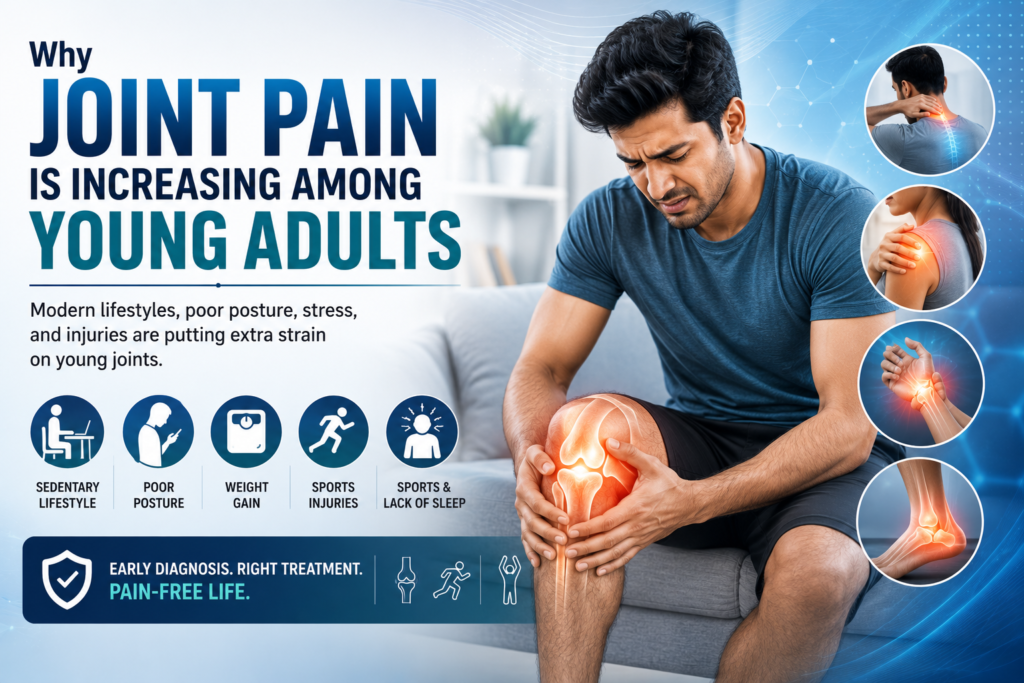
Why Joint Pain Is Increasing Among Young Adults

Why Joint Pain Is Increasing Among Young Adults Joint pain was once considered a problem that mainly affected older adults. Today, however, an increasing number of people in their 20s, 30s, and early 40s are experiencing persistent joint pain, stiffness, and reduced mobility. Whether it’s knee pain after climbing stairs, shoulder discomfort while working, or wrist pain from long hours on a computer, these issues are becoming more common among young adults. Modern lifestyles, sedentary jobs, poor posture, unhealthy eating habits, and sports injuries are some of the major reasons behind this growing trend. While occasional joint discomfort may not seem serious, persistent pain should never be ignored. Early diagnosis and appropriate treatment can prevent long-term damage and help maintain an active lifestyle. At OrthoSpineCare in Bangalore, experienced orthopedic specialists help patients identify the root cause of joint pain and provide personalized treatment plans to restore movement and improve quality of life. Why Are Young Adults Experiencing More Joint Pain? Several lifestyle and health factors contribute to the rise in joint pain among younger individuals. Unlike age-related arthritis, many cases in young adults are linked to daily habits that place excessive stress on the joints over time. Understanding these causes can help you protect your joints before serious problems develop. Poor Posture One of the biggest contributors to joint pain is poor posture. Many young professionals spend long hours sitting in front of computers or looking down at smartphones. Slouching, rounded shoulders, and improper sitting positions place additional strain on the spine, shoulders, hips, and knees. Over time, poor posture can lead to muscle imbalance, joint stress, and chronic pain. Sedentary Lifestyle Modern work environments often require prolonged sitting with very little physical activity. Lack of movement weakens the muscles that support your joints, making them more vulnerable to injury and discomfort. Regular physical activity helps maintain flexibility, muscle strength, and healthy joint function. Obesity and Weight Gain Excess body weight increases pressure on weight-bearing joints, particularly the knees, hips, and lower back. Even a small increase in body weight can significantly raise the stress placed on your joints during everyday activities such as walking or climbing stairs. Maintaining a healthy weight helps reduce joint strain and lowers the risk of long-term joint damage. Sports and Fitness Injuries Exercise is beneficial for overall health, but improper training techniques or overtraining can lead to injuries. Common sports-related joint injuries include: Ignoring these injuries can lead to chronic joint pain and instability. Repetitive Movements Repeating the same movements every day—whether typing, lifting, driving, or using machinery—can gradually irritate joints and surrounding tissues. This repetitive stress may contribute to tendonitis and other overuse injuries. Taking regular breaks and using proper ergonomics can reduce the risk. Nutritional Deficiencies Healthy joints require proper nutrition. Deficiencies in calcium, vitamin D, protein, and other essential nutrients may weaken bones and muscles, increasing the likelihood of joint pain. A balanced diet plays an important role in maintaining strong bones and healthy joints. Stress and Lack of Sleep Chronic stress and poor-quality sleep can increase inflammation and make the body more sensitive to pain. Inadequate rest also slows tissue repair, delaying recovery from minor injuries. Managing stress and getting sufficient sleep are important for overall musculoskeletal health. Early Arthritis Although arthritis is more common with aging, some forms—such as rheumatoid arthritis and certain inflammatory joint conditions—can affect younger adults. Early diagnosis is essential to prevent permanent joint damage and preserve mobility. Common Symptoms You Shouldn’t Ignore Joint pain may develop gradually or appear suddenly after an injury. Watch for symptoms such as: If these symptoms continue for more than a few weeks, consult an orthopedic specialist. Which Joints Are Most Commonly Affected? Young adults frequently experience pain in the following joints: Knees Knee pain often results from sports injuries, obesity, poor posture, or overuse. Shoulders Shoulder pain is common among people who perform repetitive overhead activities or spend long hours working on computers. Wrists Typing, gaming, and smartphone use can contribute to wrist pain and repetitive strain injuries. Hips Hip pain may develop due to muscle imbalance, sports injuries, or prolonged sitting. Ankles Sports activities and accidental twists often lead to ankle pain and ligament injuries. When Should You See an Orthopedic Specialist? Seek medical advice if: Early treatment often prevents minor problems from becoming chronic conditions. How Is Joint Pain Diagnosed? At OrthoSpineCare, specialists conduct a detailed evaluation to identify the underlying cause of your pain. Diagnosis may include: Accurate diagnosis helps create the most effective treatment plan. Treatment Options for Joint Pain Treatment depends on the cause, severity, and overall health of the patient. Physiotherapy A personalized physiotherapy program helps: Medication Doctors may recommend medications to reduce pain and inflammation while addressing the underlying condition. Lifestyle Modifications Simple lifestyle improvements can significantly reduce joint stress. Recommendations include: PRP Therapy For selected tendon, ligament, and soft tissue conditions, Platelet-Rich Plasma (PRP) Therapy may help support natural healing. Your orthopedic specialist will determine whether this treatment is suitable for your condition. Surgical Treatment Most young adults recover with conservative care. Surgery is generally considered only when significant structural damage or persistent symptoms remain despite non-surgical treatment. Tips to Keep Your Joints Healthy Protecting your joints starts with healthy everyday habits. These simple habits can reduce joint stress and improve long-term mobility. Why Choose OrthoSpineCare in Bangalore? At OrthoSpineCare, patients receive individualized care designed to address the root cause of joint pain. The clinic offers: The team is dedicated to helping patients regain mobility, reduce pain, and return to an active, healthy lifestyle. Conclusion Joint pain is no longer limited to older adults. Modern lifestyles, prolonged sitting, sports injuries, poor posture, and nutritional deficiencies have made joint problems increasingly common among young adults. Ignoring persistent pain can lead to long-term damage, while early diagnosis and treatment can help preserve joint function and prevent future complications. If you’re experiencing ongoing joint pain, stiffness, or swelling, consult the experienced orthopedic specialists at OrthoSpineCare in Bangalore. With advanced diagnostics, personalized treatment plans,

Understanding Nerve Compression
Orthospine Doctor

Understanding Nerve Compression: Causes, Symptoms, and Treatment

Understanding Nerve Compression: Causes, Symptoms, and Treatment Have you ever experienced a tingling sensation in your arm, numbness in your fingers, or a sharp pain that travels from your back into your leg? These symptoms could be signs of nerve compression, a common condition that occurs when excessive pressure is placed on a nerve by surrounding bones, muscles, ligaments, tendons, or spinal discs. While mild nerve compression may improve with rest and lifestyle changes, ignoring persistent symptoms can lead to long-term nerve damage and reduced mobility. Understanding the causes, recognizing the warning signs, and seeking timely treatment can help prevent complications and improve your quality of life. At OrthoSpineCare in Bangalore, experienced orthopedic and spine specialists provide comprehensive diagnosis and personalized treatment plans to help patients recover from nerve compression and regain pain-free movement. What Is Nerve Compression? Nerve compression, also known as a pinched nerve, occurs when surrounding tissues place excessive pressure on a nerve. This pressure interferes with the nerve’s normal function, causing pain, numbness, tingling, or weakness in different parts of the body. Although nerve compression can occur anywhere, it most commonly affects the neck, lower back, wrists, elbows, and shoulders. Early diagnosis is essential because prolonged compression can permanently damage the affected nerve. Common Causes of Nerve Compression Several conditions can place pressure on nerves and lead to compression. Herniated Disc A herniated or slipped disc is one of the most common causes of nerve compression. When the soft inner portion of a spinal disc pushes through its outer layer, it can press against nearby nerves, causing pain that may radiate into the arms or legs. Degenerative Disc Disease As spinal discs naturally wear down with age, they lose height and flexibility. This can reduce the space available for nerves and increase the risk of compression. Spinal Stenosis Spinal stenosis occurs when the spinal canal narrows, putting pressure on the spinal cord or nerve roots. This condition is more common in older adults and often causes back pain, leg pain, and difficulty walking. Bone Spurs Arthritis can lead to the formation of bone spurs that narrow the spaces around nerves, causing irritation and compression. Sports Injuries Falls, accidents, and sports-related injuries can damage the spine or surrounding tissues, leading to nerve compression. Poor Posture Long hours of sitting with poor posture, especially while working at a computer, can increase pressure on the neck and lower back, contributing to nerve irritation over time. Repetitive Movements Repeated movements at work or during sports can place ongoing stress on certain nerves, increasing the likelihood of compression injuries. Symptoms of Nerve Compression The symptoms depend on which nerve is affected and the severity of compression. Common signs include: Some people notice that symptoms become worse after prolonged sitting, standing, or repetitive activities. Common Areas Where Nerve Compression Occurs Neck (Cervical Spine) Compression of nerves in the neck may cause: Lower Back (Lumbar Spine) Lumbar nerve compression often causes: Wrist Compression of the median nerve in the wrist causes Carpal Tunnel Syndrome, leading to numbness, tingling, and weakness in the hand. Elbow Pressure on the ulnar nerve around the elbow can cause tingling in the ring and little fingers. Risk Factors Several factors increase the risk of nerve compression. These include: Maintaining a healthy lifestyle can reduce the likelihood of developing these conditions. When Should You See a Spine Specialist? You should seek medical attention if: Early diagnosis improves the chances of a full recovery. How Is Nerve Compression Diagnosed? At OrthoSpineCare, specialists perform a detailed evaluation to determine the exact cause of your symptoms. Diagnosis may include: These investigations help identify the location and severity of nerve compression. Treatment Options for Nerve Compression Treatment depends on the underlying cause and severity of the condition. Physiotherapy Physiotherapy is often the first line of treatment. A personalized rehabilitation program helps: Medication Doctors may prescribe medications to reduce pain and inflammation while the affected nerve heals. Treatment is usually short-term and combined with rehabilitation. Image-Guided Spine Injections For persistent nerve pain, image-guided injections can reduce inflammation around compressed nerves and provide significant relief. These procedures may help patients continue physiotherapy more comfortably. Lifestyle Modifications Simple changes can reduce pressure on your nerves and support recovery. Recommendations often include: PRP Therapy For selected musculoskeletal conditions, Platelet-Rich Plasma (PRP) Therapy may be considered to support tissue healing as part of a personalized treatment plan. When Is Surgery Necessary? Most patients improve with conservative treatment. However, surgery may be recommended if: Modern minimally invasive spine surgery can relieve pressure on affected nerves while supporting faster recovery. How to Prevent Nerve Compression Simple lifestyle habits can help protect your nerves and spine. Preventive care is one of the best ways to maintain long-term nerve and spine health. Why Choose OrthoSpineCare in Bangalore? At OrthoSpineCare, every patient receives comprehensive evaluation and individualized care based on their symptoms and lifestyle. Patients choose the clinic because of its: The team is committed to relieving pain, restoring movement, and helping patients return to their normal activities safely. Conclusion Nerve compression is a common condition that can cause pain, numbness, tingling, and muscle weakness. Although the symptoms may start gradually, delaying treatment can increase the risk of long-term nerve damage. Early diagnosis and appropriate care often lead to successful recovery without surgery. If you’re experiencing persistent back pain, neck pain, numbness, or radiating arm or leg pain, consult the experienced specialists at OrthoSpineCare in Bangalore. With advanced diagnostic facilities, personalized treatment plans, and comprehensive rehabilitation, you can receive the expert care you need to relieve pain and restore your quality of life.
Effective Sciatica Treatment in Bangalore
Orthospine Doctor

Effective Sciatica Treatment Options Available in Bangalore

Effective Sciatica Treatment Options Available in Bangalore Sciatica is more than just lower back pain. It is a condition that causes pain to travel from the lower back through the buttocks and down one or both legs. For many people, even simple activities like walking, sitting for long periods, driving, or climbing stairs become difficult because of persistent nerve pain. The encouraging news is that most cases of sciatica can be treated successfully without surgery. With early diagnosis and the right treatment plan, patients can experience significant pain relief, regain mobility, and return to their daily routine. If you’re looking for effective sciatica treatment in Bangalore, OrthoSpineCare provides comprehensive diagnosis, advanced non-surgical therapies, rehabilitation, and minimally invasive procedures tailored to each patient’s needs. What Is Sciatica? Sciatica occurs when the sciatic nerve, the longest and largest nerve in the body, becomes irritated or compressed. The nerve starts in the lower spine, passes through the hips and buttocks, and extends down each leg. When pressure is placed on this nerve, it can cause pain, numbness, tingling, or weakness along its pathway. Sciatica usually affects one side of the body, although severe cases may involve both legs. Common Causes of Sciatica Several spine conditions can lead to sciatica. Herniated Disc A slipped or herniated disc is the most common cause. The damaged disc presses on the sciatic nerve, resulting in pain that radiates into the leg. Degenerative Disc Disease As spinal discs wear down with age, they lose flexibility and cushioning, increasing the risk of nerve compression. Spinal Stenosis Spinal stenosis occurs when the spinal canal narrows, reducing space for the nerves and causing symptoms such as pain, numbness, and weakness. Bone Spurs Bone spurs caused by arthritis may press against nearby nerves and trigger sciatica. Piriformis Syndrome In some cases, the piriformis muscle located deep in the buttock irritates the sciatic nerve, causing symptoms similar to sciatica. Symptoms of Sciatica Sciatica symptoms vary depending on the severity of nerve compression. Common symptoms include: If these symptoms persist, it is important to consult a spine specialist. Why Early Treatment Is Important Many people ignore sciatica in the hope that it will improve on its own. While mild cases may settle with rest and conservative care, persistent symptoms can lead to prolonged nerve irritation and reduced mobility. Seeking treatment early can: Effective Sciatica Treatment Options At OrthoSpineCare, treatment is tailored to the underlying cause and severity of the condition. Comprehensive Evaluation The first step is identifying the exact cause of the nerve compression. Diagnosis may include: An accurate diagnosis helps ensure that the most appropriate treatment is selected. Physiotherapy and Rehabilitation Physiotherapy is one of the most effective treatments for sciatica. A personalized rehabilitation program focuses on: Regular physiotherapy helps many patients recover without surgery. Medication Management Medications may be prescribed to reduce pain and inflammation during recovery. Depending on your symptoms, treatment may include: Medication is usually combined with rehabilitation for better long-term outcomes. Image-Guided Spine Injections For patients with persistent or severe symptoms, image-guided injections can help reduce inflammation around the affected nerve. Common procedures include: These treatments often provide pain relief while allowing patients to participate more comfortably in physiotherapy. Lifestyle Modification Simple lifestyle changes can make a significant difference in managing sciatica. Your spine specialist may recommend: These habits reduce stress on the lower spine and help prevent recurring symptoms. Exercise Therapy Staying active is an important part of recovery. Depending on your condition, your physiotherapist may recommend: Exercises should always be performed under professional guidance to ensure safety. PRP Therapy For selected musculoskeletal conditions associated with chronic pain, Platelet-Rich Plasma (PRP) Therapy may be considered as part of a comprehensive treatment plan. Your doctor will determine whether this option is appropriate based on your diagnosis and clinical findings. When Is Surgery Necessary? Most people with sciatica recover without surgery. However, surgery may be recommended if: Modern minimally invasive spine surgery can provide effective relief when surgery becomes necessary. Tips to Prevent Sciatica Healthy daily habits can reduce the risk of future episodes. Consistency with these habits supports long-term spine health. Why Choose OrthoSpineCare for Sciatica Treatment in Bangalore? Choosing the right spine care clinic is essential for lasting recovery. Patients trust OrthoSpineCare because of its: The team works closely with every patient to identify the root cause of pain and provide treatment that restores mobility and improves quality of life. When Should You Visit a Spine Specialist? Don’t delay medical attention if you experience: Early diagnosis often leads to faster recovery and better long-term results. Conclusion Sciatica can be painful and frustrating, but it doesn’t have to control your life. With accurate diagnosis, timely treatment, and expert guidance, most patients achieve excellent recovery without surgery. Physiotherapy, medication, lifestyle changes, and advanced pain management techniques can effectively relieve symptoms and help you return to your normal activities. If you’re looking for effective sciatica treatment options in Bangalore, OrthoSpineCare offers compassionate, evidence-based care designed around your individual needs. From diagnosis to rehabilitation, the experienced team is committed to helping you move comfortably, recover confidently, and enjoy a healthier, pain-free future.

Best Orthopaedic & Spine Specialist in Bangalore
Orthospine Doctor

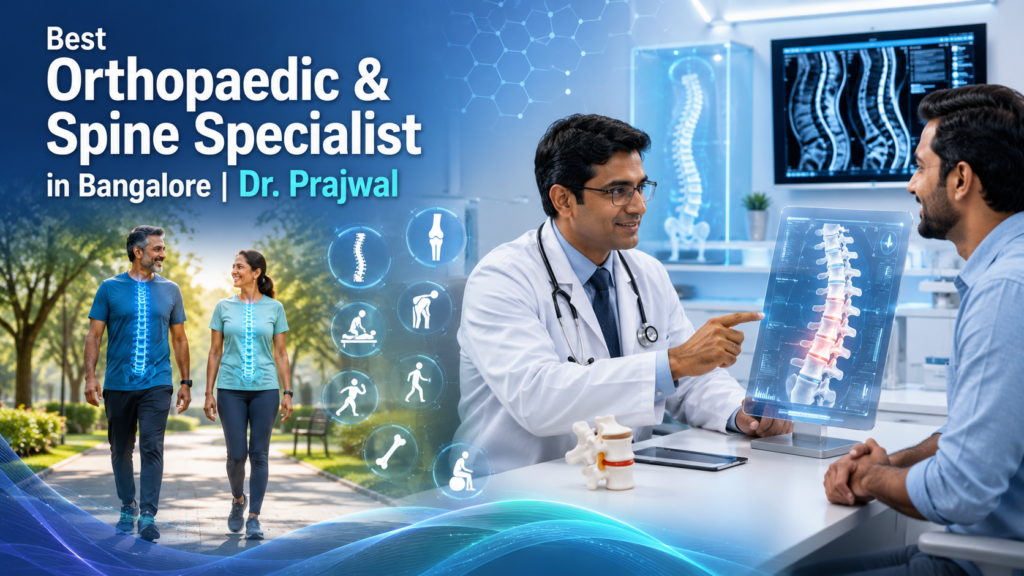
Best Orthopaedic & Spine Specialist in Bangalore | Dr. Prajwal

Best Orthopaedic & Spine Specialist in Bangalore | Dr. Prajwal Bone, joint, and spine problems can affect every aspect of your life. Whether it’s persistent back pain, a sports injury, arthritis, neck pain, or difficulty walking due to joint issues, finding the right orthopedic specialist is the first step toward recovery. Choosing an experienced doctor ensures an accurate diagnosis, effective treatment, and long-term relief. If you’re searching for the best orthopaedic & spine specialist in Bangalore, Dr. Prajwal at OrthoSpineCare is committed to providing comprehensive orthopedic and spine care using advanced diagnostic techniques, personalized treatment plans, and patient-focused care. Meet Dr. Prajwal – Your Trusted Orthopaedic & Spine Specialist Dr. Prajwal is dedicated to diagnosing and treating a wide range of orthopedic and spine conditions. His approach focuses on identifying the root cause of pain rather than simply managing symptoms. Every patient receives a personalized treatment plan based on their age, lifestyle, activity level, and medical condition. The goal is to restore mobility, relieve pain, and improve overall quality of life while avoiding surgery whenever possible. Whether you’re dealing with a recent injury or a long-term orthopedic condition, Dr. Prajwal provides compassionate care tailored to your individual needs. Conditions Treated at OrthoSpineCare OrthoSpineCare offers expert diagnosis and treatment for a wide range of orthopedic and spine disorders. Back Pain Back pain is one of the most common reasons people visit an orthopedic specialist. It may result from poor posture, muscle strain, herniated discs, arthritis, or spinal degeneration. Early diagnosis helps prevent chronic pain and improves recovery outcomes. Neck Pain Persistent neck pain may be caused by cervical spondylosis, muscle strain, disc problems, or nerve compression. Proper evaluation helps determine the most effective treatment. Sciatica Sciatica occurs when the sciatic nerve becomes compressed, causing pain that travels from the lower back into the leg. Early treatment often helps patients recover without surgery. Herniated Disc A slipped or herniated disc can compress nearby nerves, leading to pain, numbness, tingling, or muscle weakness. Treatment depends on the severity of symptoms and the patient’s overall health. Arthritis Both osteoarthritis and rheumatoid arthritis can affect the joints, reducing mobility and causing persistent pain. Early management helps preserve joint function and improve daily comfort. Sports Injuries Athletes and active individuals often experience ligament injuries, tendon problems, fractures, and muscle strains. Specialized treatment and rehabilitation help patients return safely to sports and physical activities. Joint Pain Pain affecting the knees, hips, shoulders, or ankles can result from injury, arthritis, or age-related wear and tear. A comprehensive evaluation helps identify the underlying cause. Fractures and Trauma Accidents and falls can cause fractures that require immediate orthopedic care. Proper treatment supports healing and restores normal function. Comprehensive Orthopaedic Services At OrthoSpineCare, patients have access to a wide range of orthopedic and spine services under one roof. Services include: Every treatment plan is designed to achieve the best possible outcome while minimizing recovery time. Advanced Diagnostic Evaluation Accurate diagnosis is the foundation of successful treatment. At OrthoSpineCare, evaluation may include: These advanced diagnostic tools help identify the exact cause of pain and guide personalized treatment. Non-Surgical Treatments Available Many orthopedic and spine conditions can be managed without surgery. Physiotherapy Customized rehabilitation programs improve flexibility, strengthen muscles, and restore mobility. Pain Management Medications and image-guided injections help reduce pain and inflammation when appropriate. Lifestyle Modification Patients receive practical advice on posture, workplace ergonomics, exercise, nutrition, and weight management. PRP Therapy Platelet-Rich Plasma (PRP) Therapy may be recommended for selected tendon, ligament, and soft tissue conditions to promote natural healing. Rehabilitation Programs Personalized rehabilitation helps patients recover safely after injuries or orthopedic procedures. When Is Surgery Recommended? Surgery is considered only when conservative treatments do not provide adequate relief or when the condition requires surgical correction. Common reasons for surgery include: Whenever surgery is necessary, the focus is on achieving the best possible functional recovery. Why Choose OrthoSpineCare? Patients choose OrthoSpineCare because of its commitment to quality care and patient satisfaction. Some of the reasons include: Every patient receives individual attention and a treatment plan designed around their specific needs. Tips for Maintaining Healthy Bones and Spine Healthy lifestyle habits play a major role in preventing orthopedic problems. Follow these simple tips: Prevention is always better than delayed treatment. When Should You Consult an Orthopaedic Specialist? Do not ignore symptoms such as: Early consultation often leads to quicker recovery and better treatment outcomes. Book Your Consultation with Dr. Prajwal If you’re looking for trusted orthopedic and spine care in Bangalore, Dr. Prajwal at OrthoSpineCare offers expert diagnosis and personalized treatment for a wide range of bone, joint, and spine conditions. Whether you’re dealing with chronic back pain, arthritis, sports injuries, fractures, or spine disorders, you can expect compassionate care focused on restoring your mobility and improving your quality of life. Don’t let pain limit your everyday activities. Schedule your consultation today and take the first step toward a healthier, more active future. Conclusion Your bones, joints, and spine play a vital role in keeping you active and independent. Ignoring persistent pain can lead to long-term complications, while timely medical care can help you recover faster and prevent future problems. At OrthoSpineCare, Dr. Prajwal combines clinical expertise, advanced diagnostics, and personalized treatment plans to deliver high-quality orthopedic and spine care. From non-surgical therapies and rehabilitation to advanced procedures when needed, every aspect of your treatment is designed with your recovery in mind. If you’re searching for the best orthopaedic & spine specialist in Bangalore, trust Dr. Prajwal and the team at OrthoSpineCare to provide expert care that helps you move better, feel stronger, and live pain-free.
Why Leg Pain Could Be Coming From Your Spine
Orthospine Doctor

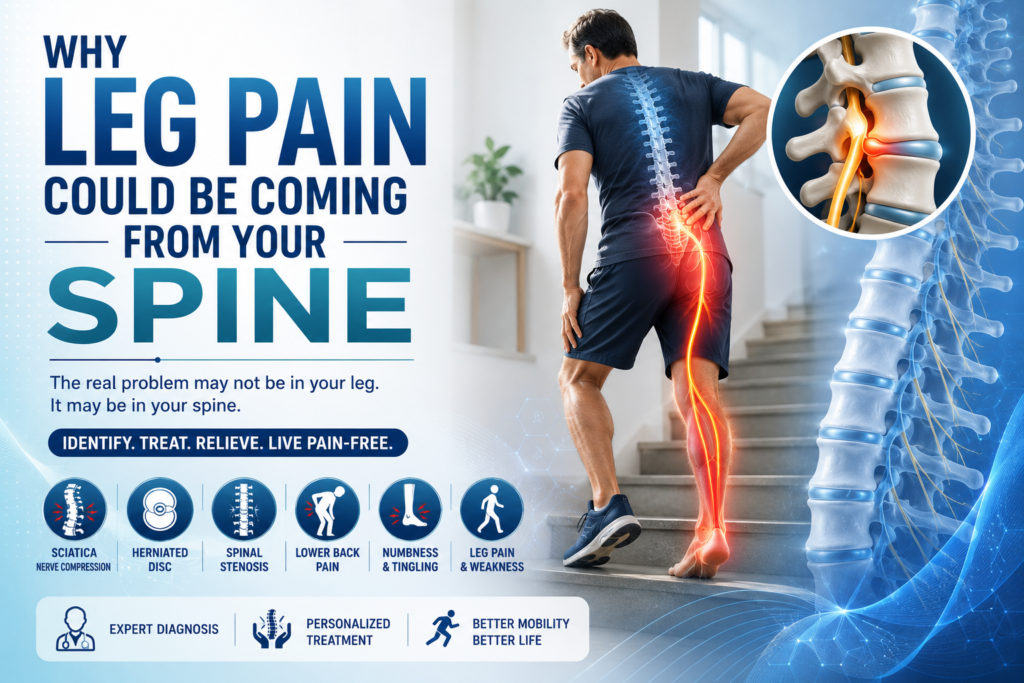
Why Leg Pain Could Be Coming From Your Spine

Why Leg Pain Could Be Coming From Your Spine Leg pain is often associated with muscle strain, overuse, or injuries. However, what many people don’t realize is that the source of the pain may not be in the leg at all. In many cases, persistent leg pain actually begins in the spine. Problems affecting the lower back can irritate or compress spinal nerves, causing pain that travels down the hips, thighs, calves, or even into the feet. Understanding the connection between your spine and leg pain is essential because treating only the symptoms in the leg may not solve the underlying problem. Early diagnosis and appropriate treatment can help relieve pain, restore mobility, and prevent long-term complications. At OrthoSpineCare in Bangalore, experienced orthopedic and spine specialists diagnose the root cause of leg pain and provide personalized treatment plans to help patients return to an active, pain-free lifestyle. How Is Your Spine Connected to Your Legs? Your spinal cord sends nerve signals from your brain to every part of your body. In the lower back (lumbar spine), several nerves branch out and travel through the hips, buttocks, legs, and feet. If one of these nerves becomes compressed or irritated, you may experience pain, numbness, tingling, or weakness in your leg—even though the actual problem originates in your spine. This type of pain is known as referred pain or radicular pain, depending on the underlying condition. Common Spine Conditions That Cause Leg Pain Several spinal disorders can lead to pain that radiates into the legs. Sciatica Sciatica is one of the most common causes of leg pain originating from the spine. It occurs when the sciatic nerve becomes compressed, usually due to a herniated disc or spinal narrowing. Symptoms include: Herniated (Slipped) Disc A spinal disc acts as a cushion between the vertebrae. When a disc bulges or ruptures, it may press against nearby nerves. Depending on which nerve is affected, pain can travel into the thigh, calf, or foot. Spinal Stenosis Spinal stenosis is the narrowing of the spinal canal, which places pressure on the spinal nerves. People with spinal stenosis often experience: Degenerative Disc Disease As spinal discs naturally wear down with age, they lose flexibility and cushioning. This can increase pressure on spinal nerves, causing recurring lower back and leg pain. Spondylolisthesis This condition occurs when one vertebra slips forward over another. The displaced bone can compress nearby nerves, leading to leg pain, weakness, and numbness. Symptoms That Suggest Your Leg Pain Is Coming From the Spine Not every leg pain originates from the spine. However, certain symptoms strongly suggest a spinal cause. These include: If you experience several of these symptoms together, it’s important to consult a spine specialist. Risk Factors for Spine-Related Leg Pain Several factors increase the likelihood of developing spine-related nerve pain. Common risk factors include: Making healthy lifestyle changes can reduce your risk of developing these conditions. When Should You See a Spine Specialist? You should seek medical attention if: Early treatment often leads to faster recovery and better outcomes. How Spine Specialists Diagnose the Cause At OrthoSpineCare, specialists perform a detailed evaluation to determine whether your leg pain originates from the spine. Diagnosis may include: These investigations help identify nerve compression and other spinal abnormalities accurately. Non-Surgical Treatment Options The good news is that many patients recover without surgery. Physiotherapy Physiotherapy strengthens the muscles supporting the spine, improves flexibility, and reduces pressure on affected nerves. Customized exercise programs also help prevent future episodes of pain. Pain Management Depending on the diagnosis, doctors may recommend medications to reduce inflammation and control pain. Image-Guided Spine Injections For persistent symptoms, image-guided injections around the affected nerve may provide significant pain relief while supporting rehabilitation. Lifestyle Modifications Simple changes often make a big difference. Your doctor may recommend: These habits reduce stress on your spine and support long-term recovery. PRP Therapy For selected musculoskeletal conditions, Platelet-Rich Plasma (PRP) Therapy may be considered to promote healing as part of a personalized treatment plan. When Is Surgery Needed? Surgery is usually recommended only when: Modern minimally invasive spine surgery often allows faster recovery with smaller incisions and less postoperative discomfort. Tips to Prevent Spine-Related Leg Pain Healthy daily habits can help protect both your spine and your nerves. These simple habits help reduce pressure on your spinal nerves and improve overall spine health. Why Choose OrthoSpineCare in Bangalore? At OrthoSpineCare, every patient receives personalized care based on their symptoms, lifestyle, and medical condition. The clinic offers: The focus is always on identifying the root cause of pain and providing long-term relief rather than simply treating symptoms. Conclusion Leg pain isn’t always caused by a problem in the leg itself. In many cases, the real cause lies in the spine, where compressed or irritated nerves send pain signals down the leg. Recognizing the warning signs early and seeking expert evaluation can prevent complications and improve recovery. If you’re experiencing persistent leg pain, numbness, tingling, or lower back discomfort, consult the experienced spine specialists at OrthoSpineCare in Bangalore. With advanced diagnostic facilities, personalized treatment plans, and comprehensive rehabilitation, you can find lasting relief and get back to doing the activities you enjoy.

Can Sciatica Heal Without Surgery? Everything You Need to Know
Orthospine Doctor

Can Sciatica Heal Without Surgery? Everything You Need to Know

Can Sciatica Heal Without Surgery? Everything You Need to Know Sciatica is one of the most common causes of lower back and leg pain. The sharp, radiating pain can make simple activities like walking, sitting, or even sleeping uncomfortable. Hearing the word “sciatica” often makes people worry that they might need surgery. Fortunately, that’s not usually the case. The majority of people with sciatica recover successfully through non-surgical treatments. With early diagnosis, the right treatment plan, and a few lifestyle changes, many patients experience significant pain relief and return to their normal routine without undergoing an operation. If you’re struggling with sciatica, OrthoSpineCare in Bangalore provides expert diagnosis, advanced non-surgical treatments, and personalized rehabilitation programs to help you recover safely and effectively. What Is Sciatica? Sciatica is not a disease but a symptom caused by irritation or compression of the sciatic nerve, the largest nerve in the body. This nerve begins in the lower back, passes through the hips and buttocks, and extends down each leg. When the sciatic nerve is compressed, it can cause pain, numbness, tingling, or weakness that usually affects one side of the body. What Causes Sciatica? Several spine conditions can lead to sciatica. Herniated Disc A slipped or herniated disc is the most common cause of sciatica. The damaged disc presses on the sciatic nerve, causing pain that travels down the leg. Degenerative Disc Disease As spinal discs naturally wear down with age, they may lose their cushioning ability and place pressure on nearby nerves. Spinal Stenosis Narrowing of the spinal canal can compress the nerves in the lower back, leading to sciatica symptoms. Bone Spurs Arthritis can cause bone spurs that reduce the space around spinal nerves and trigger nerve irritation. Piriformis Syndrome In some people, the piriformis muscle in the buttock can irritate the sciatic nerve, resulting in pain similar to sciatica. Common Symptoms of Sciatica Symptoms vary depending on the severity of nerve compression. Common signs include: The symptoms may develop gradually or appear suddenly after lifting something heavy or making an awkward movement. Can Sciatica Heal Without Surgery? Yes. In many cases, sciatica improves without surgery. Most patients respond well to conservative treatment, especially when care begins early. The body can often reduce inflammation around the affected nerve over time. With proper medical guidance, the compressed nerve can recover, and symptoms may gradually improve. Recovery time varies depending on the cause and severity of the condition, but many people notice significant improvement within a few weeks to a few months. Non-Surgical Treatments for Sciatica Physiotherapy Physiotherapy is one of the most effective treatments for sciatica. A personalized exercise program can: Regular physiotherapy also improves mobility and speeds up recovery. Medications Doctors may prescribe medications to reduce pain and inflammation during the recovery process. Depending on your symptoms, treatment may include: Medication works best when combined with exercise and rehabilitation. Image-Guided Spine Injections For patients with persistent pain, image-guided spinal injections may reduce inflammation around the affected nerve. Common procedures include: These treatments can provide significant pain relief while allowing rehabilitation to continue. Lifestyle Modifications Simple lifestyle changes can reduce stress on your spine and help prevent recurring sciatica. Doctors often recommend: These changes support long-term spine health. PRP Therapy For selected musculoskeletal conditions associated with chronic pain, Platelet-Rich Plasma (PRP) Therapy may be considered as part of a comprehensive treatment plan. Your spine specialist will determine whether this option is suitable for your condition. Exercises That May Help Sciatica Recovery Gentle movement often supports recovery better than complete bed rest. Your physiotherapist may recommend: Exercises should always be performed under professional guidance to avoid worsening symptoms. When Is Surgery Needed? Although most patients recover without surgery, some situations require surgical treatment. Surgery may be recommended if: Modern minimally invasive spine surgery offers faster recovery and excellent outcomes for patients who require surgical intervention. How Long Does Recovery Take? Recovery depends on several factors, including the underlying cause, severity of nerve compression, and commitment to treatment. Many patients improve within 4 to 8 weeks, while others with more complex conditions may require several months of rehabilitation. Following your treatment plan consistently plays a major role in achieving the best results. Tips to Prevent Sciatica from Returning Preventing future episodes is just as important as treating the current one. Healthy habits include: These simple steps reduce pressure on the spine and support overall spinal health. Why Choose OrthoSpineCare in Bangalore? At OrthoSpineCare, every patient receives a personalized treatment plan based on their specific condition and lifestyle. Patients choose the clinic because of its: The goal is always to relieve pain, restore mobility, and help patients return to their daily lives with confidence. Conclusion A diagnosis of sciatica does not automatically mean you need surgery. In fact, most people recover successfully through physiotherapy, medication, lifestyle changes, and other non-surgical treatments. The key is to seek medical advice early before the condition becomes more severe. If you’re experiencing persistent lower back pain, leg pain, or numbness, consult the experienced spine specialists at OrthoSpineCare in Bangalore. With accurate diagnosis, evidence-based treatment, and comprehensive rehabilitation, you can find lasting relief and get back to living an active, pain-free life.

Early Symptoms of Sciatica Pain
Orthospine Doctor

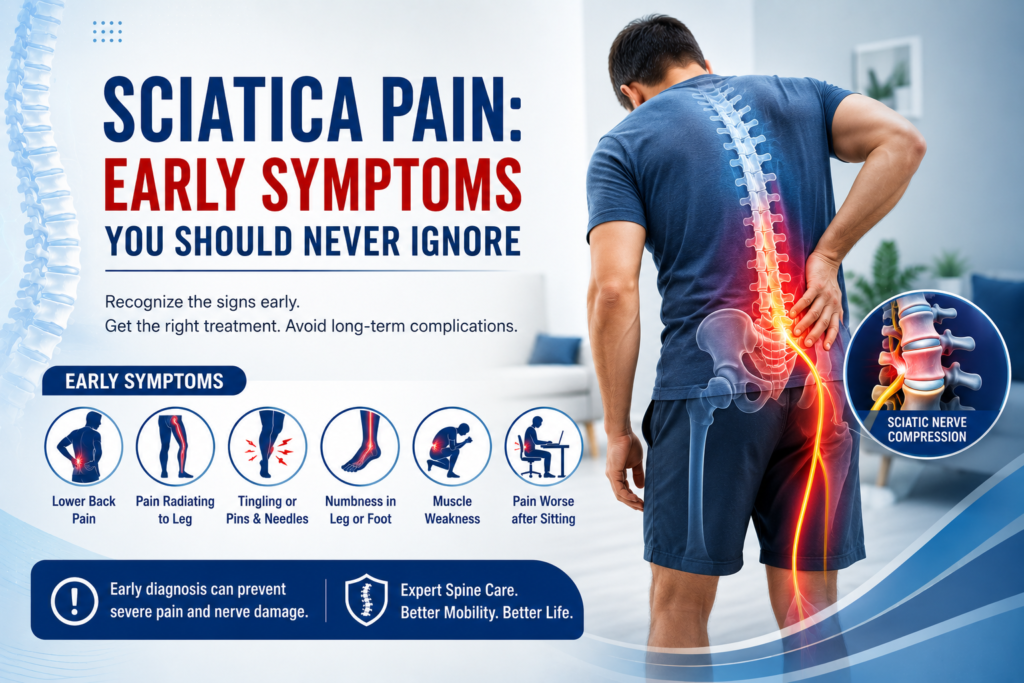
Sciatica Pain: Early Symptoms You Should Never Ignore

Sciatica Pain: Early Symptoms You Should Never Ignore Sciatica is one of the common reasons people get leg pain but a lot of people think it is just regular back pain or a pulled muscle. Actually sciatica happens when the sciatic nerve, which is the nerve in our body gets irritated or squeezed. This can cause pain that starts in the back and goes down through the buttock, thigh and leg. It is really important to know the symptoms of sciatica because if you get treated right away you can stop the problem from getting worse and prevent long-term nerve damage. Luckily a lot of people get better with treatment that does not involve surgery long as they get diagnosed early. If you have leg pain or lower back discomfort that will not go away OrthoSpineCare in Bangalore has experts who can diagnose your problem and create a treatment plan that’s just for you to help you get back to your normal life without pain. What Is Sciatica? Sciatica is not a disease it is a symptom of a problem that affects the sciatic nerve. The sciatic nerve starts in the spine and goes down through the hips, buttocks and down each leg. When this nerve gets squeezed or inflamed it can cause pain, numbness, tingling and weakness in the areas it touches. Usually sciatica only affects one side of the body. In bad cases it can affect both legs. Common Causes of Sciatica There are spine problems that can cause sciatica. Herniated or Slipped Disc A herniated disc is the common reason for sciatica. When a spinal disc bulges or breaks it can push on the nerve and cause pain. Spinal Stenosis Spinal stenosis happens when the spinal canal gets narrower which puts pressure on the nerves. This problem is more common in people and can cause chronic leg pain and numbness. Degenerative Disc Disease As spinal discs get older they can lose their ability to cushion which increases the chance of nerve compression. Bone Spurs Bone spurs from arthritis can make the spaces around nerves smaller which can irritate the sciatic nerve. Muscle Tightness Sometimes muscles, especially the piriformis muscle in the buttock can squeeze the sciatic nerve and cause symptoms. Symptoms of Sciatica You Should Never Ignore If you know what sciatica is early on you can get treated faster and feel better sooner. Pain That Travels Down One Leg Unlike back pain sciatica often causes pain that starts in the lower back or buttock and goes down the back of the thigh and into the calf or foot. This kind of pain is one of the signs of sciatica. Tingling or “Pins and Needles” A lot of people notice a tingling feeling in their leg or foot before the pain gets really bad. This usually means the sciatic nerve is irritated. Numbness in the Leg or Foot If the nerve is squeezed you might lose feeling in one leg or foot. If you have numbness that will not go away you should see a specialist. Burning or Sharp Pain Sciatica pain can feel like it is burning, shooting or like a shock, rather than a dull ache. The pain can get worse when you sit, cough or sneeze. Muscle Weakness If you have trouble lifting your foot climbing stairs or walking normally it might mean the nerve is not working right. If you have muscle weakness you should see a doctor away. Lower Back Pain Even though leg pain is usually more noticeable a lot of people also have back discomfort. The amount of pain varies from person to person. Pain That Worsens After Sitting If you sit for a time it can put more pressure on your lower spine, which can make sciatica symptoms worse. A lot of people who work at desks notice their pain gets worse after sitting for a time. Risk Factors for Sciatica There are some lifestyle and health things that can increase your chance of getting sciatica. These include: If you make lifestyle changes you can lower your risk. When Should You See a Spine Specialist? You should see a doctor if: If you get treated early you can prevent long-term nerve damage and feel better faster. When Is Sciatica a Medical Emergency? Even though most cases are not emergencies you should get help right away if you have: These symptoms might mean you have Cauda Equina Syndrome, which needs to be treated away. How Is Sciatica Diagnosed? At OrthoSpineCare the specialists will do a check to figure out what is causing your symptoms. The diagnosis might include: If the diagnosis is accurate the doctors can decide on the treatment. Non-Surgical Treatment Options Most people get better without surgery. Treatment might include: A rehabilitation program can help strengthen your muscles improve your flexibility and reduce pressure on the nerve. Medicine can help with pain and inflammation while you heal. Improving your posture staying at a weight being active and not sitting for too long can all help you get better. If your symptoms persist, injections around the affected nerve can reduce inflammation. Help with pain. For some patients treatments like Platelet-Rich Plasma Therapy might help certain musculoskeletal problems heal. When Is Surgery Needed? Surgery is only considered when: spine surgery is less invasive and can help patients recover faster and have better outcomes. Why Choose OrthoSpineCare in Bangalore? Patients trust OrthoSpineCare because they take care of everything related to health. The clinic offers: The team works closely with each patient to relieve pain help them move better and improve their quality of life. Tips to Prevent Sciatica There are some habits that can help lower your chance of getting sciatica. Healthy habits can help keep your spine and sciatic nerve Sciatica often starts with symptoms like tingling, leg pain or lower back discomfort but if you ignore these signs it can lead to more serious nerve problems. If you know what sciatica is on and get treated you can

Right Spine Specialist in Bangalore
Orthospine Doctor

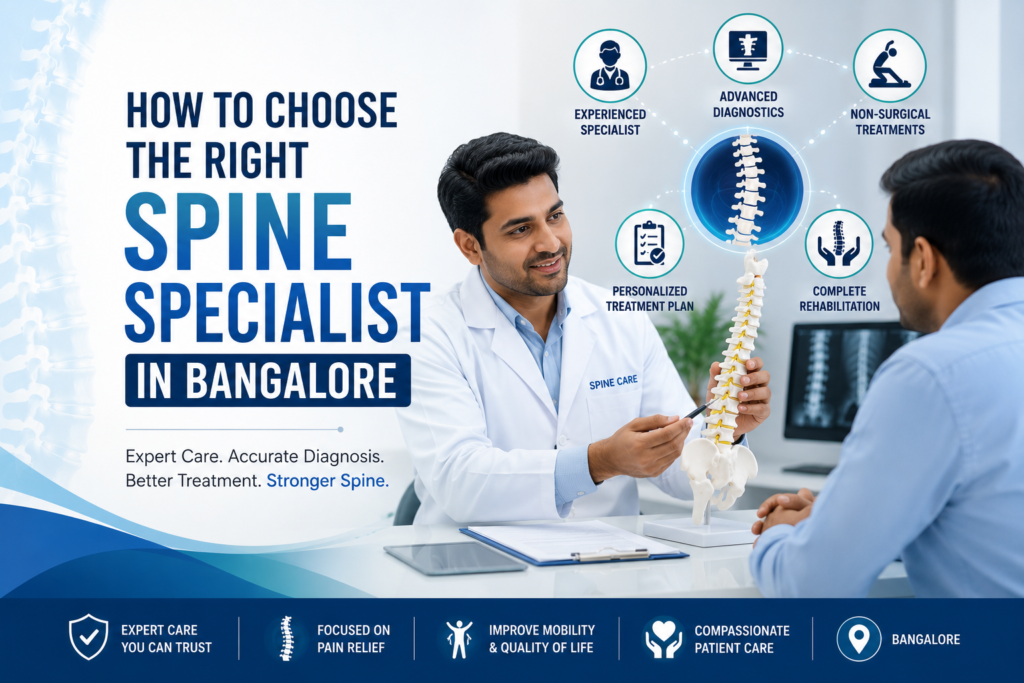
How to Choose the Right Spine Specialist in Bangalore

How to Choose the Right Spine Specialist in Bangalore Back and neck pain can really affect your life. It can make it hard to work drive and even spend time with your family. Sometimes rest can help with the pain. If it keeps coming back you might need to see a doctor. Choosing the right spine specialist is a decision for your health. There are hospitals and clinics in Bangalore that offer spine care so it can be hard to pick the right one. This guide will help you figure out what to look for in a specialist. That way you can make a decision and get the best care. At OrthoSpineCare patients get to see doctors use advanced equipment to diagnose problems and get personalized treatment plans. These plans are designed to help patients move around easily again and improve their quality of life. Why Choosing the Right Spine Specialist Matters The spine is made up of different parts, including bones, discs, nerves, muscles and ligaments. If one part gets hurt it can affect how you move, your balance and how your nerves work. A good spine specialist can figure out what is causing your pain. Suggest the best treatment. If you get help early you might not need surgery. You will also get treatment that’s just right for you, not a one-size-fits-all approach. When Should You See a Spine Specialist? Some people wait long to see a doctor about their back or neck pain.. It is better to get help early. You should see a specialist if you have: *. Tingling If your symptoms are getting in the way of your work, sleep or daily life it is time to see a doctor. What to Look for in a Spine Specialist Experience and Expertise It is really important to choose a doctor who has experience with problems. A specialist who has seen patients with spine issues will be better at diagnosing and treating them. Look for a doctor who has experience with: A good specialist can offer different treatment options, including surgery if needed. Comprehensive Diagnostic Facilities To get the treatment you need an accurate diagnosis. A good spine clinic should have equipment like: These tests can help figure out what is causing your symptoms. Focus on Non-Surgical Treatment Surgery is not always the answer. A good spine specialist will try -surgical treatments first. These can include: Many patients get better without surgery if they get help early. Personalized Treatment Plans Every patient is different. The best spine specialists take the time to understand your symptoms, medical history and lifestyle. Then they can create a treatment plan. This kind of plan usually works better. Helps patients recover faster. Strong Rehabilitation Support Recovering from problems does not stop when the pain is gone. Physiotherapy and rehabilitation are important for getting strong and preventing future injuries. Choose a clinic that offers rehabilitation programs as part of your treatment. Clear Communication A good spine specialist should explain: When you understand your condition you can make good decisions about your health. Questions to Ask During Your First Consultation It is an idea to prepare questions before your appointment. You might ask: When you talk openly with your doctor you can trust them more. Get better care. Why Early Treatment Is Important If you wait long to get treatment small spine problems can become big ones. Getting help can: The sooner you see a doctor, the better your chances of getting better. Common Spine Conditions Treated by Specialists specialists can diagnose and treat many different conditions, including: Each condition needs a treatment plan based on how bad it is and your overall health. Why Choose OrthoSpineCare in Bangalore? When you are looking for a specialist choose a clinic that puts patients first. OrthoSpineCare is committed to giving patients the spine care using advanced diagnostics and proven treatments. Patients choose OrthoSpineCare because of its: The team at OrthoSpineCare focuses on finding the cause of your pain and helping you get lasting relief. Tips to Maintain a Healthy Spine after treatment it is important to take care of your spine. You should: These habits can help prevent future spine problems and keep you healthy. Choosing the right spine specialist is a step in getting better from back or neck pain. Look for experience, advanced equipment, personalized care and a focus on -surgical treatment. If you are looking for a specialist in Bangalore OrthoSpineCare offers comprehensive evaluation, advanced treatment options and compassionate care. Whether you have chronic back pain, sciatica, neck pain or a sports injury the experienced team, at OrthoSpineCare can help you move comfortably and live without pain.

Non-Surgical Treatments for Chronic Back Pain in Bangalore
Orthospine Doctor

Best Non-Surgical Treatments for Chronic Back Pain in Bangalore

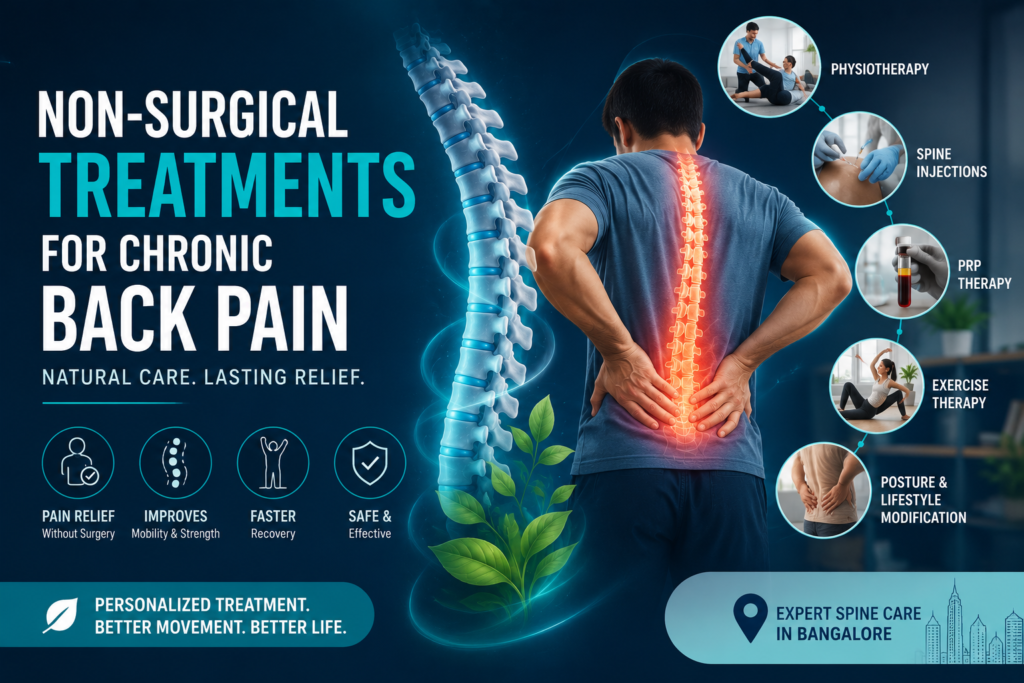
Best Non-Surgical Treatments for Chronic Back Pain in Bangalore Living with back pain can be really tough. It can make everyday things feel like a challenge. Whether you are sitting at your desk, driving, climbing stairs or trying to get a nights sleep chronic back pain can affect every part of your life. The good news is that not everyone with chronic back pain needs to have surgery. Thanks to developments in orthopedic and spine care many conditions can now be treated without surgery. If you are looking for the non-surgical treatments for chronic back pain in Bangalore OrthoSpineCare is a good option. They offer an evaluation, advanced pain management, physiotherapy and personalized treatment plans to help you regain mobility and live without pain. What is chronic back pain? Chronic back pain is when your back hurts for a time. 12 Weeks or more. This is different from temporary muscle soreness. Chronic back pain often means that there is something with your spine, joints, discs, muscles or nerves. If you ignore chronic back pain it can get worse. You may not be able to move as well and your quality of life can suffer. It is really important to get diagnosed so you can get treated successfully. There are things that can cause chronic back pain. These include: If the spine specialists know what is causing your back pain they can recommend the best treatment for you. Can chronic back pain be treated without surgery? Yes it can. Most people with back pain get better with conservative treatment. Surgery is usually only considered if other treatments do not work or if there is nerve compression, spinal instability or significant neurological weakness. Many people get results with a combination of therapies that are tailored to their condition. Best non-surgical treatments for chronic back pain Every successful treatment starts with a diagnosis. At OrthoSpineCare spine specialists do: This helps them figure out what is causing your pain and create a personalized treatment plan. Physiotherapy is one of the treatments for chronic back pain. A customized rehabilitation program focuses on: Regular physiotherapy can reduce pain naturally and improve your long-term spine health. Pain management aims to reduce discomfort while letting you stay active during recovery. Treatment may include: Medication is usually used with physiotherapy not as a long-term solution. For people with inflammation or nerve pain image-guided injections can provide significant relief. Common procedures include: These treatments reduce inflammation around affected nerves. Improve mobility. PRP therapy uses your platelets to support natural healing in damaged soft tissues and selected musculoskeletal conditions. For some patients PRP may: Your specialist will decide if PRP is suitable for you based on your diagnosis. Simple lifestyle changes can really improve back pain. Doctors often recommend: These habits reduce stress on your spine and help prevent recurring pain. Poor posture is a contributor to chronic back pain especially among office workers. Correct posture while sitting, standing and lifting can reduce strain on spinal discs and muscles. Making adjustments to your workstation is also important. Targeted exercise improves health and reduces pain. Low-impact activities include: Exercise programs should always be designed according to your condition. Simple home treatments can often help manage symptoms. Ice packs reduce swelling during flare-ups. Heat therapy relaxes muscles. Improves blood circulation. Your doctor can advise when each treatment is most appropriate. Benefits of -surgical spine treatment Choosing conservative treatment has several advantages. These include: Many people achieve lasting relief without having surgery. When is surgery necessary? Although non-surgical treatments are effective for people surgery may be recommended if you have: minimally invasive spine surgery offers excellent outcomes when surgery is necessary. Why choose OrthoSpineCare in Bangalore? At OrthoSpineCare treatment begins with understanding each patients condition and lifestyle. Patients trust the clinic because of its: The goal is always to relieve pain improve movement and help patients avoid surgery whenever possible. Tips to keep your healthy Healthy daily habits can help prevent chronic back pain. Consistency is the key to maintaining a spine. Chronic back pain does not always mean you need surgery. In fact many people recover successfully through physiotherapy, pain management, posture correction, exercise and advanced non-surgical treatments. The earlier you seek expert care the your chances of avoiding surgery and returning to your normal routine. If you are looking for the non-surgical treatment for chronic back pain, in Bangalore OrthoSpineCare offers comprehensive spine care with advanced diagnostics, personalized treatment plans and compassionate support. With the approach lasting pain relief is possible helping you enjoy a healthier more active life.

Back Pain Become a Medical Emergency
Orthospine Doctor

When Does Back Pain Become a Medical Emergency?

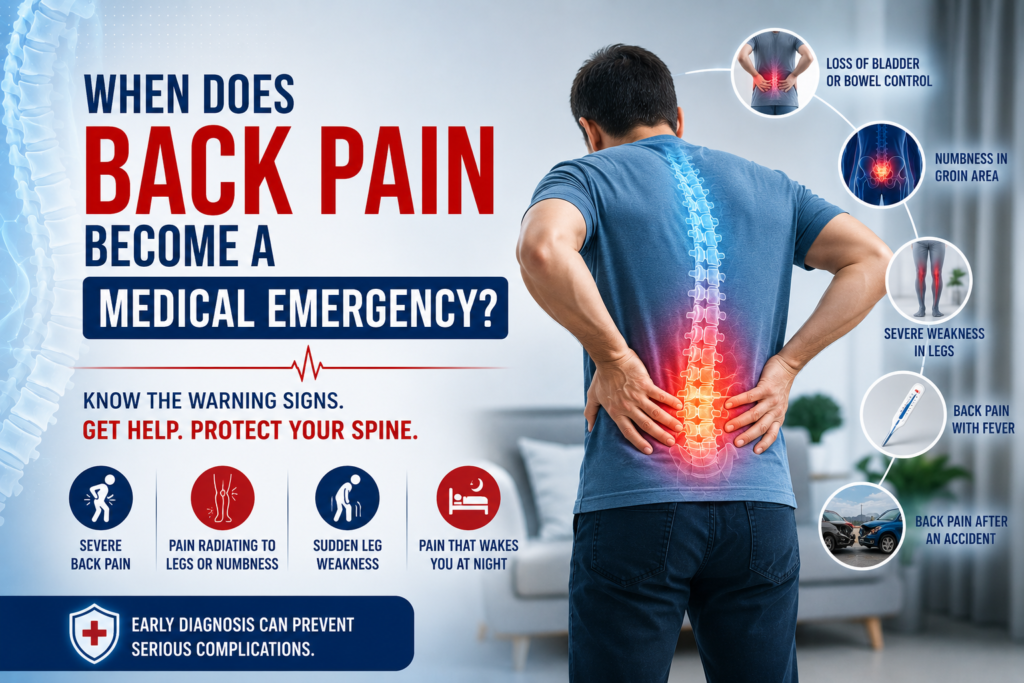
When Does Back Pain Become a Medical Emergency? Back pain is one of the most common health problems worldwide. In many cases, it improves with rest, proper posture, and simple treatments. However, not all back pain is harmless. Sometimes, it can be a warning sign of a serious spinal condition that requires immediate medical attention. Knowing when back pain becomes a medical emergency can help prevent permanent nerve damage, disability, or other life-threatening complications. If you or a loved one experience severe or unusual symptoms along with back pain, seeking emergency medical care without delay is essential. At OrthoSpineCare in Bangalore, experienced orthopedic and spine specialists diagnose and treat both routine and emergency spine conditions, ensuring patients receive timely and effective care. Is All Back Pain an Emergency? The simple answer is no. Most cases of back pain result from muscle strain, poor posture, or minor injuries and improve within a few days or weeks. However, certain symptoms indicate that the pain may be caused by a serious problem affecting the spinal cord, nerves, bones, or internal organs. These situations require immediate medical evaluation. Warning Signs That Require Emergency Medical Care If your back pain is accompanied by any of the following symptoms, seek emergency medical attention immediately. 1. Loss of Bladder or Bowel Control Sudden inability to control urination or bowel movements, along with severe back pain, could indicate Cauda Equina Syndrome, a rare but serious condition caused by severe compression of the spinal nerves. Without immediate treatment, permanent nerve damage may occur. 2. Numbness Around the Groin or Inner Thighs Loss of sensation in the buttocks, groin, or inner thighs—often called saddle numbness—is another warning sign of severe nerve compression. This symptom should never be ignored and requires urgent medical evaluation. 3. Severe Weakness in the Legs If you suddenly find it difficult to walk, stand, or move one or both legs, your spinal nerves or spinal cord may be affected. Immediate treatment can help prevent long-term disability. 4. Back Pain After a Serious Accident Back pain following: may indicate fractures, spinal instability, or ligament injuries. Even if the pain seems manageable, you should seek medical attention immediately. 5. Sudden, Severe Back Pain With Fever Back pain accompanied by fever, chills, or unexplained fatigue may indicate a spinal infection. Prompt diagnosis and treatment are essential to prevent serious complications. 6. Back Pain With Unexplained Weight Loss Persistent back pain along with unexplained weight loss, loss of appetite, or night sweats may indicate an underlying medical condition such as infection or, in rare cases, cancer. Early evaluation is important for proper diagnosis. 7. Pain That Wakes You Every Night Muscle-related back pain usually improves with rest. Pain that consistently wakes you from sleep or becomes worse at night deserves prompt medical attention. 8. Pain Spreading to Both Legs Pain radiating down one leg often indicates sciatica. However, pain affecting both legs, especially with weakness or numbness, may suggest significant spinal nerve compression. Early treatment helps prevent permanent nerve damage. 9. Progressive Numbness or Tingling Occasional tingling may not always be serious, but numbness that gradually worsens or spreads should be evaluated by a spine specialist immediately. It may indicate ongoing nerve damage. 10. Severe Back Pain That Doesn’t Improve Pain that remains severe despite medication, rest, or home treatment should never be ignored. Persistent pain may indicate a more serious spine condition requiring specialized care. Common Spine Conditions That Can Become Emergencies Several spinal disorders require urgent medical treatment if symptoms become severe. These include: Cauda Equina Syndrome A medical emergency caused by compression of the nerves at the base of the spinal cord. Symptoms include: Immediate surgery is often necessary. Spinal Fractures Fractures may occur after trauma or because of osteoporosis. Without treatment, spinal instability can lead to nerve injury. Severe Herniated Disc A large disc herniation may compress spinal nerves or the spinal cord, causing severe pain, numbness, and muscle weakness. Spinal Infections Although uncommon, infections affecting the spine require urgent diagnosis and antibiotic treatment. Spinal Tumors Some tumors can compress nerves and cause persistent pain, weakness, and neurological symptoms. Early diagnosis improves treatment outcomes. When Should You Schedule a Spine Consultation Instead of Visiting the Emergency Room? Not every case of back pain requires emergency care. Book an appointment with a spine specialist if you experience: These symptoms still require evaluation but are usually not emergencies. How Spine Specialists Diagnose Serious Back Pain At OrthoSpineCare, specialists perform a detailed evaluation to determine the cause of your symptoms. Diagnosis may include: Accurate diagnosis helps guide the most effective treatment. Treatment Options for Serious Spine Conditions Treatment depends on the underlying diagnosis and severity of the condition. Emergency Treatment Patients with severe nerve compression, fractures, or spinal instability may require immediate hospitalization or surgery. Non-Surgical Treatment Many spine problems can be managed through: Minimally Invasive Spine Procedures Advanced minimally invasive techniques often reduce recovery time while effectively treating certain spinal conditions. Rehabilitation After treatment, rehabilitation helps restore strength, flexibility, and mobility while reducing the risk of future injuries. How to Reduce the Risk of Serious Spine Problems Healthy daily habits help protect your spine. Prevention is always better than delayed treatment. Why Choose OrthoSpineCare in Bangalore? When it comes to spine health, early diagnosis and expert treatment make a significant difference. Patients choose OrthoSpineCare because of its: The team is dedicated to helping patients recover safely and return to their daily lives with confidence. Conclusion Most back pain improves with conservative care, but certain symptoms should never be ignored. Severe pain accompanied by numbness, muscle weakness, loss of bladder or bowel control, fever, or pain after an accident may indicate a medical emergency that requires immediate attention. Recognizing these warning signs can help prevent serious complications and protect your long-term spine health. If you have persistent back pain or notice concerning symptoms, consult the experienced specialists at OrthoSpineCare in Bangalore. Whether your condition requires conservative treatment or urgent intervention, timely care can make all the difference in

Scroll to Top
Call Now Button