
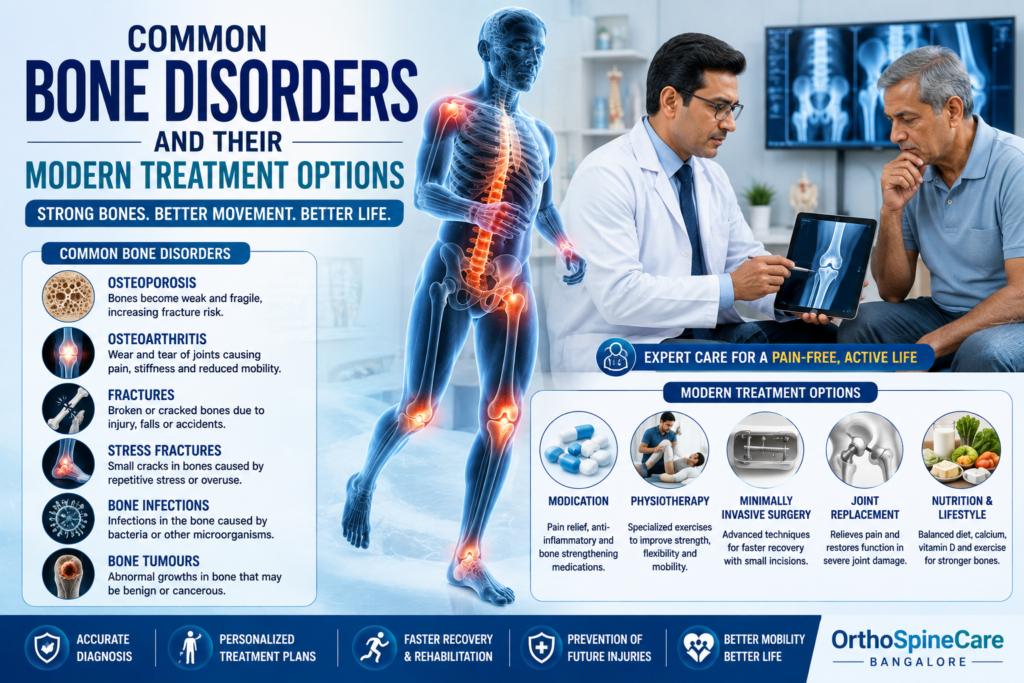
Common Bone Disorders and Their Modern Treatment Options
Our bones provide structure, support, and protection while allowing us to move, work, exercise, and enjoy everyday life. We often don’t think about bone health until pain, stiffness, weakness, or an injury starts affecting our routine.
Bone problems can affect people at different stages of life. Some develop gradually, such as osteoporosis and osteoarthritis, while others result from accidents, sports injuries, infections, or nutritional deficiencies. The good news is that modern orthopaedic care offers several effective ways to diagnose and manage these conditions.
At OrthoSpineCare in Bangalore, orthopaedic specialists evaluate bone and joint problems and recommend treatment based on the patient’s condition, age, lifestyle, and recovery goals.
What Are Bone Disorders?
Bone disorders include conditions that affect the strength, structure, growth, or function of bones. Some conditions primarily weaken the bone, while others affect the joints, surrounding tissues, or the body’s ability to repair damaged bone.
Common symptoms can include:
- Persistent bone or joint pain
- Swelling or tenderness
- Reduced mobility
- Frequent fractures
- Weakness
- Changes in posture
- Difficulty walking or performing daily activities
Not every ache indicates a serious bone disorder, but persistent or unexplained symptoms deserve professional evaluation.
Common Bone Disorders You Should Know About
1. Osteoporosis
Osteoporosis causes bones to become weaker and more fragile. A person may have osteoporosis without experiencing noticeable symptoms until a fracture occurs.
The condition commonly affects the hip, spine, and wrist.
The risk increases with age, but factors such as family history, low body weight, hormonal changes, inadequate calcium and vitamin D intake, smoking, and certain medications can also contribute.
2. Osteoarthritis
Although osteoarthritis primarily affects joints, it is one of the most common musculoskeletal conditions associated with age-related changes in cartilage and the structures around joints.
It commonly affects the:
- Knees
- Hips
- Hands
- Spine
Pain, stiffness, swelling, and reduced movement can gradually develop and interfere with everyday activities.
3. Fractures
A fracture occurs when a bone breaks or cracks. Falls, road accidents, sports injuries, and weakened bones can all cause fractures.
Some fractures are obvious, while others may initially cause only moderate pain and swelling.
Proper diagnosis is important because bones need to heal in the correct position to restore normal function.
4. Stress Fractures
Stress fractures are small cracks in a bone caused by repeated stress rather than a single major injury.
They can occur in runners, athletes, military personnel, and people who suddenly increase their physical activity.
Persistent pain that worsens with activity should not be ignored.
5. Bone Infections
Bone infections, known medically as osteomyelitis, can develop when bacteria or other microorganisms reach the bone.
Symptoms may include:
- Persistent localized pain
- Swelling
- Warmth
- Fever
- Fatigue
Bone infections require medical evaluation and appropriate treatment.
6. Vitamin D and Calcium-Related Bone Problems
Calcium and vitamin D play important roles in maintaining healthy bones. Inadequate levels can affect bone strength and contribute to problems such as osteomalacia in adults.
A balanced diet, appropriate sunlight exposure, and supplements when medically recommended can support bone health.
7. Bone Tumours
Bone tumours can be benign or cancerous. They are less common than conditions such as osteoporosis or fractures.
Persistent unexplained bone pain, swelling, or a lump should be evaluated rather than assumed to be a routine muscle or joint problem.
Warning Signs You Shouldn’t Ignore
Consider seeing an orthopaedic specialist if you experience:
- Bone or joint pain that persists for several weeks
- Repeated fractures
- Pain after a minor fall
- Unexplained swelling
- Difficulty walking
- Reduced movement
- Persistent back pain
- Sudden loss of strength
- Pain that becomes worse at night
- A noticeable lump or deformity
Early evaluation can help identify the cause and prevent complications.
How Are Bone Disorders Diagnosed?
Treatment begins with an accurate diagnosis.
During an orthopaedic consultation, your doctor may review your symptoms, medical history, previous injuries, medications, lifestyle, and family history.
Depending on the suspected condition, diagnostic tests may include:
X-Ray
X-rays can identify fractures, changes in bone structure, and certain signs of arthritis.
MRI
MRI scans provide detailed images of bones and surrounding soft tissues. Doctors may recommend them for selected injuries, bone lesions, ligament problems, or persistent pain.
CT Scan
CT imaging provides detailed cross-sectional views and can be particularly useful for complex fractures.
Bone Density Test
A bone mineral density test, commonly called a DEXA or DXA scan, can help assess bone strength and identify osteoporosis or low bone density.
Blood Tests
Blood tests may help identify nutritional deficiencies, inflammation, infection, or other medical conditions contributing to bone problems.
Modern Treatment Options for Bone Disorders
Treatment depends entirely on the underlying condition. Your specialist may recommend one or a combination of approaches.
1. Medication
Doctors may prescribe medications to control pain, reduce inflammation, treat infections, or improve bone strength depending on the diagnosis.
For osteoporosis, specific medicines can help reduce the risk of fractures in appropriate patients.
2. Physiotherapy
Physiotherapy can play an important role in restoring strength and mobility after injuries or fractures.
A customized program may focus on:
- Muscle strengthening
- Flexibility
- Balance
- Joint mobility
- Walking patterns
- Functional movement
Physiotherapy can also help reduce the risk of future injuries.
3. Bracing and Support
Certain fractures, joint problems, and injuries may benefit from braces, splints, or other supportive devices.
These can stabilize the affected area while healing takes place.
4. Lifestyle and Nutrition
Bone health doesn’t depend only on medical treatment.
Your doctor may recommend:
- Adequate calcium intake
- Sufficient vitamin D
- Regular weight-bearing exercise
- Strength training
- Maintaining a healthy body weight
- Avoiding smoking
- Limiting excessive alcohol consumption
- Reducing fall risks at home
Nutrition and exercise plans should be appropriate for your age and medical condition.
5. Minimally Invasive Procedures
Some orthopaedic conditions can be treated using minimally invasive techniques.
Depending on the problem, these may involve smaller incisions and specialized instruments compared with traditional open procedures.
The appropriate procedure depends on the location and severity of the condition.
6. Fracture Fixation
Some fractures need surgical stabilization to help the bone heal correctly.
Orthopaedic surgeons may use:
- Plates
- Screws
- Rods
- Pins
- Other fixation devices
The choice depends on the type and location of the fracture.
7. Joint Replacement
Advanced arthritis can severely damage a joint and affect everyday activities.
When conservative treatment no longer provides adequate relief, joint replacement may become an option for selected patients.
Knee and hip replacement procedures can help reduce pain and restore function when significant joint damage exists.
Can Bone Disorders Be Prevented?
Not every bone disorder can be prevented, but many risk factors can be managed.
Stay Physically Active
Walking, strength training, and other appropriate weight-bearing exercises can support bone and muscle health.
Eat a Balanced Diet
Include calcium-rich foods, adequate protein, fruits, vegetables, and other nutrient-rich foods in your diet.
Maintain Vitamin D Levels
Vitamin D helps the body absorb calcium. If you’re at risk of deficiency, discuss testing and supplementation with your doctor.
Protect Yourself From Falls
Good lighting, supportive footwear, handrails, and keeping floors free from obstacles can reduce fall risks, especially for older adults.
Don’t Ignore Persistent Pain
Pain that continues without a clear explanation deserves evaluation. Early diagnosis can make treatment easier.
When Should You See an Orthopaedic Specialist?
You don’t need to wait until a bone or joint problem becomes severe.
Consider consulting an orthopaedic specialist if:
- Pain continues despite rest
- You experience repeated fractures
- A minor injury causes significant pain
- You have persistent swelling
- Your mobility is decreasing
- You experience unexplained bone pain
- You have difficulty performing everyday activities
- Previous treatment hasn’t improved your symptoms
After a major injury, severe pain, visible deformity, or inability to bear weight requires prompt medical attention.
Why Choose OrthoSpineCare in Bangalore?
At OrthoSpineCare, treatment starts with understanding the patient’s symptoms and identifying the underlying problem.
The approach may include:
- Detailed orthopaedic evaluation
- Appropriate diagnostic imaging
- Fracture management
- Arthritis care
- Osteoporosis assessment
- Physiotherapy and rehabilitation
- Non-surgical treatment
- Surgical consultation when required
- Personalized follow-up care
The aim is to reduce pain, restore mobility, and help patients maintain better musculoskeletal health over the long term.
Conclusion
Bone disorders can affect anyone, but early attention can make a significant difference. Conditions such as osteoporosis, fractures, osteoarthritis, stress fractures, and other bone problems require different treatment approaches, so getting the correct diagnosis is essential.
Modern orthopaedic care offers a wide range of options, from medication, nutrition, physiotherapy, and lifestyle changes to minimally invasive procedures and surgery when necessary. The right treatment depends on your specific condition and overall health.
If you’re experiencing persistent bone or joint pain in Bangalore, consider consulting an orthopaedic specialist at OrthoSpineCare. Early evaluation can help identify the problem, explore appropriate treatment options, and get you back to moving comfortably and confidently.