
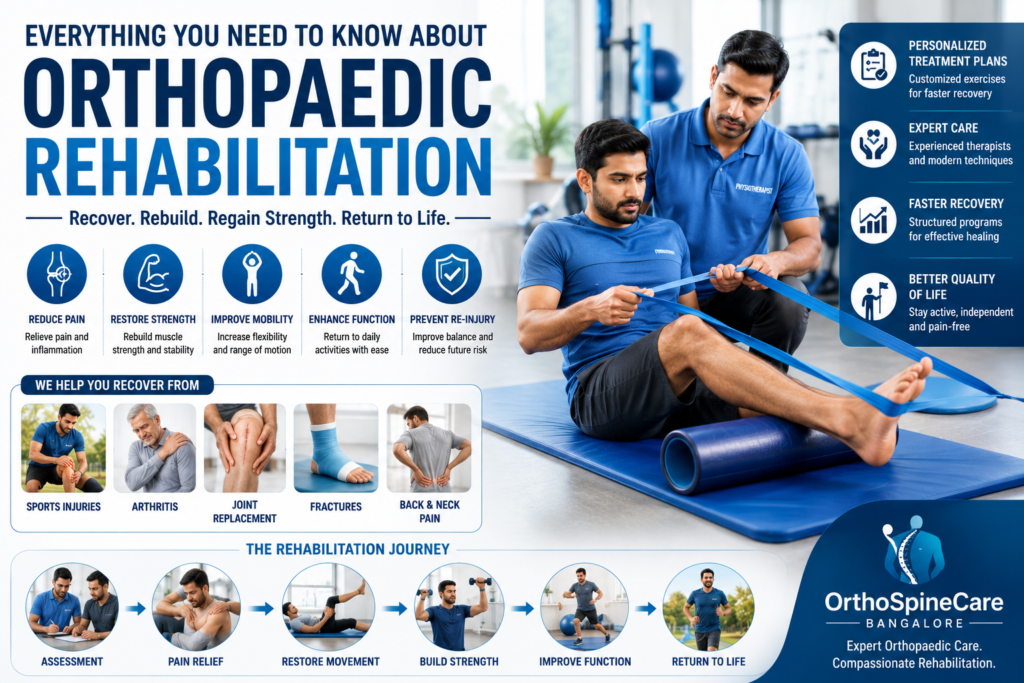
Everything You Need to Know About Orthopaedic Rehabilitation
Recovering from an injury, surgery, or long-term joint problem involves more than simply waiting for the pain to disappear. Your muscles need to regain strength, your joints need to recover movement, and your body needs time to rebuild confidence after an injury.
This is where orthopaedic rehabilitation plays an important role.
Orthopaedic rehabilitation combines physiotherapy, targeted exercises, movement training, pain management, and lifestyle guidance to help you return to everyday activities safely. Whether you’re recovering from a fracture, ligament injury, joint replacement, sports injury, or chronic musculoskeletal condition, a structured rehabilitation program can support your recovery.
At OrthoSpineCare in Bangalore, rehabilitation plans are tailored to each patient’s condition, physical abilities, and recovery goals.
What Is Orthopaedic Rehabilitation?
Orthopaedic rehabilitation is a structured treatment process designed to restore movement, strength, flexibility, balance, and function after an injury or orthopaedic condition.
It can help people recover from problems involving:
- Bones
- Joints
- Muscles
- Ligaments
- Tendons
- Cartilage
- Spine
The rehabilitation process varies from person to person. Someone recovering from a minor sports injury may need a few weeks of guided exercises, while recovery after major surgery or a fracture may require a longer program.
Who Can Benefit From Orthopaedic Rehabilitation?
Rehabilitation can benefit people with a wide range of conditions.
Sports Injuries
Athletes and active individuals may require rehabilitation after:
- ACL injuries
- Meniscus injuries
- Ankle sprains
- Rotator cuff injuries
- Muscle strains
- Tendon injuries
- Sports-related fractures
A structured program can help restore strength and reduce the risk of returning to sport too soon.
Fractures
After a fracture heals, the surrounding muscles and joints may remain weak or stiff.
Rehabilitation can help restore:
- Joint movement
- Muscle strength
- Balance
- Coordination
- Confidence while walking or using the affected limb
Joint Replacement
Knee and hip replacement patients often require rehabilitation to regain strength and normal movement.
A physiotherapist may gradually introduce exercises that help patients return to walking and everyday activities.
Arthritis
People with osteoarthritis or other joint conditions can use rehabilitation to improve muscle strength, flexibility, mobility, and physical function.
Spine Conditions
Rehabilitation can also help patients managing certain back and neck conditions.
Depending on the diagnosis, a program may focus on posture, core strength, flexibility, movement patterns, and gradual return to activity.
What Are the Main Goals of Rehabilitation?
A good rehabilitation program does more than reduce pain.
The major goals include:
Reducing Pain
Appropriate movement, exercise, and other treatment techniques can help manage pain and improve comfort.
Restoring Mobility
Injury and surgery can make joints stiff. Rehabilitation helps gradually restore range of motion.
Building Strength
Strong muscles support joints and improve stability. Strength training is introduced progressively according to your recovery stage.
Improving Balance
Balance exercises can help reduce the risk of falls and improve confidence during movement.
Restoring Everyday Function
The ultimate goal is to help you return to activities such as walking, working, exercising, driving, or playing sports.
What Happens During Orthopaedic Rehabilitation?
Your rehabilitation program usually begins with an assessment.
A physiotherapist or rehabilitation specialist may evaluate:
- Pain levels
- Joint movement
- Muscle strength
- Flexibility
- Balance
- Walking pattern
- Posture
- Functional limitations
Based on this assessment, the specialist creates an individualized program.
Phase 1: Protect and Control Symptoms
Immediately after an injury or surgery, the priority is to protect the affected area and manage pain and swelling.
Your rehabilitation team may recommend appropriate rest, movement restrictions, support devices, and gentle exercises.
Phase 2: Restore Movement
Once the initial symptoms improve, exercises focus on restoring joint mobility and flexibility.
The movements are usually gentle at first and gradually become more challenging.
Phase 3: Build Strength
As your joint becomes more comfortable, strengthening exercises become an important part of rehabilitation.
Exercises may target:
- The muscles around the injured joint
- Core muscles
- Leg muscles
- Shoulder muscles
- Stabilizing muscles
Phase 4: Improve Function
The next step involves exercises that resemble your daily activities.
For example, someone recovering from a knee injury may practice:
- Walking
- Step-ups
- Squatting
- Balance exercises
An athlete may progress toward running, jumping, agility drills, and sport-specific movements.
Phase 5: Return to Normal Activities
The final stage focuses on returning to your normal lifestyle.
Your rehabilitation team may help you gradually resume:
- Work
- Gym workouts
- Sports
- Running
- Household activities
- Other physical activities
Common Rehabilitation Techniques
Orthopaedic rehabilitation can involve several treatment methods.
Therapeutic Exercises
Exercises improve strength, flexibility, coordination, and joint stability.
Stretching
Gentle stretching can improve flexibility and reduce stiffness when appropriate.
Strength Training
Progressive resistance exercises help rebuild muscle strength after injury or surgery.
Balance Training
Balance exercises improve stability and can reduce the risk of falls.
Gait Training
People recovering from lower-limb injuries may need help correcting their walking pattern.
Manual Therapy
Selected patients may benefit from hands-on techniques to improve mobility and reduce stiffness.
Activity Modification
Your rehabilitation specialist may teach you how to modify activities so you can remain active without placing unnecessary stress on the injured area.
Why Is Personalized Rehabilitation Important?
No two injuries are exactly the same.
Two people with knee pain may have completely different causes. One may have arthritis, while another may have a ligament injury. Their rehabilitation programs should therefore look different.
A personalized plan considers:
- Your diagnosis
- Age
- Fitness level
- Occupation
- Previous injuries
- Surgery history
- Pain level
- Activity goals
- Overall health
This approach helps ensure that exercises match your recovery stage.
How Long Does Orthopaedic Rehabilitation Take?
There is no fixed recovery timeline.
The duration depends on:
- Type of injury
- Severity of the condition
- Whether surgery was performed
- Age and overall health
- Muscle strength
- Consistency with rehabilitation
- Individual healing response
Some minor injuries may improve within weeks, while major surgeries and complex injuries may require several months of rehabilitation.
Your specialist can provide a more realistic timeline after evaluating your condition.
Can Rehabilitation Help Avoid Surgery?
In some cases, appropriate non-surgical treatment and rehabilitation can help patients manage their condition without surgery.
Physiotherapy and exercise may improve symptoms in several musculoskeletal conditions, particularly when treatment begins early.
However, rehabilitation cannot replace surgery when significant structural damage requires surgical correction.
The right approach depends on the diagnosis.
The Importance of Following Your Rehabilitation Plan
Recovery requires consistency.
Skipping exercises or returning to demanding activities too early can slow your progress or increase the risk of reinjury.
Try to:
- Complete your prescribed exercises regularly.
- Follow activity restrictions.
- Attend scheduled follow-up appointments.
- Ask questions when you’re unsure about an exercise.
- Report new or worsening symptoms.
- Increase activity gradually.
You don’t need to push through severe pain to make progress. Rehabilitation should follow a controlled and progressive approach.
What Can You Do at Home?
Your rehabilitation doesn’t stop when you leave the clinic.
Depending on your condition, your specialist may recommend a home exercise program.
You can support recovery by:
- Following your exercise plan
- Staying active within recommended limits
- Getting adequate sleep
- Eating a balanced diet
- Staying hydrated
- Maintaining a healthy body weight
- Avoiding smoking
- Using proper posture
- Following lifting and movement instructions
Small, consistent efforts often make rehabilitation more effective.
When Should You Start Rehabilitation?
The appropriate time to begin rehabilitation depends on your injury or surgery.
Some patients can begin gentle movement soon after an injury, while others need a period of protection first.
After surgery, your surgeon will provide specific instructions about when to begin physiotherapy and how much weight or movement is appropriate.
Don’t start an aggressive exercise program on your own after a significant injury or surgery. Professional guidance helps ensure that rehabilitation matches the healing stage.
Signs That Your Rehabilitation Plan May Need Adjustment
Speak with your rehabilitation team if you experience:
- Increasing pain
- New swelling
- Significant loss of movement
- New numbness or tingling
- Increasing weakness
- Difficulty performing previously comfortable exercises
- Symptoms that continue to worsen
Your treatment plan may need modification based on your progress.
Why Choose OrthoSpineCare for Orthopaedic Rehabilitation in Bangalore?
At OrthoSpineCare, rehabilitation forms an important part of comprehensive orthopaedic care.
The team focuses on creating personalized recovery programs for conditions involving the:
- Knee
- Hip
- Shoulder
- Ankle
- Spine
- Muscles
- Ligaments
- Tendons
The rehabilitation approach may include assessment, therapeutic exercise, strengthening, mobility training, functional rehabilitation, and guidance for returning to work, exercise, or sports.
The goal is simple: help you move better, regain strength, and return to your normal activities safely.
Conclusion
Orthopaedic rehabilitation is an important part of recovering from injuries, surgery, arthritis, and other musculoskeletal conditions. It helps more than just the injured area—it helps rebuild strength, mobility, balance, confidence, and everyday function.
The most effective rehabilitation program is one that matches your diagnosis and recovery goals. With proper professional guidance, consistent exercises, and gradual progression, many patients can make meaningful improvements in their mobility and quality of life.
If you’re recovering from an orthopaedic injury or struggling with persistent joint, muscle, or spine problems in Bangalore, consider consulting OrthoSpineCare for a personalized evaluation and rehabilitation plan. Starting the right treatment at the right time can help you move toward a stronger and more confident recovery.