
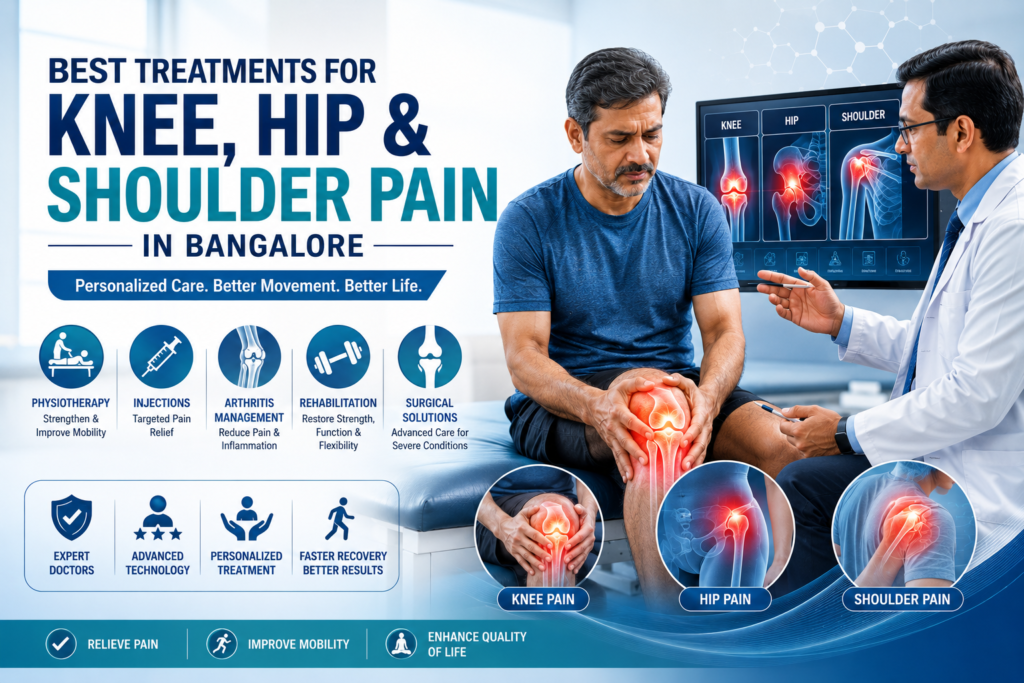
Best Treatments for Knee, Hip, and Shoulder Pain in Bangalore
Knee, hip, and shoulder pain can make even simple daily activities feel difficult. A painful knee may make climbing stairs uncomfortable, hip pain can affect walking and sleeping, and shoulder pain can make reaching overhead or getting dressed a struggle.
Joint pain can happen because of arthritis, sports injuries, overuse, tendon problems, previous injuries, or gradual changes in the joint. The right treatment depends on the cause, severity, age, activity level, and overall health of the patient. There is no single treatment that works for everyone.
At OrthoSpineCare in Bangalore, orthopedic specialists focus on identifying the underlying cause of joint pain and creating an individualized treatment plan. Depending on the condition, treatment may range from physiotherapy and lifestyle changes to injections or surgery when necessary.
Understanding Knee, Hip, and Shoulder Pain
The knee, hip, and shoulder all work differently, so the causes of pain can vary.
Knee Pain
Knee pain commonly develops because of:
- Osteoarthritis
- Ligament injuries
- Meniscus tears
- Tendonitis
- Sports injuries
- Previous trauma
- Excess body weight
- Overuse
Knee osteoarthritis can cause pain, stiffness, swelling, and difficulty with activities such as walking or climbing stairs. Exercise, weight management, physical therapy, and appropriate medication are among the commonly used treatment approaches.
Hip Pain
Hip pain may result from:
- Hip osteoarthritis
- Sports injuries
- Tendon problems
- Bursitis
- Previous fractures or trauma
- Muscle problems
Hip arthritis can cause pain around the groin, hip, or thigh and may gradually reduce mobility. Physical therapy, exercise, lifestyle changes, medication, and selected injections may help manage symptoms.
Shoulder Pain
Shoulder pain can occur because of:
- Rotator cuff injuries
- Tendonitis
- Frozen shoulder
- Bursitis
- Arthritis
- Sports injuries
- Repetitive overhead activities
Shoulder problems can interfere with everyday tasks such as combing your hair, reaching for a shelf, lifting objects, or sleeping comfortably.
How Is the Cause of Joint Pain Diagnosed?
Before starting treatment, it is important to understand why the joint hurts.
An orthopedic specialist may evaluate:
- Your medical history
- Previous injuries
- Pain location and duration
- Joint movement
- Muscle strength
- Swelling or tenderness
- Walking pattern
- Activity and lifestyle habits
Depending on the symptoms, your doctor may recommend imaging such as an X-ray or MRI. Blood tests may also help when an inflammatory condition such as rheumatoid arthritis is suspected.
An accurate diagnosis helps prevent unnecessary treatments and allows the treatment plan to target the actual problem.
Best Non-Surgical Treatments for Joint Pain
Many patients do not need surgery immediately. Conservative treatment can often reduce pain and improve mobility, particularly when the underlying condition is identified early.
1. Physiotherapy
Physiotherapy is an important part of treatment for many knee, hip, and shoulder conditions.
A physiotherapist can create exercises designed to:
- Strengthen muscles around the joint
- Improve flexibility
- Restore range of motion
- Improve balance and stability
- Reduce stress on the joint
- Help prevent future injuries
For mild to moderate hip osteoarthritis, physical therapy and exercise can improve function and reduce pain.
2. Exercise and Activity Modification
Complete rest is not always the answer to joint pain. In many cases, controlled movement helps maintain strength and flexibility.
Your doctor or physiotherapist may recommend lower-impact activities such as:
- Walking
- Swimming
- Cycling
- Strength training
- Stretching
- Water-based exercises
If a particular activity increases pain, temporarily modifying it may allow the joint to recover without stopping physical activity completely.
3. Weight Management
Excess weight can increase stress on weight-bearing joints, particularly the knees and hips.
Maintaining a healthy weight can reduce mechanical stress and make everyday movement easier. For people with hip osteoarthritis, weight loss can reduce stress on the hip and improve symptoms.
4. Medication
Depending on the cause of pain, your doctor may recommend pain-relieving or anti-inflammatory medication.
Medication should be selected according to your medical history and other medicines you may be taking. Long-term use of certain medications can cause side effects, so they should not be taken regularly without medical guidance.
5. Joint Injections
In selected cases, injections may provide temporary relief when pain remains significant despite other treatments.
For example, corticosteroid injections can provide short-term relief for some patients with knee or hip osteoarthritis.
The appropriate injection depends on the diagnosis, joint involved, and individual patient factors.
6. Braces and Supportive Devices
Some patients may benefit from braces, walking aids, or other supportive devices.
These can help reduce stress on a painful joint and improve stability during movement. However, the device should match the underlying condition and should ideally be recommended by a healthcare professional.
7. Rehabilitation After Injury
If joint pain follows a sports injury, fall, or accident, rehabilitation plays an important role in recovery.
A structured program can gradually restore:
- Strength
- Flexibility
- Balance
- Joint stability
- Confidence during movement
Returning to demanding activities too quickly can increase the risk of reinjury.
When Might Surgery Be Recommended?
Surgery is not automatically the first choice for joint pain. Doctors generally consider it when symptoms remain severe despite appropriate non-surgical treatment or when significant structural damage affects daily life.
For advanced hip osteoarthritis, for example, total hip replacement may be considered when non-surgical treatments no longer provide adequate relief.
Depending on the joint and condition, surgical options may include:
- Arthroscopy
- Ligament or tendon repair
- Joint-preserving procedures
- Partial joint replacement
- Total joint replacement
Your orthopedic specialist should discuss the potential benefits, risks, alternatives, and expected recovery before you make a decision.
How to Choose the Right Treatment
The “best” treatment is not necessarily the most advanced or expensive option. It is the treatment that addresses your specific diagnosis and fits your individual needs.
Your doctor may consider:
Your age: Treatment priorities can differ between a young athlete and an older adult.
Severity of damage: Mild degeneration may respond to conservative treatment, while advanced joint damage may require surgery.
Activity level: Athletes and physically active individuals may need specialized rehabilitation.
Duration of symptoms: Long-standing pain may require a more comprehensive evaluation.
Overall health: Medical conditions and medications can influence treatment choices.
Response to previous treatment: Your response to physiotherapy, medication, or other treatments can help guide the next step.
When Should You See an Orthopedic Specialist?
Don’t simply live with joint pain if it keeps returning or interferes with your daily routine.
Consider an orthopedic evaluation if you experience:
- Pain lasting several weeks
- Persistent swelling
- Difficulty walking
- Reduced range of motion
- Joint instability
- Pain that wakes you at night
- Repeated sports injuries
- Difficulty using your arm or shoulder
- Pain that prevents normal work or exercise
Seek urgent medical attention after a significant injury if you cannot bear weight, the joint looks deformed, or you develop severe swelling or loss of movement.
Simple Ways to Protect Your Joints
Treatment doesn’t end when the pain improves. Everyday habits can help protect your joints and reduce the chance of future problems.
Stay Active
Regular, appropriate exercise keeps muscles strong and joints mobile.
Warm Up Before Exercise
A proper warm-up prepares your muscles and joints for physical activity.
Maintain a Healthy Weight
A healthy body weight reduces stress on weight-bearing joints.
Strengthen Supporting Muscles
Strong muscles help support the knee, hip, and shoulder during everyday movement.
Don’t Ignore Injuries
Treat sports injuries and other joint injuries properly rather than returning to activity too quickly.
Improve Your Posture
Good posture can reduce unnecessary stress on the shoulders, spine, and other joints.
Why Choose OrthoSpineCare in Bangalore?
At OrthoSpineCare, the focus is on understanding the cause of your pain before recommending treatment.
Patients can receive comprehensive orthopedic care that may include:
- Orthopedic consultation
- Joint pain evaluation
- Sports injury management
- Physiotherapy and rehabilitation
- Arthritis management
- Image-guided procedures when appropriate
- Non-surgical pain management
- Surgical consultation when required
The goal is to help patients reduce pain, restore movement, and return to their everyday activities with greater confidence.
Conclusion
Knee, hip, and shoulder pain can affect your independence, work, exercise routine, and overall quality of life. But living with joint pain is not something you simply have to accept.
The right treatment starts with an accurate diagnosis. Depending on your condition, physiotherapy, exercise, weight management, medication, lifestyle changes, or selected injections may provide meaningful relief. When significant joint damage or persistent symptoms make surgery necessary, modern orthopedic procedures can help restore function.
If you’re experiencing persistent knee, hip, or shoulder pain in Bangalore, consult an orthopedic specialist at OrthoSpineCare for a personalized evaluation. Early attention can help you understand what’s causing your pain and choose a treatment approach that supports better movement and long-term joint health.