
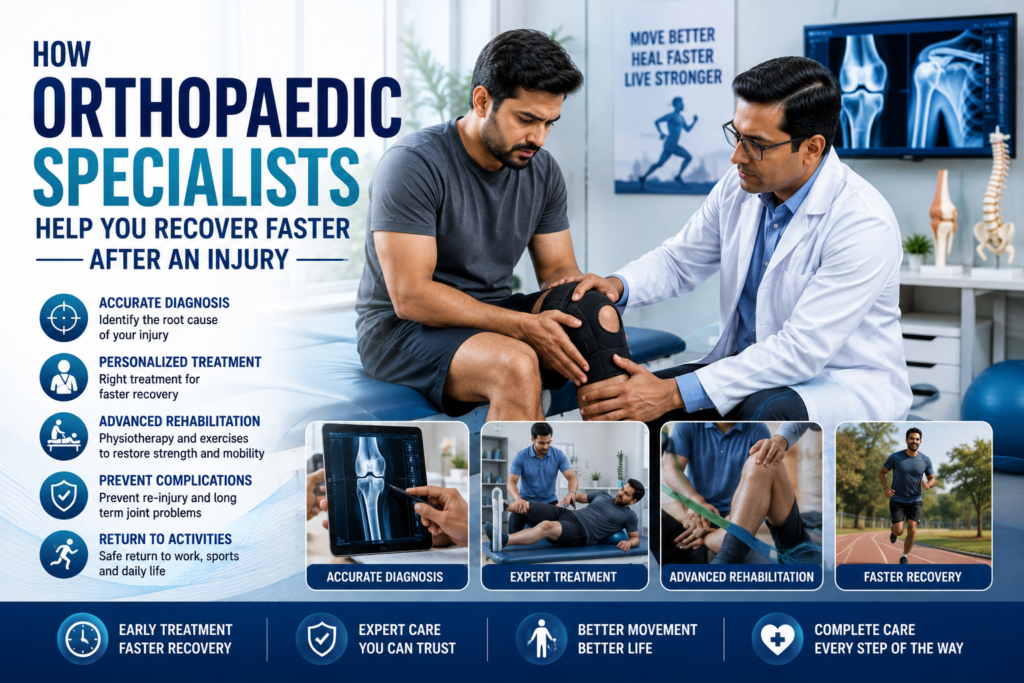
How Orthopaedic Specialists Help You Recover Faster After an Injury
An injury can happen in a moment. A fall, sports accident, sudden twist, or road accident can leave you dealing with pain, swelling, stiffness, or difficulty moving. While minor injuries may improve with rest, more serious injuries need proper evaluation and treatment.
Many people try to manage an injury themselves and return to normal activities as soon as the pain decreases. However, pain relief doesn’t always mean the injury has completely healed. Returning to work, exercise, or sports too early can increase the risk of reinjury.
This is where an orthopaedic specialist can make a meaningful difference. From identifying the exact injury to creating a rehabilitation plan, orthopaedic care can help you recover safely and regain strength and mobility.
At OrthoSpineCare in Bangalore, orthopaedic specialists provide comprehensive care for sports injuries, fractures, ligament injuries, joint problems, and spine-related injuries.
What Does an Orthopaedic Specialist Do After an Injury?
An orthopaedic specialist focuses on conditions affecting the bones, joints, muscles, ligaments, tendons, cartilage, and spine.
After an injury, the specialist’s first priority is to understand what has been damaged and how severe the injury is.
Your evaluation may include:
- Detailed medical history
- Physical examination
- Assessment of joint movement
- Muscle strength testing
- Evaluation of swelling and tenderness
- X-rays when required
- MRI or CT scans for selected injuries
This detailed assessment helps your doctor develop a treatment plan based on your specific injury rather than treating pain alone.
1. Accurate Diagnosis Helps You Start the Right Treatment
One of the biggest advantages of seeing an orthopaedic specialist is getting an accurate diagnosis.
For example, persistent knee pain after a sports injury could result from a ligament sprain, meniscus injury, tendon problem, or fracture. These conditions may require very different treatment approaches.
Treating the wrong problem can delay recovery.
An orthopaedic evaluation helps identify the underlying injury and determine the safest path forward.
2. They Determine Whether You Need Surgery
Not every injury requires surgery.
Many ligament injuries, muscle strains, tendon problems, and certain fractures can improve with appropriate non-surgical treatment.
Depending on your condition, your specialist may recommend:
- Rest and activity modification
- Medication
- Physiotherapy
- Bracing or support
- Rehabilitation
- Image-guided injections for selected conditions
If an injury does require surgery, your specialist can explain the available options and expected recovery process.
3. Early Treatment Can Prevent Complications
Ignoring an injury may sometimes lead to complications.
For example, an untreated ligament injury can contribute to joint instability. Poorly managed injuries may also result in stiffness, weakness, or recurring pain.
Early treatment can help:
- Control pain and swelling
- Protect the injured area
- Maintain appropriate movement
- Prevent unnecessary stiffness
- Restore strength gradually
- Reduce the risk of reinjury
The earlier you understand the injury, the easier it becomes to plan your recovery.
4. Physiotherapy Plays a Major Role in Recovery
Pain may improve before your muscles and joints regain their full strength.
This is why rehabilitation matters.
An orthopaedic specialist may work with a physiotherapist to develop a program that gradually restores:
- Muscle strength
- Flexibility
- Joint movement
- Balance
- Coordination
- Stability
The exercises change as you recover. Early rehabilitation may focus on protecting the injured area, while later stages focus on strengthening and returning to normal activities.
5. Specialists Help You Return to Activities Safely
One of the biggest mistakes people make after an injury is returning to normal activity too quickly.
You may feel better after a few days, but the injured tissues may still need time to heal.
An orthopaedic specialist can guide your return to:
- Work
- Walking
- Gym workouts
- Running
- Sports
- Heavy physical activities
A gradual return reduces unnecessary stress on healing tissues.
6. They Help Manage Pain Without Over-Reliance on Medication
Pain management is an important part of recovery, but medication is not always the only solution.
Depending on the injury, your treatment plan may combine:
- Appropriate medication
- Ice or heat when suitable
- Physiotherapy
- Activity modification
- Bracing
- Rehabilitation
- Selected injections
The goal is to control pain while addressing the underlying cause of the injury.
7. They Monitor Your Recovery
Recovery isn’t always a straight line.
Some injuries improve quickly, while others require several weeks or months of rehabilitation. Regular follow-up allows your specialist to monitor your progress and adjust your treatment plan.
Your doctor may gradually increase your activity level as your strength and mobility improve.
If recovery isn’t progressing as expected, additional investigations may help identify the reason.
Common Injuries That May Need Orthopaedic Care
Orthopaedic specialists treat many types of injuries, including:
Sports Injuries
These include:
- ACL injuries
- Meniscus tears
- Rotator cuff injuries
- Ankle sprains
- Tendon injuries
- Muscle strains
Fractures
Falls and accidents can cause fractures in the arms, legs, wrists, ankles, and other bones.
Proper diagnosis and treatment help the bone heal in the correct position.
Ligament Injuries
Ligaments stabilize joints. Injuries can cause pain, swelling, and instability.
Appropriate rehabilitation can help restore joint function.
Joint Dislocations
A dislocated shoulder, knee, or other joint requires prompt medical attention. Once the joint is treated, rehabilitation helps restore strength and movement.
Spine Injuries
Back and neck injuries may affect muscles, discs, joints, or nerves. Persistent pain, numbness, or weakness requires medical evaluation.
When Should You See an Orthopaedic Specialist After an Injury?
You should consider an orthopaedic evaluation if you experience:
- Severe or persistent pain
- Significant swelling
- Difficulty putting weight on a limb
- Reduced joint movement
- Joint instability
- Persistent bruising
- Numbness or tingling
- Muscle weakness
- Pain that keeps returning
- Symptoms that don’t improve with basic care
After a significant accident or trauma, seek prompt medical attention even if the pain initially seems manageable.
Warning Signs That Need Urgent Medical Attention
Some injury symptoms require immediate evaluation.
Seek urgent medical care if you have:
- A visibly deformed limb or joint
- Severe pain after major trauma
- Inability to move the affected area
- Inability to bear weight after an injury
- Loss of sensation
- Sudden or progressive muscle weakness
- Severe swelling
- An open wound over a suspected fracture
These symptoms may indicate a serious injury requiring immediate treatment.
How You Can Support Your Recovery at Home
Your actions between appointments also matter.
Follow Your Treatment Plan
Complete your prescribed exercises and follow activity restrictions carefully.
Don’t Rush Back to Exercise
Returning to sports or heavy workouts before your body is ready can increase the risk of reinjury.
Maintain Good Nutrition
Adequate protein, vitamins, minerals, and hydration support overall recovery.
Get Enough Sleep
Quality sleep gives your body time to recover and repair tissues.
Stay Active Within Your Limits
Complete inactivity isn’t always beneficial. Follow your specialist’s recommendations regarding safe movement.
Why Choose OrthoSpineCare in Bangalore?
At OrthoSpineCare, the focus goes beyond simply reducing pain. The team aims to identify the underlying injury and help patients return to their normal activities safely.
Patients can receive care for:
- Sports injuries
- Ligament injuries
- Fractures
- Joint injuries
- Tendon and soft tissue problems
- Knee injuries
- Shoulder injuries
- Hip injuries
- Spine injuries
- Rehabilitation needs
Treatment plans are personalized according to the injury, lifestyle, activity level, and recovery goals of each patient.
Conclusion
Recovering from an injury involves more than waiting for the pain to disappear. Proper diagnosis, timely treatment, rehabilitation, and a gradual return to activity can all contribute to a safer and more effective recovery.
Orthopaedic specialists can help you understand the extent of your injury, choose the appropriate treatment, monitor your progress, and reduce the risk of future problems. Whether you have suffered a sports injury, fracture, ligament injury, or joint problem, getting professional advice early can put you on the right path to recovery.
If you’ve suffered an injury and continue to experience pain, swelling, weakness, or restricted movement, consider consulting the experienced orthopaedic specialists at OrthoSpineCare in Bangalore. With personalized treatment and rehabilitation, the goal is to help you recover safely, regain mobility, and return to the activities you enjoy.