Orthopedic Doctor

Orthopaedic Care in Bangalore
Orthopedic Doctor

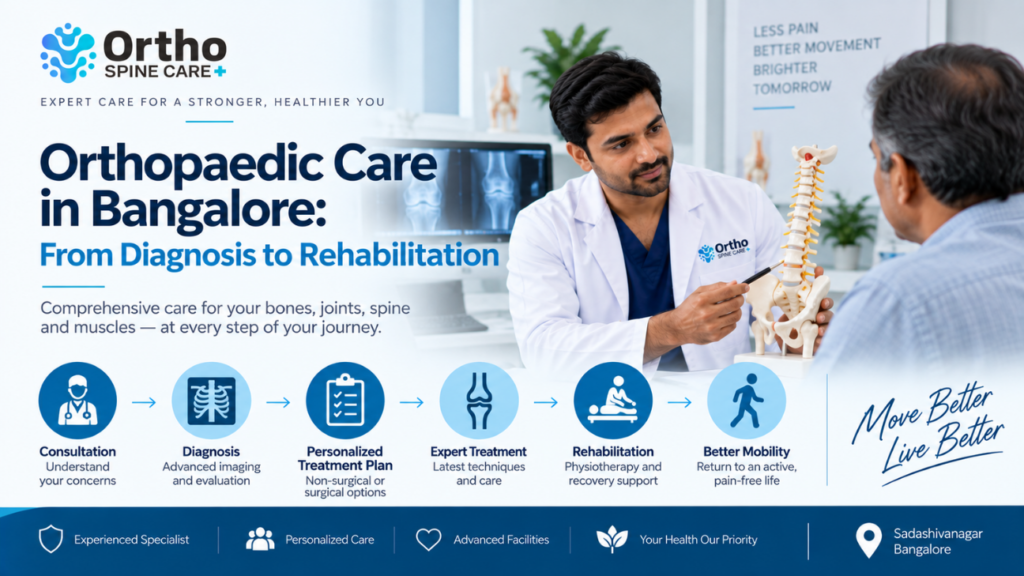
Orthopaedic Care in Bangalore: From Diagnosis to Rehabilitation

Orthopaedic Care in Bangalore: From Diagnosis to Rehabilitation Pain in your back, knee, shoulder, hip, or other joints can affect much more than your physical comfort. A problem that starts as occasional discomfort may eventually make it difficult to walk, exercise, work, sleep, or enjoy everyday activities. This is why orthopaedic care is not simply about treating pain. It involves understanding what is causing the problem, choosing an appropriate treatment, and helping you regain movement and function. For people looking for orthopaedic care in Bangalore, knowing what to expect from diagnosis through rehabilitation can make the treatment journey feel much easier to understand. What Is Orthopaedic Care? Orthopaedic care focuses on conditions affecting the musculoskeletal system, including: Orthopaedic problems can develop because of injuries, sports activities, ageing, overuse, joint degeneration, or other conditions. Treatment is not always surgical. Depending on the diagnosis, care may involve medication, physiotherapy, rehabilitation, pain management, injections, lifestyle changes, minimally invasive procedures, or surgery when appropriate. At OrthoSpineCare, services include spine care, fracture and trauma management, bone and joint treatment, sports injury management, pain management, physiotherapy and rehabilitation, diagnostics, and surgical care. Step 1: Understanding Your Symptoms The first part of good orthopaedic care is understanding what you are experiencing. During a consultation, your doctor may ask about: Try to describe your symptoms honestly and in your own words. You don’t need to know the medical name for your condition. For example, instead of simply saying, “My knee hurts,” explain whether it hurts while climbing stairs, walking, sitting for long periods, or getting up from a chair. These details can help your doctor understand the problem more clearly. Step 2: Physical Examination After discussing your symptoms, your orthopaedic specialist may examine the affected area. Depending on your condition, the examination may involve checking: For someone with knee pain, for example, the doctor may assess how the knee moves and whether there are signs of instability or tenderness. For back pain, the examination may focus on spinal movement, strength, sensation, and other relevant findings. The physical examination helps provide information that cannot be obtained from symptoms alone. Step 3: Diagnostic Tests When Needed Not every orthopaedic problem requires imaging or other investigations. However, depending on your symptoms and examination, your doctor may recommend tests to better understand what is happening. These may include appropriate imaging such as: OrthoSpineCare lists digital X-rays, standing X-rays for spine and joint analysis, and bone-density/DEXA scan guidance among its diagnostic services. The purpose of these investigations is to provide additional information that can help with diagnosis and treatment planning. Step 4: Understanding Your Diagnosis Once your symptoms, examination findings, and relevant investigations have been considered, your doctor can explain the likely diagnosis. This is an important stage because the same symptom can have different causes. For example, back pain could be associated with a muscle problem, disc condition, nerve irritation, or another spine-related issue. Similarly, knee pain could be associated with an injury, arthritis, overuse, or another joint condition. Understanding the underlying problem allows you and your doctor to discuss treatment options that are appropriate for your situation. Step 5: Creating a Personalized Treatment Plan There is no single treatment that works for every orthopaedic condition. Your treatment plan may depend on: Depending on the condition, treatment may include: Non-surgical care Surgical care Surgery may be considered for selected conditions when it is appropriate based on the patient’s diagnosis and circumstances. OrthoSpineCare provides both non-surgical and surgical treatment options across its orthopaedic and spine services. Does Orthopaedic Treatment Always Mean Surgery? No. This is one of the most common concerns patients have. Seeing an orthopaedic surgeon does not automatically mean that you will need an operation. Many musculoskeletal problems can be managed through non-surgical approaches. Surgery may be discussed when there is a significant structural problem, persistent symptoms, certain injuries, or when other appropriate treatments have not provided sufficient improvement. The goal is to identify an appropriate treatment for the individual condition. Step 6: Rehabilitation and Physiotherapy Treatment doesn’t necessarily end when pain starts improving. For many patients, rehabilitation is an important part of returning to normal activities. Physiotherapy may focus on: For example, after a fracture or orthopaedic procedure, the affected area may need time and structured rehabilitation to regain strength and movement. OrthoSpineCare provides physiotherapy and rehabilitation guidance for post-injury recovery and post-surgical rehabilitation. Step 7: Gradually Returning to Normal Activities Recovery is not always about getting back to normal as quickly as possible. It is about progressing safely according to your condition and treatment plan. Depending on the problem, your healthcare team may guide you on when to gradually return to: Trying to do too much too soon after an injury or procedure can interfere with recovery. Following the rehabilitation plan and discussing your activity levels with your healthcare team can help you understand what is appropriate for your situation. Orthopaedic Care for Common Problems Back and Spine Problems Back and neck problems are common reasons people seek orthopaedic care. Conditions such as sciatica, slipped discs, spondylosis, spinal injuries, scoliosis, and other spine-related problems may require specialist evaluation. Treatment can range from non-surgical care and rehabilitation to minimally invasive procedures or surgery for selected conditions. Knee and Joint Problems Knee and other joint problems can make walking, climbing stairs, exercising, or performing household activities difficult. Treatment depends on the underlying cause and may involve medication, physiotherapy, injections, joint-preservation approaches, or joint replacement for selected severe cases. OrthoSpineCare provides care for joints including the shoulder, elbow, wrist, hand, hip, knee, ankle, and foot. Fractures Fractures may require different types of treatment depending on their location and nature. Orthopaedic fracture care can include casting, splinting, fracture reduction, fixation when required, and rehabilitation. Sports Injuries Sports injuries can affect athletes and people who simply enjoy staying active. Ligament injuries, tendon problems, soft-tissue injuries, and rotator cuff problems may require specialist assessment. Treatment can include rehabilitation and other appropriate interventions depending on the injury. When Should You Consider Orthopaedic Care? Consider consulting


Orthopaedic Surgeon in Bangalore
Orthopedic Doctor

Questions to Ask Your Orthopaedic Surgeon Before Treatment

Questions to Ask Your Orthopaedic Surgeon Before Treatment When you are dealing with bone, joint, muscle, or spine pain, deciding on treatment can sometimes feel overwhelming. You may have questions about your diagnosis, whether you actually need treatment, how long recovery could take, or whether surgery is necessary. It is completely reasonable to ask questions before starting any treatment. In fact, having a clear conversation with your doctor can help you understand your condition and what to expect from the treatment process. Whether you are visiting an orthopaedic surgeon for knee pain, a sports injury, a fracture, back pain, a spine condition, or another musculoskeletal problem, here are some useful questions you can ask during your consultation. Why Should You Ask Questions Before Treatment? Every patient’s condition is different. Two people may experience similar symptoms but have different underlying problems and therefore require different approaches. At OrthoSpineCare, orthopaedic services cover conditions involving the spine, bones, joints, fractures, sports injuries, pain management, rehabilitation, and other musculoskeletal problems. Treatment options can include both surgical and non-surgical approaches depending on the condition. Asking questions can help you understand: You don’t need to know all the medical terminology. Simply asking your doctor to explain something in simpler language is perfectly appropriate. 1. What Is Causing My Symptoms? This is one of the most important questions to ask. Pain can have many possible causes. For example, knee pain may be associated with arthritis, an injury, or another joint problem. Back pain can also have several possible causes. Ask your doctor: “What is causing my symptoms?” Understanding the underlying condition can help you understand why a particular treatment has been recommended. 2. What Tests or Scans Do I Need? Depending on your symptoms and examination, your doctor may recommend diagnostic tests. You can ask: “Do I need an X-ray, scan, or any other investigation?” You can also ask what the test is intended to show and how the results may influence your treatment. OrthoSpineCare lists digital X-rays, standing X-rays for spine and joint analysis, and bone-density/DEXA scan guidance among its diagnostic services. Not every patient requires every test, so investigations should be based on the individual’s clinical situation. 3. What Treatment Options Do I Have? Don’t hesitate to ask about your options. Depending on the condition, orthopaedic treatment may include: OrthoSpineCare provides both non-surgical and surgical services for various orthopaedic and spine conditions. Understanding the available options can help you have a more meaningful discussion with your doctor about your treatment plan. 4. Do I Really Need Surgery? If surgery has been recommended, it is reasonable to ask why. You could ask: “Why is surgery being recommended in my case?” Also ask: Orthopaedic surgery is used for selected conditions, including certain fractures, joint problems, ligament injuries, and spine conditions. OrthoSpineCare’s listed surgical services include spine procedures, joint replacement, and arthroscopy for selected conditions. Whether surgery is appropriate depends on the individual’s diagnosis and clinical assessment. 5. What Happens If I Choose Non-Surgical Treatment? If you are considering non-surgical treatment, ask your doctor what you can realistically expect. You might ask: “If I don’t have surgery, what other treatment options are available?” Depending on your condition, non-surgical management may include physiotherapy, rehabilitation, medication, injections, activity modification, or other approaches. It is useful to understand both the potential benefits and limitations of each option. 6. How Long Could My Recovery Take? Recovery varies considerably depending on the condition and treatment. Ask: “How long should I expect recovery to take?” You can also ask: Having realistic expectations can make the recovery process easier to manage. 7. Will I Need Physiotherapy or Rehabilitation? Rehabilitation can be an important part of orthopaedic recovery. It may help patients work on: OrthoSpineCare provides physiotherapy and rehabilitation guidance for post-injury recovery and post-surgical rehabilitation. Ask your doctor whether rehabilitation will be part of your treatment and what the process may involve. 8. What Are the Benefits of the Recommended Treatment? Before starting treatment, it is useful to understand what the treatment is intended to achieve. Ask: “What improvement are we expecting from this treatment?” Depending on your condition, the goal may involve improving movement, managing symptoms, restoring function, treating an injury, or addressing a structural problem. Understanding the goal helps you know what progress to look for during recovery. 9. What Are the Possible Risks or Complications? Every medical treatment has potential risks, and the relevant risks vary depending on the procedure and the patient’s circumstances. If a procedure or surgery has been recommended, ask: Your surgeon can explain the risks that are relevant to your particular situation. 10. Will I Need to Change My Daily Activities? Some treatments may require temporary changes to your normal routine. Ask your doctor: “What activities should I avoid during recovery?” You may also want to discuss: The appropriate restrictions depend on your condition and treatment. 11. When Can I Return to Work or Exercise? If you have an active lifestyle or a physically demanding job, this is particularly important. Ask your doctor: “When can I safely return to my normal activities?” The answer can depend on the type of condition, treatment, recovery progress, and nature of your work or exercise. A gradual return may be appropriate for some conditions, but your healthcare team should guide you based on your individual recovery. 12. What Should I Bring to My Appointment? If you have previously received treatment, bring relevant medical records when possible. These may include: This information can help your doctor understand your previous evaluation and treatment history. Questions to Ask About Spine Treatment If you are visiting an orthopaedic or spine surgeon for back or neck problems, you can ask additional questions such as: OrthoSpineCare’s spine services include care for conditions such as sciatica, slipped discs, spondylosis, spinal injuries, scoliosis, spinal deformities, and selected procedures including minimally invasive and endoscopic spine treatments. Questions to Ask About Knee or Joint Problems For knee, hip, shoulder, or other joint problems, you can ask: OrthoSpineCare’s services include treatment for

orthopedic treatment
Orthopedic Doctor

How Orthopaedic Treatment Can Improve Mobility and Quality of Life

How Orthopaedic Treatment Can Improve Mobility and Quality of Life Being able to walk comfortably, climb stairs, exercise, work without pain, or simply get out of bed in the morning can have a major impact on everyday life. When bone, joint, muscle, ligament, tendon, or spine problems begin to interfere with these simple activities, it can affect much more than physical comfort. Pain may make you avoid exercise, change the way you move, disturb your sleep, or make everyday tasks feel difficult. This is where appropriate orthopaedic treatment can make a meaningful difference. Orthopaedic care focuses on diagnosing and managing conditions affecting the musculoskeletal system. Depending on the problem, treatment may include non-surgical care, physiotherapy, rehabilitation, pain management, injections, minimally invasive procedures, or surgery when appropriate. For people searching for an orthopaedic surgeon in Bangalore, understanding how orthopaedic treatment can support mobility and quality of life is an important first step. What Does Mobility Really Mean? Mobility is more than simply being able to walk. It includes your ability to: When pain or stiffness limits these activities, people often start changing their routines. You may stop going for your morning walk because of knee pain. You might avoid stairs because your joints hurt. Perhaps back pain makes sitting at work uncomfortable. Over time, these changes can affect your confidence, activity levels, and overall quality of life. How Orthopaedic Problems Affect Daily Life A musculoskeletal problem can affect different aspects of your routine. Pain can limit movement When movement causes pain, you may naturally try to avoid it. This can make everyday activities more difficult. Stiffness can reduce flexibility Joint or spine problems may make bending, stretching, or changing positions uncomfortable. Weakness can affect independence Muscle weakness or joint problems can make walking, lifting, or maintaining balance more challenging. Poor mobility can affect activity levels When exercise becomes uncomfortable, people may become less active. This can make it harder to maintain strength and physical function. Sleep can be affected Persistent pain can make it difficult to find a comfortable sleeping position or remain comfortable through the night. The right treatment approach depends on the underlying condition rather than simply the location of the pain. 1. Accurate Diagnosis Is the First Step Before discussing treatment, it is important to understand what is causing the problem. For example, knee pain could be associated with arthritis, an injury, overuse, or another joint condition. Back pain may have several possible causes, including muscle-related problems, disc conditions, or other spine disorders. An orthopaedic evaluation may involve: OrthoSpineCare provides diagnostic services including digital X-rays, standing X-rays for spine and joint assessment, and bone-density/DEXA scan guidance. A clearer diagnosis helps the doctor determine which treatment options may be suitable. 2. Non-Surgical Treatment Can Help Restore Function Orthopaedic treatment does not always mean surgery. Depending on the condition, non-surgical treatment may include: For many patients, the goal is to control symptoms while improving movement and function. At OrthoSpineCare, the listed services include non-surgical spine care, pain management, physiotherapy and rehabilitation guidance, and injections alongside surgical services. 3. Physiotherapy Can Support Better Movement Physiotherapy can be an important part of orthopaedic recovery. A personalized rehabilitation program may focus on: For example, someone recovering from a knee injury may need to gradually rebuild strength and movement before returning to normal activities. Similarly, rehabilitation can be important after orthopaedic surgery. OrthoSpineCare provides post-injury recovery and post-surgical rehabilitation guidance as part of its services. 4. Treating Joint Problems Can Make Everyday Activities Easier Joint problems can affect almost every part of your day. Knee, hip, shoulder, ankle, wrist, and other joint problems may make simple activities uncomfortable. For example, knee pain can make it difficult to: Shoulder pain may make it difficult to: Appropriate treatment aims to address the underlying problem while helping you regain useful movement. OrthoSpineCare provides bone and joint treatment for conditions affecting areas including the shoulder, elbow, wrist, hand, hip, knee, ankle, and foot. 5. Spine Treatment Can Help With Movement and Function Back and neck problems can affect almost everything you do. Persistent back pain may make sitting, standing, walking, bending, or exercising difficult. Some spine conditions may also cause symptoms that travel into an arm or leg. Depending on the condition, treatment can include conservative care, rehabilitation, spinal injections, minimally invasive procedures, or surgery when appropriate. OrthoSpineCare’s spine services include care for sciatica, slipped discs, spondylosis, spinal injuries, scoliosis, spinal deformities, and other spine-related conditions. The objective of treatment is not simply to focus on pain. It is also to help the patient maintain or regain appropriate function. 6. Sports Injury Treatment Can Help You Return to Activity An injury can temporarily take you away from the activities you enjoy. A ligament injury, tendon problem, or rotator cuff injury may affect both recreational activities and everyday movement. Appropriate assessment can help determine the extent of the injury and the treatment required. Recovery may involve rehabilitation, strengthening, movement training, and a gradual return to activity. OrthoSpineCare provides sports injury management for ligament and soft-tissue injuries, tendonitis, and rotator cuff injuries. 7. Fracture Care Helps Restore Stability and Function A fracture can significantly affect mobility. Depending on the injury, treatment may involve a cast, splint, walker boot, fracture reduction, fixation, and rehabilitation. Once the injury has been treated, rehabilitation can help patients work toward restoring movement and function. The type of treatment depends on the location and nature of the fracture. OrthoSpineCare’s fracture management services include plaster casts, walker boots and splints, fracture reduction and fixation when required, emergency trauma care, and post-fracture rehabilitation. 8. Joint Replacement May Be Considered for Severe Joint Problems When a joint becomes severely damaged, everyday movement can become increasingly difficult. For selected patients with severe joint degeneration, joint replacement may be considered. The purpose is to address the damaged joint and help improve movement and function when the procedure is considered appropriate. OrthoSpineCare lists knee, hip, and shoulder replacement among its surgical services. However, joint replacement is not automatically necessary for everyone

Orthopaedic Surgery
Orthopedic Doctor

When Is Orthopaedic Surgery Necessary?

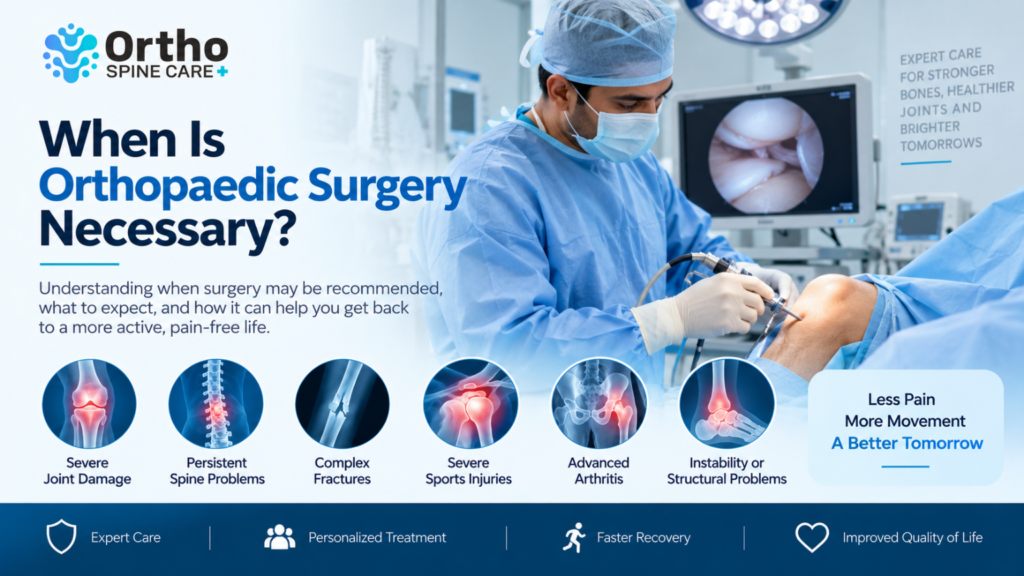
When Is Orthopaedic Surgery Necessary? Hearing the word “surgery” can make anyone nervous. If you have persistent knee pain, a spine problem, a sports injury, or a damaged joint, you may wonder whether an operation is really necessary or whether there are other ways to manage the condition. The good news is that orthopaedic surgery is not automatically the first treatment for every bone, joint, or spine problem. Orthopaedic care often begins with an accurate diagnosis and consideration of non-surgical treatments. Surgery may be discussed when the condition is severe, significantly affecting daily life, or when other appropriate treatments have not provided sufficient improvement. If you are looking for an orthopaedic surgeon in Bangalore, understanding when surgery may be considered can help you have a more informed conversation with your doctor. What Is Orthopaedic Surgery? Orthopaedic surgery refers to procedures used to treat problems involving the musculoskeletal system, including: Depending on the condition, surgery may be used to repair an injury, stabilize a fracture, relieve pressure on a nerve, replace a severely damaged joint, or address another structural problem. The type of surgery depends entirely on the diagnosis and the patient’s individual circumstances. Does Every Orthopaedic Problem Require Surgery? No. Many orthopaedic conditions can be managed without surgery. Depending on the problem, a doctor may first consider treatments such as: At OrthoSpineCare, treatment options include both non-surgical and surgical approaches for spine, bone, joint, fracture, and sports-related conditions. The decision to operate should be based on the condition, symptoms, examination findings, investigations, and the expected benefits and risks of the procedure. 1. When a Fracture Needs Surgical Treatment Some fractures can heal successfully with a cast, splint, or other forms of immobilization. However, certain fractures may require surgery to restore alignment or stabilize the bone. Factors such as the location and nature of the fracture can influence treatment. Orthopaedic fracture care can include fracture reduction and fixation when required, alongside casting, splinting, and rehabilitation. If you have suffered a significant injury, especially one associated with severe pain, swelling, deformity, or inability to use the affected limb, prompt medical assessment is important. 2. When Joint Damage Is Severe Joints can become damaged because of arthritis, injuries, degeneration, or other conditions. In the early stages, treatment may focus on controlling symptoms and maintaining movement. However, when joint damage becomes advanced and significantly affects mobility and everyday activities, surgical options may be considered. For selected patients, joint replacement can be an option for severely damaged joints. OrthoSpineCare’s listed surgical services include knee, hip, and shoulder replacement procedures. A joint replacement decision should be made after an individual assessment rather than based on pain alone. 3. When Persistent Pain Is Affecting Your Daily Life Pain can become more than an occasional inconvenience. If persistent pain makes it difficult to: it may be time for a specialist evaluation. This does not necessarily mean surgery is required. Instead, it means the underlying problem should be assessed and all appropriate treatment options considered. If non-surgical approaches have been tried appropriately and symptoms continue to significantly affect your quality of life, surgery may sometimes become part of the discussion. 4. When a Spine Problem Requires Surgical Intervention Many back and neck problems can be managed without surgery. However, certain spinal conditions may require surgical treatment when there is a significant structural problem or when symptoms and clinical findings indicate that an operation may provide meaningful benefit. Conditions that may sometimes require surgical evaluation include: OrthoSpineCare lists minimally invasive, endoscopic, and open spine procedures among its surgical services. The decision depends on the individual diagnosis and assessment. 5. When a Nerve Is Being Compressed Some spine conditions can irritate or compress nerves. This can result in symptoms such as: Not every case requires surgery. Depending on the condition, non-surgical treatment may be considered first. However, persistent or significant nerve-related symptoms may require specialist evaluation to determine whether a surgical procedure is appropriate. New or severe neurological symptoms should receive prompt medical attention. 6. When a Sports Injury Damages a Ligament or Joint Sports injuries can range from minor strains to significant ligament and joint injuries. Some injuries respond well to rest and rehabilitation. Others may result in instability or structural damage that requires surgical consideration. For example, certain ligament injuries or rotator cuff injuries may require specialist assessment to determine whether surgery is appropriate. OrthoSpineCare provides sports injury management for ligament and soft-tissue injuries, tendonitis, and rotator cuff injuries, along with arthroscopy for selected ligament and joint injuries. The treatment decision depends on the specific injury, its severity, activity requirements, and other individual factors. 7. When Non-Surgical Treatment Has Not Provided Enough Improvement Doctors often consider conservative treatment before recommending surgery when it is clinically appropriate. This may include: If symptoms continue despite appropriate treatment, your doctor may reassess the diagnosis and discuss other options. Surgery should not be viewed simply as the next step because a certain number of weeks have passed. The decision should be based on whether the expected benefits of surgery outweigh its risks for the individual patient. 8. When the Condition Is Getting Worse Some musculoskeletal problems gradually progress. If pain, stiffness, weakness, instability, or loss of mobility is getting worse, it may be important to have the condition reassessed. Early specialist evaluation does not necessarily mean you will need surgery. It can help establish what is happening and whether there are treatment options that could prevent further deterioration or improve function. Surgery Should Be a Considered Decision Choosing surgery is an important decision, and patients should understand why it is being recommended. Before agreeing to a procedure, consider asking your orthopaedic surgeon: About the diagnosis About treatment About the procedure A clear conversation can help you understand your options and make decisions based on your individual situation. What Happens Before Orthopaedic Surgery? If surgery is being considered, your doctor will generally review your symptoms, medical history, examination findings, and relevant investigations. Depending on the procedure and your circumstances, additional medical evaluation may

First Orthopaedic Consultation
Orthopedic Doctor

What to Expect During Your First Orthopaedic Consultation

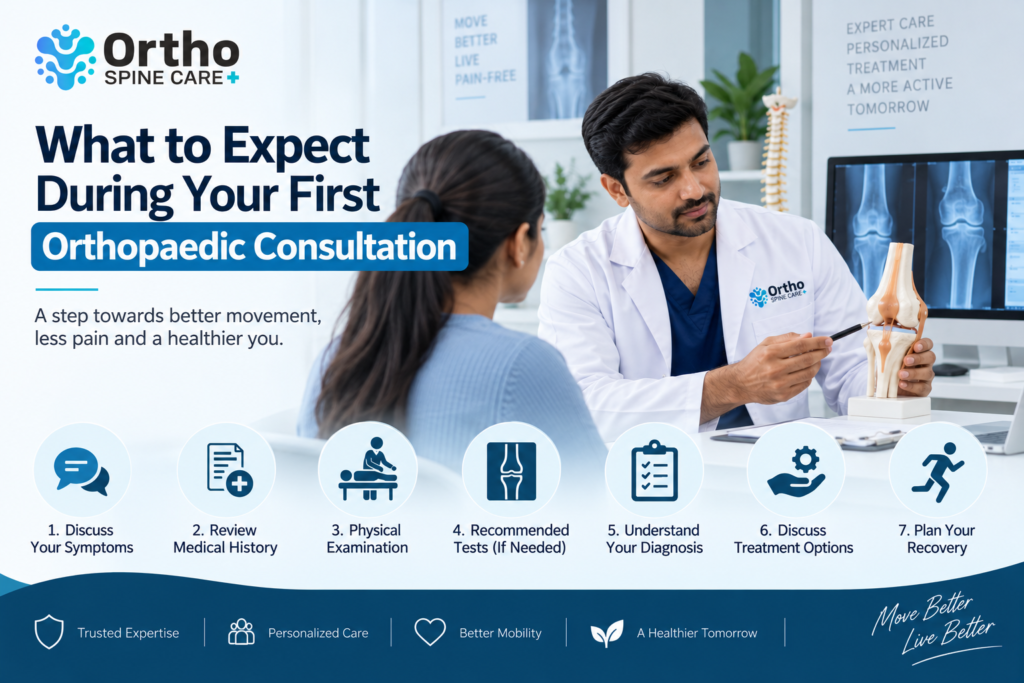
What to Expect During Your First Orthopaedic Consultation Visiting an orthopaedic surgeon for the first time can feel a little uncertain. You may be wondering what questions the doctor will ask, whether you need an X-ray or scan, or whether your pain could eventually require surgery. The good news is that your first orthopaedic consultation is mainly about understanding your symptoms, identifying the possible cause, and discussing appropriate treatment options. It does not automatically mean that you will need surgery. Whether you are dealing with knee pain, back pain, a sports injury, a fracture, shoulder discomfort, or another bone and joint problem, knowing what to expect can make your appointment more comfortable. If you are looking for an orthopaedic surgeon in Bangalore, here is a simple guide to what usually happens during your first consultation. Why Is an Orthopaedic Consultation Important? Pain in your bones, joints, muscles, or spine can have many possible causes. Two people may have similar symptoms but require completely different treatments. For example, knee pain could be related to an injury, arthritis, overuse, or another joint problem. Similarly, back pain may be associated with posture, muscle problems, a disc condition, or a spine-related issue. An orthopaedic consultation helps the doctor understand your symptoms and assess the affected area before recommending a treatment approach. At OrthoSpineCare, orthopaedic and spine care includes conditions involving the spine, joints, bones, fractures, sports injuries, and other musculoskeletal problems. 1. Your Doctor Will Ask About Your Symptoms The consultation usually begins with a conversation about what you are experiencing. Your doctor may want to know: Try to describe your symptoms as clearly as possible. You don’t need to know the medical terminology. Simply explain what you feel and how the problem affects your daily life. 2. Your Medical History May Be Discussed Your previous health history can provide useful information when evaluating an orthopaedic problem. Your doctor may ask about: If you have visited another doctor or undergone imaging for the same problem, bring those reports if they are available. Having previous records can help provide a clearer picture of your condition. 3. The Doctor Will Examine the Affected Area After discussing your symptoms, the doctor may perform a physical examination. Depending on your complaint, this could involve checking: For example, if you have knee pain, the doctor may examine how your knee moves and assess areas of tenderness or instability. If you have back pain, the examination may focus on your spine, movement, strength, sensation, and other relevant findings. The examination helps the doctor understand your symptoms beyond what can be learned from conversation alone. 4. You May Be Recommended Diagnostic Tests Not every patient needs an X-ray or scan. If your symptoms and physical examination indicate that imaging or another investigation would be useful, your doctor may recommend an appropriate test. Depending on the condition, diagnostic evaluation may involve imaging such as: OrthoSpineCare lists digital X-ray services, standing X-rays for spine and joint analysis, and bone-density/DEXA scan guidance among its diagnostic services. The purpose of diagnostic testing is to provide additional information that can help with diagnosis and treatment planning. 5. Your Doctor Will Explain the Possible Diagnosis Once your symptoms, examination findings, and relevant investigations have been considered, your doctor can explain what may be causing your problem. This is a good time to ask questions. If you don’t understand a medical term, ask the doctor to explain it in simpler language. You can ask: “What is causing my pain?” “Is this condition serious?” “Will it get worse if I leave it untreated?” “What treatment options do I have?” Understanding your condition can make it easier to participate in decisions about your care. 6. Treatment May Not Involve Surgery One of the biggest concerns patients have before visiting an orthopaedic surgeon is the possibility of surgery. However, an orthopaedic consultation does not automatically lead to an operation. Depending on the condition, treatment may include: The treatment approach depends on the diagnosis and individual circumstances. OrthoSpineCare specifically provides both surgical and non-surgical orthopaedic and spine treatment options. 7. You May Be Given a Physiotherapy or Rehabilitation Plan For many musculoskeletal problems, rehabilitation is an important part of recovery. If appropriate, your treatment plan may include physiotherapy or exercises designed to improve: Rehabilitation may also be recommended following surgery or fracture treatment. OrthoSpineCare provides physiotherapy and rehabilitation guidance for post-injury recovery and post-surgical rehabilitation. 8. Your Doctor May Discuss Different Treatment Options Sometimes there is more than one possible way to manage a condition. Your doctor may explain the available options and discuss their potential benefits, limitations, and expected recovery. For example, depending on the condition, treatment could involve conservative management first, while certain cases may require a procedure or surgery. Don’t hesitate to ask: A consultation should give you an opportunity to understand your options. 9. You Can Ask Questions You don’t need to wait for the doctor to finish before asking questions. In fact, writing down your questions before your appointment can be helpful. Here are some useful questions to consider: About your condition About treatment About surgery, if recommended Having these questions ready can help you make better use of your consultation. 10. Bring Your Previous Medical Reports If you have already undergone tests or received treatment elsewhere, bring your relevant medical documents. These may include: You don’t necessarily need to repeat investigations if your doctor already has useful recent information, although the doctor will decide whether additional testing is appropriate. How Long Does an Orthopaedic Consultation Take? The duration can vary depending on the reason for your visit and the complexity of your symptoms. A straightforward consultation may be relatively quick, while a more complicated condition may require a detailed discussion, examination, and review of previous reports or investigations. Rather than focusing on the exact number of minutes, the important thing is that you have enough opportunity to explain your symptoms and understand the recommended next steps. What Should You Wear to Your Appointment? Wear comfortable

Orthopaedic Surgeon in Bangalore
Orthopedic Doctor, Orthospine Doctor

Common Bone and Joint Problems Treated by Orthopaedic Surgeons

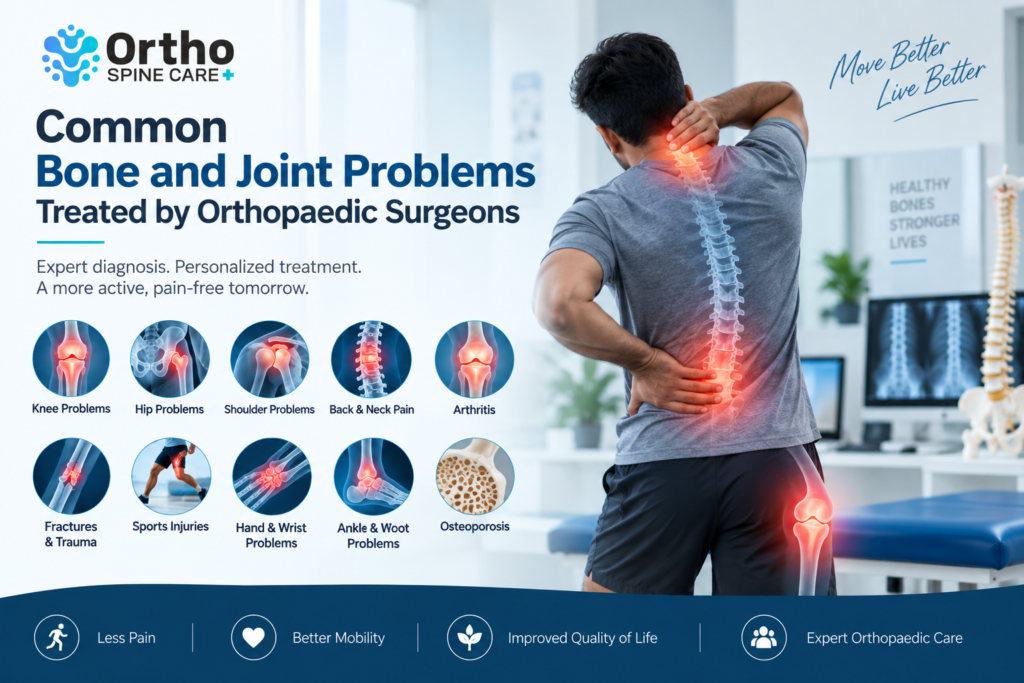
Common Bone and Joint Problems Treated by Orthopaedic Surgeons Bone and joint problems can affect anyone. A young athlete may develop a ligament injury during a game, an office worker may struggle with persistent neck or shoulder pain, while an older adult may experience knee pain because of joint degeneration. Sometimes the discomfort is temporary and improves with rest. However, when pain continues, movement becomes difficult, or an injury affects your everyday activities, it may be time to consult an orthopaedic specialist. Orthopaedic surgeons diagnose and treat conditions involving the bones, joints, muscles, ligaments, tendons, and spine. Depending on the condition, treatment may include medication, physiotherapy, rehabilitation, injections, lifestyle changes, or surgery. If you are looking for an orthopaedic surgeon in Bangalore, understanding some of the common conditions treated by these specialists can help you recognize when professional care may be appropriate. What Does an Orthopaedic Surgeon Treat? Orthopaedic surgeons deal with a wide range of musculoskeletal problems. These can result from injuries, ageing, overuse, sports activities, posture, joint degeneration, or other underlying conditions. Some common problems include: The treatment depends on the individual’s symptoms and diagnosis. Surgery is only one part of orthopaedic care; many conditions can be managed with non-surgical approaches. OrthoSpineCare’s services include fracture management, spine care, bone and joint treatment, sports injury management, pain management, physiotherapy and rehabilitation, and specialized treatments. 1. Arthritis and Joint Pain Arthritis is one of the common causes of joint pain and stiffness. It can affect different parts of the body, including the knees, hips, shoulders, hands, and other joints. People with joint problems may notice: Joint pain can have different causes, so getting the right diagnosis is important. Treatment may involve medication, physiotherapy, activity modification, injections, joint-preservation approaches, or joint replacement in selected cases. 2. Knee Problems Your knees carry much of your body’s weight and are involved in almost every movement you make. Knee problems can develop because of sports injuries, overuse, arthritis, previous injuries, or age-related changes. Common symptoms include pain while walking, climbing stairs, squatting, exercising, or getting up from a chair. An orthopaedic surgeon can evaluate the knee and determine whether conservative treatment, rehabilitation, injections, or a surgical procedure may be appropriate. Not every knee problem requires surgery. The treatment should be based on the actual cause and severity of the problem. 3. Shoulder Problems Shoulder pain can make simple activities surprisingly difficult. Reaching overhead, lifting something, dressing, exercising, or even sleeping on one side may become uncomfortable. Shoulder problems can involve the joint, tendons, muscles, or surrounding soft tissues. Rotator cuff injuries are one example of a condition that may require orthopaedic assessment. Depending on the diagnosis, treatment may include rehabilitation, medication, injections, or surgery when necessary. 4. Hip Problems Hip pain can affect walking, standing, exercising, and everyday movement. Some people experience discomfort in the hip itself, while others may feel pain around the groin, thigh, or buttock. Hip problems can be related to injuries, arthritis, joint degeneration, or other musculoskeletal conditions. Early evaluation can help determine the source of the pain and identify suitable treatment options. 5. Back and Neck Pain Back and neck pain are particularly common among people who spend long hours sitting, driving, working at a computer, or maintaining poor posture. While occasional discomfort may improve, persistent or recurring pain deserves attention. Orthopaedic and spine specialists may manage conditions such as: Treatment may range from non-surgical care and rehabilitation to minimally invasive procedures or surgery, depending on the diagnosis. 6. Sciatica Sciatica refers to pain that follows the path of the sciatic nerve, commonly travelling from the lower back through the buttock and into the leg. Patients may describe the sensation as sharp, burning, shooting, or electric-like. Numbness or tingling can also occur. Sciatica can have different underlying causes. A specialist assessment can help determine what is contributing to the symptoms and whether further investigation or treatment is needed. 7. Slipped Disc The discs between the vertebrae help cushion and support the spine. Sometimes, a disc can bulge or become damaged and irritate a nearby nerve. A slipped disc may cause: Treatment depends on the individual’s symptoms and the underlying condition. Some patients may improve with non-surgical treatment, while others may require further specialist intervention. 8. Fractures and Trauma A fracture can occur after a fall, accident, sports injury, or other trauma. Some fractures are obvious, while others may initially appear to be a simple injury. Significant pain, swelling, deformity, or difficulty using the affected body part should be evaluated promptly. Orthopaedic fracture care may include: The appropriate treatment depends on the location and nature of the fracture. 9. Sports Injuries Sports and fitness activities are excellent for maintaining an active lifestyle, but injuries can happen. Running, cycling, cricket, football, badminton, gym workouts, and other activities can place stress on the muscles, joints, tendons, and ligaments. Common sports-related problems include: Ignoring an injury and returning to activity too quickly may delay recovery. A proper assessment can help determine the extent of the injury and guide rehabilitation. 10. Ligament and Tendon Problems Ligaments connect bones to one another, while tendons connect muscles to bones. Both can become injured through sports, accidents, repetitive activity, or overuse. Depending on the injury, patients may experience pain, swelling, weakness, instability, or difficulty moving the affected area. Treatment varies according to the severity of the injury. Rehabilitation can be an important part of recovery, while some significant injuries may require surgical intervention. 11. Osteoporosis and Bone Health Bone health becomes increasingly important as we age. Osteoporosis can reduce bone strength and increase the risk of fractures. This is particularly concerning in older adults because a fracture can significantly affect mobility and independence. Orthopaedic care may include bone health assessment, osteoporosis screening guidance, treatment planning, and strategies to reduce the risk of falls and fractures. Maintaining adequate physical activity and following appropriate medical advice can also support overall musculoskeletal health. 12. Orthopaedic Problems in Children Children have developing bones and joints, so their orthopaedic needs can

Orthopaedic Surgeon in Bangalore
Orthopedic Doctor

Orthopaedic Surgeon vs Physiotherapist: Who Should You Consult?

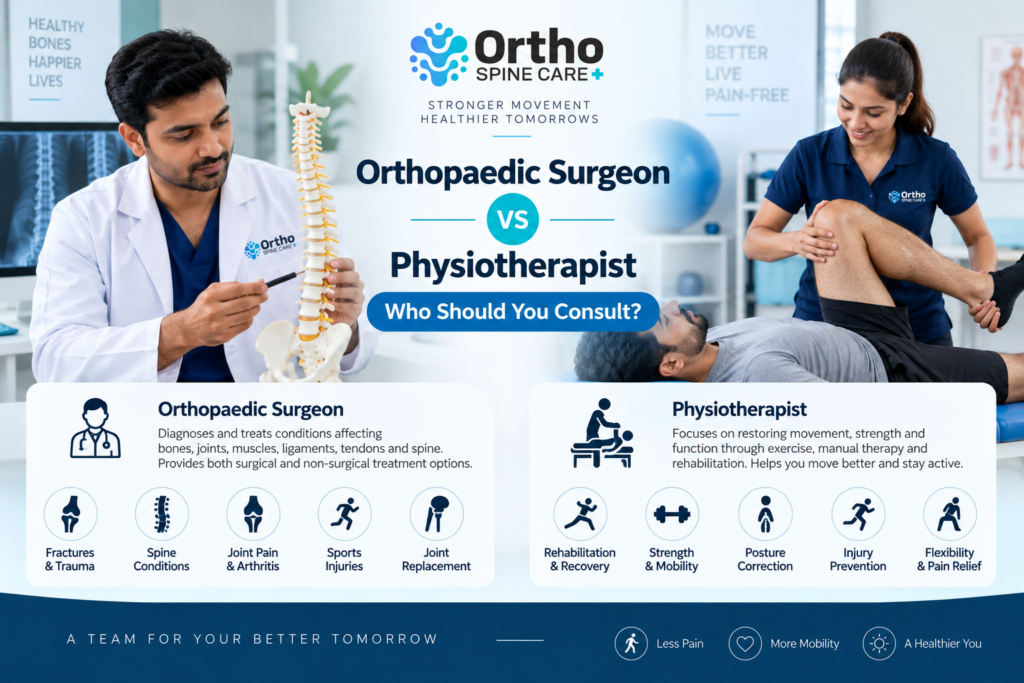
Orthopaedic Surgeon vs Physiotherapist: Who Should You Consult? When you have back pain, knee discomfort, a sports injury, or difficulty moving a joint, one question often comes to mind: Should I see an orthopaedic surgeon or a physiotherapist? Both professionals play an important role in musculoskeletal healthcare, but their roles are different. An orthopaedic surgeon focuses on diagnosing and treating conditions affecting the bones, joints, muscles, ligaments, tendons, and spine. A physiotherapist focuses mainly on improving movement, strength, flexibility, and physical function through rehabilitation and therapeutic exercises. In many situations, you may even benefit from both. The right choice depends on what is causing your symptoms and how severe or persistent they are. If you are searching for an orthopaedic surgeon in Bangalore, understanding the difference between these two professionals can help you make a more informed decision. What Does an Orthopaedic Surgeon Do? An orthopaedic surgeon is a medical doctor who specializes in conditions affecting the musculoskeletal system. This includes problems involving: An orthopaedic surgeon can evaluate an injury or persistent pain, make a diagnosis, recommend investigations when appropriate, and discuss both surgical and non-surgical treatment options. Importantly, seeing an orthopaedic surgeon does not automatically mean you will need surgery. Many orthopaedic conditions can initially be managed with conservative treatment, such as medication, activity modification, physiotherapy, rehabilitation, pain management, or injections. Surgery may be considered when it is appropriate for the specific condition. What Does a Physiotherapist Do? Physiotherapists specialize in helping people restore movement and physical function. They commonly work with patients recovering from injuries, surgery, chronic pain, or conditions that affect mobility. Physiotherapy may involve: For example, after an orthopaedic injury or surgery, physiotherapy may be an important part of the recovery process. The goal is usually to help you move better, become stronger, return to normal activities, and reduce the risk of future problems. Orthopaedic Surgeon vs Physiotherapist: What’s the Difference? The simplest way to understand the difference is this: An orthopaedic surgeon diagnoses and manages musculoskeletal conditions, including conditions that may require surgery. A physiotherapist focuses on restoring movement, strength, and function through rehabilitation. However, there is considerable overlap in patient care. For example, someone with knee pain may first need an orthopaedic assessment to determine whether the problem is related to arthritis, an injury, a ligament problem, or another condition. Once the diagnosis is established, physiotherapy may become an important part of treatment. In other cases, someone with mild muscle stiffness or a movement problem may benefit from physiotherapy without needing surgical evaluation. When Should You See an Orthopaedic Surgeon? Consider consulting an orthopaedic specialist when you have a problem that may require medical diagnosis or specialist assessment. Examples include: 1. Persistent Joint Pain If knee, shoulder, hip, ankle, wrist, or other joint pain continues for several weeks or keeps returning, an orthopaedic evaluation may help identify the underlying cause. 2. Significant Injury Falls, road accidents, sports injuries, and other trauma can result in fractures, dislocations, ligament injuries, or other structural problems. An orthopaedic assessment can help determine the extent of the injury and the appropriate treatment. 3. Severe or Recurring Back Pain Persistent back or neck pain may have several possible causes. Conditions such as sciatica, slipped discs, spondylosis, spinal injuries, scoliosis, and other spine problems may require assessment by a spine or orthopaedic specialist. 4. Pain That Travels Into Your Arm or Leg Pain that travels from your back into your leg or from your neck into your arm can sometimes be associated with nerve irritation. If these symptoms persist or are accompanied by numbness, tingling, or weakness, specialist assessment is advisable. 5. Difficulty Moving a Joint If you suddenly lose movement or gradually find it harder to use a joint, it is worth finding out why. An orthopaedic specialist can evaluate the problem and determine whether further investigations or treatment are required. 6. You May Need Surgery Certain fractures, severe joint damage, ligament injuries, spinal conditions, and other problems may eventually require surgery. An orthopaedic surgeon can determine whether surgery is appropriate and explain the available options. When Should You See a Physiotherapist? Physiotherapy can be particularly useful when your main goal is to improve movement, strength, flexibility, and physical function. You may benefit from physiotherapy when: Physiotherapy can also play an important role in preventing future injuries by helping improve strength, flexibility, balance, and movement patterns. What About Back Pain? Back pain is a good example of why choosing between an orthopaedic surgeon and physiotherapist is not always straightforward. If you have mild back discomfort after sitting for a long time, a physiotherapy-based approach may be useful. However, persistent, severe, recurring, or radiating back pain may require an assessment by an orthopaedic or spine specialist first. For example, symptoms associated with a slipped disc or sciatica may need a proper diagnosis before beginning a rehabilitation program. Once the underlying problem has been evaluated, physiotherapy may become an important part of the treatment plan. What About Knee Pain? Knee pain can also have many different causes. It could be related to: A physiotherapist can help with strength, mobility, movement, and rehabilitation. However, if the pain is persistent, severe, associated with an injury, or affecting your ability to walk and perform everyday activities, an orthopaedic evaluation may be appropriate. The important thing is to understand the cause before deciding on treatment. Can You Need Both? Absolutely. In fact, many patients benefit from coordinated care. Imagine someone who has undergone an orthopaedic procedure. The surgeon may address the underlying structural problem, while the physiotherapist helps the patient regain strength, flexibility, balance, and movement during recovery. Similarly, a patient with a sports injury may require medical assessment first and then follow a rehabilitation program to safely return to their sport. This teamwork can make the recovery process more structured and personalized. Does Seeing an Orthopaedic Surgeon Mean You Need an Operation? No. This is a common misconception. Orthopaedic surgeons provide both surgical and non-surgical care. Depending on the condition, treatment may involve medication,

Orthopaedic Surgeon in Bangalore
Orthopedic Doctor

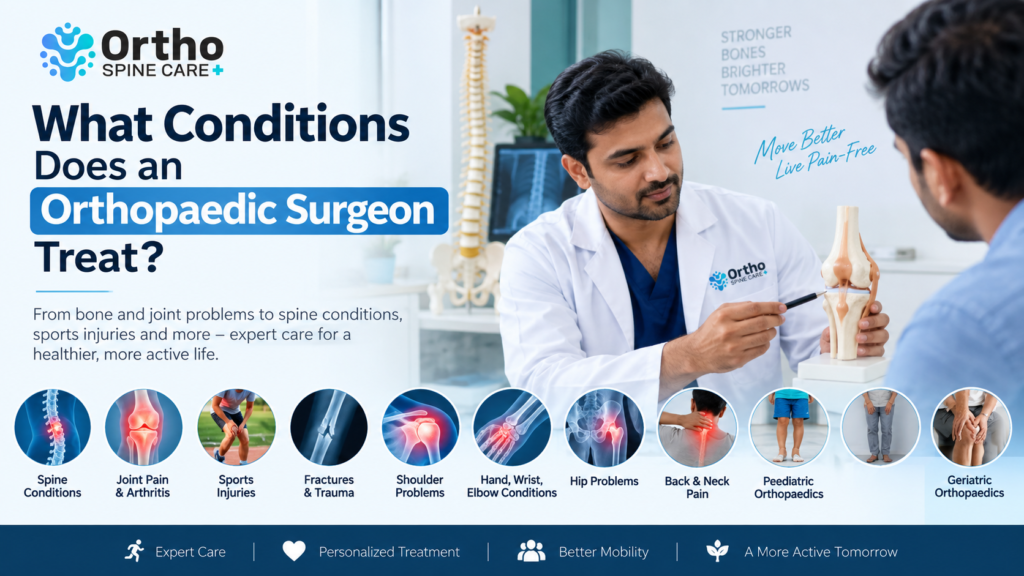
What Conditions Does an Orthopaedic Surgeon Treat?

What Conditions Does an Orthopaedic Surgeon Treat? When you hear the word orthopaedic surgeon, you might immediately think of broken bones or surgery. However, orthopaedic care covers much more than that. Orthopaedic surgeons diagnose and treat conditions affecting the bones, joints, muscles, ligaments, tendons, and spine. Depending on the problem, treatment may involve physiotherapy, medication, rehabilitation, injections, lifestyle changes, or surgery. From persistent knee pain and back problems to sports injuries and fractures, an orthopaedic surgeon can help identify the cause of your symptoms and recommend an appropriate treatment plan. If you are looking for an orthopaedic surgeon in Bangalore, understanding the conditions these specialists treat can help you decide when it may be time to seek professional advice. What Does an Orthopaedic Surgeon Do? An orthopaedic surgeon specializes in the diagnosis and treatment of problems affecting the musculoskeletal system. This includes: Not every orthopaedic condition requires surgery. In fact, many problems can initially be managed with non-surgical treatments and rehabilitation. The treatment approach depends on your symptoms, diagnosis, severity of the condition, lifestyle, age, and overall health. 1. Spine Conditions and Back Problems Spine-related problems are among the common reasons people seek orthopaedic care. Long hours at a desk, poor posture, injuries, age-related changes, and other factors can contribute to back and neck problems. An orthopaedic and spine specialist may evaluate conditions such as: Symptoms may include back pain, neck pain, stiffness, tingling, numbness, or pain that travels into the arm or leg. Depending on the diagnosis, treatment may include conservative care, physiotherapy, pain management, spinal injections, minimally invasive procedures, or surgery when necessary. 2. Sciatica and Nerve Pain Sciatica typically refers to pain that travels along the path of the sciatic nerve, often extending from the lower back through the buttock and into the leg. Some people describe it as a sharp, shooting, burning, or electric-like pain. You may also experience numbness or tingling. Because several conditions can cause similar symptoms, it is important to identify the underlying problem rather than simply treating the pain. An orthopaedic or spine specialist can assess your symptoms and determine whether further investigation or treatment is needed. 3. Slipped Disc and Disc Problems The discs between the bones of your spine help provide cushioning and flexibility. When a disc becomes damaged or protrudes, it can sometimes irritate nearby nerves. This may result in: Treatment depends on the severity of the condition and the symptoms you experience. Many patients may initially be considered for non-surgical treatment. However, certain cases may require specialist procedures or surgery. 4. Arthritis and Joint Problems Arthritis can affect different joints and may cause pain, stiffness, swelling, and difficulty with movement. Orthopaedic care may help patients dealing with joint problems involving the: The goal is not simply to reduce pain but also to preserve mobility and help you remain active. Depending on the condition, treatment may include medication, physiotherapy, activity modification, injections, joint preservation approaches, or joint replacement when appropriate. 5. Knee Pain Knee pain can affect people of all ages. For some, it may develop after an injury or sports activity. For others, it can gradually appear due to arthritis or other joint-related problems. You may notice knee pain while: Persistent knee pain should not automatically be assumed to require surgery. An orthopaedic surgeon can evaluate the cause and discuss appropriate treatment options based on the condition. 6. Shoulder and Rotator Cuff Problems The shoulder is a highly mobile joint, which also makes it vulnerable to injuries and overuse. Shoulder problems may involve muscles, tendons, ligaments, or the joint itself. Rotator cuff injuries are particularly common among people involved in sports or activities requiring repeated overhead movements. Symptoms may include: Treatment depends on the nature and severity of the injury and may include rehabilitation, medication, injections, or surgical treatment in selected cases. 7. Sports Injuries You don’t have to be a professional athlete to suffer a sports injury. Running, cycling, gym workouts, cricket, football, badminton, and other physical activities can sometimes lead to injuries involving muscles, tendons, ligaments, and joints. Orthopaedic surgeons may treat problems such as: Proper diagnosis is important because returning to activity too quickly can sometimes worsen an injury or delay recovery. 8. Fractures and Trauma Fractures can occur because of falls, road accidents, sports injuries, workplace accidents, or other trauma. Orthopaedic fracture care may involve: The treatment depends on the type, location, and severity of the fracture. If you have suffered a significant injury and are experiencing severe pain, swelling, deformity, or difficulty using the affected limb, prompt medical evaluation is important. 9. Osteoporosis and Bone Health Bone strength can decrease with age and certain medical conditions. Osteoporosis can make bones more vulnerable to fractures, particularly in older adults. Orthopaedic care may include evaluation of bone health, osteoporosis screening guidance, treatment planning, and strategies to reduce fracture risk. Maintaining bone health is particularly important as we get older because a fracture can significantly affect mobility and independence. 10. Paediatric Orthopaedic Conditions Children’s bones and joints are still developing, so their orthopaedic needs can be different from those of adults. Paediatric orthopaedic care may address conditions such as: Early assessment can be helpful when parents notice unusual walking patterns, limb alignment concerns, persistent pain, or other musculoskeletal changes. 11. Orthopaedic Problems in Older Adults Ageing can bring changes in bone and joint health. Older adults may experience: Orthopaedic care for older adults focuses not only on treating an existing condition but also on maintaining independence and mobility. Fall prevention guidance and appropriate joint care can play an important role in helping older adults remain active. 12. Joint Replacement and Advanced Joint Care When severe joint damage significantly affects movement and quality of life, joint replacement may be considered in selected patients. Knee, hip, and shoulder replacement procedures can be used to address severe joint degeneration and other conditions when other treatment options are no longer providing adequate relief. However, joint replacement is not automatically the first choice for every patient. A specialist evaluates the

Orthopaedic Surgeon in Bangalore
Orthopedic Doctor

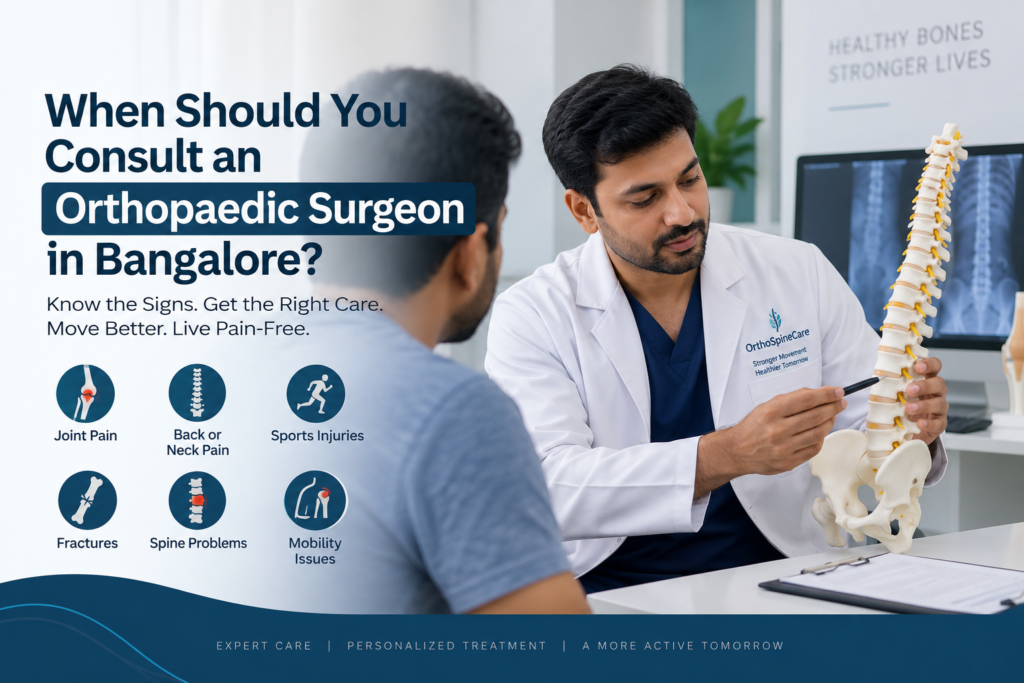
When Should You Consult an Orthopaedic Surgeon in Bangalore?

When Should You Consult an Orthopaedic Surgeon in Bangalore? Pain in your bones, joints, muscles, or back can sometimes feel like something you simply have to live with. A little discomfort after exercise, a stiff back after a long day at work, or occasional knee pain may not seem serious at first. But when the pain keeps returning, starts affecting your daily activities, or gradually becomes worse, it may be time to speak with an orthopaedic specialist. An orthopaedic surgeon can evaluate problems involving the bones, joints, muscles, ligaments, tendons, and spine and recommend treatment based on the underlying cause. Treatment does not always mean surgery. In many cases, medication, physiotherapy, lifestyle changes, injections, or other non-surgical approaches may be considered first. If you are wondering whether you should consult an orthopaedic surgeon in Bangalore, here are some common situations when professional evaluation can be helpful. 1. Your Joint Pain Isn’t Going Away Occasional joint discomfort can happen after physical activity or a minor injury. However, persistent pain in the knee, shoulder, hip, ankle, elbow, or wrist should not be ignored. If joint pain continues for several weeks, repeatedly returns, or interferes with walking, climbing stairs, exercising, working, or sleeping, an orthopaedic evaluation can help identify the cause. Joint pain may be associated with several conditions, including arthritis, injuries, inflammation, cartilage problems, or other musculoskeletal issues. Finding the cause is important because treatment depends on the condition responsible for the pain. 2. You Have Persistent Back or Neck Pain Back and neck pain are extremely common, especially among people who spend long hours sitting at a desk, driving, using computers, or maintaining poor posture. While many episodes of back pain improve with appropriate conservative care, persistent or recurring symptoms deserve attention. You may want to consult a spine or orthopaedic specialist if your back or neck pain: Conditions such as sciatica, slipped discs, spondylosis, spinal injuries, and other spine-related problems may require specialist assessment. 3. You Have Pain That Travels Down Your Leg or Arm Not all pain stays where it begins. For example, a problem involving the lower back may cause pain that travels through the buttock and down the leg. Similarly, certain conditions affecting the neck can cause symptoms extending into the shoulder or arm. This type of radiating pain can sometimes be related to irritation or compression of a nerve. If you experience persistent shooting, burning, tingling, or numb sensations along with pain, it is worth getting evaluated rather than repeatedly treating only the symptoms. 4. You Have Suffered a Fracture or Serious Injury Accidents, falls, sports injuries, and other trauma can result in fractures, dislocations, ligament injuries, or damage to soft tissues. A fracture may not always look obvious from the outside. Swelling, bruising, difficulty moving a limb, significant pain, or inability to put weight on an injured area can be signs that medical evaluation is necessary. Orthopaedic care may involve imaging, immobilization with a cast or splint, fracture reduction, fixation when required, and rehabilitation. Getting appropriate treatment early can help support proper healing and restore function. 5. Your Knee Hurts When You Walk or Climb Stairs Knee pain is one of the most common reasons people seek orthopaedic care. You may notice pain while: Knee pain can have many different causes, from injuries and overuse to arthritis and age-related changes. Rather than assuming that knee pain automatically means you need a knee replacement, it is better to have the problem assessed. Depending on the diagnosis and severity, treatment may range from exercise and physiotherapy to medication, injections, or surgery when appropriate. 6. You Have a Sports Injury You don’t have to be a professional athlete to experience a sports injury. Running, cycling, gym workouts, football, cricket, badminton, and other activities can place stress on muscles, tendons, ligaments, and joints. Common sports-related problems include ligament injuries, tendonitis, muscle injuries, and rotator cuff problems. If swelling, instability, weakness, restricted movement, or persistent pain continues after an injury, an orthopaedic assessment can help determine the extent of the problem and guide recovery. Returning to sports too quickly without proper evaluation may increase the risk of aggravating an injury. 7. Your Pain Is Affecting Your Everyday Life One of the simplest ways to decide whether you need specialist care is to ask yourself: “Is this pain stopping me from doing the things I normally do?” If you are avoiding stairs because of knee pain, struggling to sit comfortably because of back pain, unable to lift your arm because of shoulder pain, or finding it difficult to walk after an injury, it is worth discussing your symptoms with an orthopaedic specialist. Pain that affects your work, sleep, exercise, travel, household activities, or overall independence deserves attention. 8. You Have Recurring Pain After an Old Injury Sometimes an injury seems to heal, but discomfort or stiffness returns months or even years later. An old fracture, ligament injury, joint injury, or spinal problem can sometimes contribute to ongoing symptoms. If the same area repeatedly becomes painful, swollen, stiff, or unstable, an orthopaedic assessment may help determine whether there is an underlying issue that needs treatment. 9. Conservative Treatment Hasn’t Helped Many orthopaedic problems can initially be managed without surgery. Depending on the condition, treatment may include: However, if symptoms continue despite appropriate conservative treatment, a specialist may recommend further evaluation or discuss other treatment options. Surgery is generally considered based on the diagnosis, severity of the condition, symptoms, response to other treatments, and the patient’s individual circumstances. 10. You Want a Proper Diagnosis Before Choosing Treatment One of the biggest mistakes people make with musculoskeletal pain is trying to diagnose themselves. A similar symptom can have very different causes. For example, “back pain” could be related to muscles, joints, discs, nerves, posture, injury, or other conditions. Likewise, knee pain may arise from arthritis, ligament problems, cartilage issues, overuse, or an injury. An orthopaedic consultation can include a discussion of your symptoms, medical history, physical examination, and appropriate diagnostic tests when necessary.

Orthopaedic Specialist in Bangalore
Orthopedic Doctor

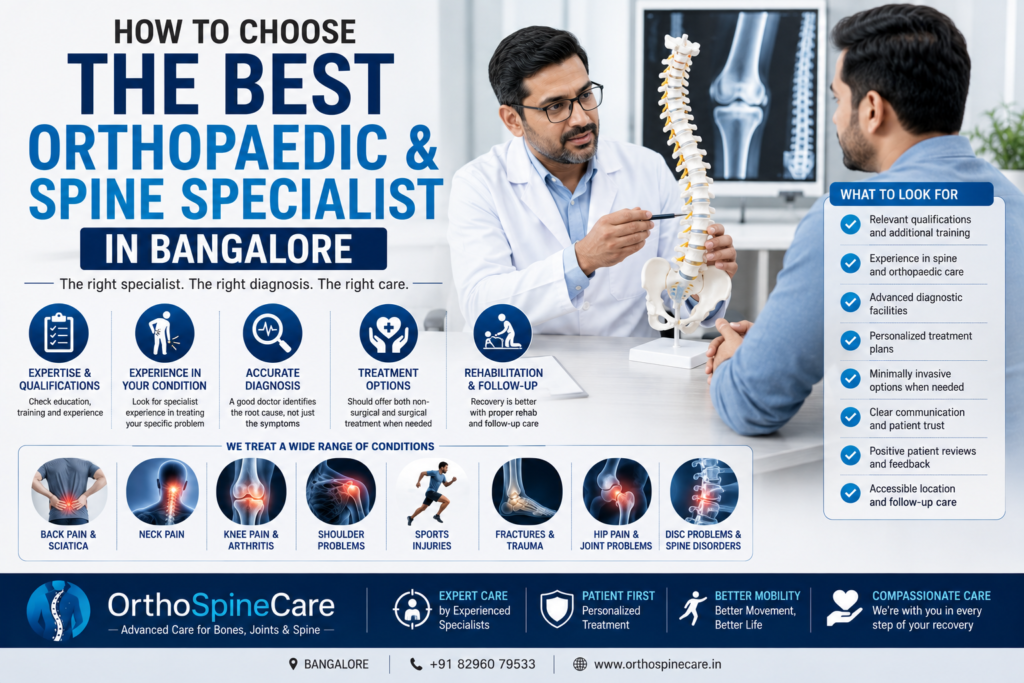
How to Find the Right Orthopaedic Specialist in Bangalore

How to Find the Right Orthopaedic Specialist in Bangalore When knee pain makes climbing stairs difficult, back pain starts affecting your workday, or a sports injury keeps you away from the activities you enjoy, finding the right orthopaedic specialist becomes an important decision. Bangalore has no shortage of hospitals, clinics, and orthopaedic doctors. But having many choices can make the decision harder—not easier. Should you choose a specialist based on experience? Location? The treatment options they offer? Patient reviews? Or whether they recommend surgery? The answer is that there isn’t one factor that makes an orthopaedic specialist right for everyone. Your choice should depend on your condition, treatment needs, and how comfortable you feel with the doctor’s approach. Here are some practical things to consider when looking for the right orthopaedic specialist in Bangalore. What Does an Orthopaedic Specialist Treat? Orthopaedic specialists diagnose and manage conditions affecting the musculoskeletal system, including bones, joints, muscles, ligaments, tendons, and the spine. Patients may consult an orthopaedic specialist for problems such as: Because orthopaedics is a broad field, different doctors may have particular areas of expertise. This is one of the first things you should consider. 1. Look for Expertise Relevant to Your Problem One of the most important factors is whether the doctor’s experience matches your condition. For example, if you’re experiencing persistent back pain with leg symptoms, you may want to consult someone with experience in spine care. If you’re recovering from a sports injury, a specialist experienced in sports-related musculoskeletal problems may be more appropriate. Before booking an appointment, check: You don’t necessarily need the doctor with the longest list of qualifications. What matters is whether their expertise is relevant to your particular problem. 2. Don’t Choose a Doctor Based Only on Online Ratings Online reviews can be useful, but they shouldn’t be the only reason you choose a doctor. A review may tell you about someone’s experience with communication, waiting time, or the overall clinic environment. However, one patient’s experience doesn’t necessarily tell you whether a particular treatment is appropriate for your condition. Instead, consider reviews alongside: Think of reviews as one piece of the puzzle, rather than the entire decision. 3. Pay Attention to the Diagnosis A good orthopaedic consultation should begin with understanding your problem. The doctor may ask about: A physical examination may then help the doctor understand the problem more clearly. Depending on the situation, diagnostic tests such as X-rays, MRI scans, CT scans, or other investigations may be recommended. The goal is to identify the underlying cause rather than simply treat the location where you feel pain. 4. Ask About Your Treatment Options Once you understand the diagnosis, ask what treatment options are available. Depending on the condition, orthopaedic treatment may include: A good consultation should give you an understanding of why a particular treatment is being recommended. 5. Don’t Assume Surgery Is Always Necessary The word “orthopaedic” sometimes makes people immediately think about surgery. But that’s not how modern orthopaedic care works. Many conditions can be managed initially with non-surgical treatment when clinically appropriate. Physiotherapy, strengthening exercises, activity modification, medications, and other approaches may be considered depending on the diagnosis. Surgery may become an option when there is a significant structural problem or when appropriate non-surgical treatments have not provided enough improvement. If surgery is recommended, don’t be afraid to ask: Understanding the reasoning behind a recommendation can help you make a more informed decision. 6. Consider the Doctor’s Communication Style Medical treatment isn’t just about tests and procedures. Communication matters too. You should feel comfortable asking questions about your condition and treatment. During your consultation, notice whether the doctor: You don’t need to understand every medical term. A good specialist should be willing to explain things in language you can understand. 7. Look at the Complete Treatment Journey Orthopaedic care doesn’t always end when the initial pain improves. For many conditions, recovery may involve rehabilitation and gradual return to normal activities. Depending on your problem, ask about: This can be particularly important after injuries or procedures. 8. Consider Convenience—But Don’t Make It the Only Factor Bangalore is a large city, and travelling across the city for repeated appointments can become difficult. Location and accessibility are therefore worth considering, particularly if you require multiple follow-up visits or physiotherapy sessions. However, convenience shouldn’t completely outweigh medical expertise. Ideally, look for a specialist who offers the appropriate expertise while remaining reasonably accessible for you. 9. Ask Questions During Your First Consultation You don’t have to walk into your appointment knowing exactly what to ask. A few simple questions can make the consultation more useful: “What is causing my pain?” “Do I need any tests?” “What treatment options do I have?” “Can this condition be managed without surgery?” “How long might recovery take?” “What activities should I avoid?” “Will I need physiotherapy?” These questions can help you understand both the problem and the treatment plan. 10. Be Careful About Guaranteed Results Be cautious if someone promises a guaranteed cure or a specific result without properly evaluating your condition. Orthopaedic problems vary significantly from one patient to another. Recovery depends on factors such as the underlying condition, severity, age, general health, treatment response, and adherence to rehabilitation. A responsible specialist should explain what can reasonably be expected rather than making unrealistic promises. When Should You See an Orthopaedic Specialist? You may want to consider an orthopaedic consultation if you have: You should seek prompt medical attention after a significant injury if there is severe pain, obvious deformity, inability to use the affected limb, or other concerning symptoms. Why Bangalore Patients Should Consider Specialized Orthopaedic Care Bangalore’s active lifestyle and demanding work environment mean people may experience musculoskeletal problems for very different reasons. An office worker may struggle with persistent neck or back discomfort. A recreational runner may develop a knee problem. An older adult may experience arthritis-related stiffness. Someone else may need treatment following an accident. The important point is that the same symptom can have

Scroll to Top
Call Now Button