Orthopedic Doctor

Best Orthopaedic Doctor in Bangalore
Orthopedic Doctor

Orthopaedic Treatment in Bangalore: What Patients Should Know

Orthopaedic Treatment in Bangalore: What Patients Should Know Bone, joint, muscle, and spine problems can affect almost every part of daily life. A painful knee can make climbing stairs difficult. Shoulder pain can make it uncomfortable to lift your arm. Back pain can turn a normal workday into a struggle. And when the pain doesn’t go away, one of the first questions people ask is: “Where should I go for orthopaedic treatment in Bangalore?” With so many clinics, hospitals, specialists, and treatment options available, choosing the right care can feel confusing. More importantly, orthopaedic treatment isn’t the same for everyone. The right treatment depends on the cause of the problem, how severe it is, your age, activity level, and overall health. This guide explains what patients should know before seeking orthopaedic treatment in Bangalore and what to expect during the treatment process. What Does Orthopaedic Treatment Include? Orthopaedics is a medical specialty focused on the musculoskeletal system, which includes bones, joints, muscles, ligaments, tendons, and related structures. An orthopaedic specialist may evaluate and treat conditions affecting areas such as: Treatment can range from simple lifestyle modifications and physiotherapy to medications, injections, minimally invasive procedures, or surgery when necessary. Common Orthopaedic Problems in Bangalore People seek orthopaedic care for many different reasons. Some problems develop gradually, while others occur suddenly after an accident or injury. 1. Knee Pain Knee pain is one of the most common reasons people consult an orthopaedic specialist. It can be associated with: Knee pain may make walking, squatting, climbing stairs, or exercising uncomfortable. 2. Back and Spine Problems Long working hours, prolonged sitting, poor movement habits, injuries, and various spinal conditions can contribute to back pain. Some patients may experience only local back discomfort, while others may have symptoms such as pain travelling into the leg, numbness, tingling, or weakness. Persistent or worsening symptoms should be evaluated rather than repeatedly managed with painkillers or home remedies. 3. Arthritis and Joint Stiffness Arthritis can cause pain, stiffness, swelling, and difficulty moving a joint. It may affect the: The treatment approach depends on the type of arthritis and the individual’s symptoms. 4. Sports Injuries Sports and exercise are excellent for overall health, but injuries can happen. Common sports-related problems include: Proper diagnosis can help determine when it is safe to return to physical activity. 5. Fractures and Trauma Falls, road accidents, workplace injuries, and sports accidents can result in fractures or other orthopaedic injuries. Some fractures require immediate medical attention and may need immobilization, reduction, or surgery depending on the injury. When Should You See an Orthopaedic Specialist? Not every ache requires a specialist consultation. However, persistent or recurring symptoms shouldn’t be ignored. Consider seeing an orthopaedic doctor if you experience: Early assessment can help identify the underlying problem and guide appropriate treatment. What Happens During an Orthopaedic Consultation? Many patients feel nervous before their first consultation because they don’t know what to expect. The process usually starts with a discussion about your symptoms. Step 1: Understanding Your Symptoms Your doctor may ask: These details can provide important clues. Step 2: Physical Examination The affected area may be examined to assess: A physical examination helps the doctor understand how the problem is affecting your body. Step 3: Diagnostic Tests Not everyone needs imaging or laboratory tests. Depending on your symptoms, the doctor may recommend an X-ray, MRI, CT scan, ultrasound, or blood tests. The purpose is to understand the underlying condition rather than simply identify where it hurts. Does Orthopaedic Treatment Always Mean Surgery? No. This is one of the biggest misconceptions about orthopaedic care. Many orthopaedic conditions can initially be managed with non-surgical approaches when appropriate. Depending on the diagnosis, treatment may include: Surgery may be considered when there is a significant structural problem or when appropriate non-surgical treatment does not provide sufficient improvement. The decision should always be based on the individual patient’s condition. The Importance of Physiotherapy and Rehabilitation Treatment doesn’t necessarily end when the pain decreases. For many injuries and orthopaedic conditions, rehabilitation plays an important role in restoring strength and movement. Depending on the condition, rehabilitation may focus on: Following a structured rehabilitation plan can be particularly important after injuries and certain procedures. How to Choose Orthopaedic Treatment in Bangalore Bangalore has many healthcare options, so choosing a specialist can sometimes feel overwhelming. Instead of selecting a clinic based only on advertisements or online rankings, consider a few practical factors. Look at the Doctor’s Expertise Orthopaedics covers a broad range of conditions. If your problem involves the spine, sports injuries, joints, or trauma, look for a doctor with relevant experience in that area. Consider the Diagnostic Approach Accurate diagnosis is an important part of effective treatment. A good consultation should focus on understanding your symptoms and medical history rather than immediately recommending a procedure. Ask About Non-Surgical Options If surgery has been suggested, don’t hesitate to ask whether there are appropriate non-surgical options for your particular condition. Consider Rehabilitation Ask how rehabilitation and follow-up care will be handled, particularly if you’re recovering from an injury or procedure. Communication Matters You should feel comfortable asking questions about your diagnosis, treatment choices, expected recovery, and possible risks. Good communication can make the treatment journey easier to understand. Why Personalized Orthopaedic Treatment Matters Two people can have pain in the same joint but completely different underlying problems. For example, knee pain in a young athlete may be related to an injury, while knee pain in an older adult may be associated with degenerative changes. Treating both patients in exactly the same way wouldn’t necessarily make sense. That’s why orthopaedic treatment should consider: A personalized approach helps doctors select treatment based on the actual condition rather than simply treating the symptom. Orthopaedic Treatment for Office Workers Bangalore’s technology and corporate workforce means many people spend long hours sitting at desks. Extended sitting and limited physical activity can contribute to musculoskeletal discomfort, particularly when combined with poor ergonomics or insufficient movement. Simple habits can help: If back
Orthopaedic Treatment in Bangalore
Orthopedic Doctor

Bone and Joint Pain: Causes, Symptoms, and Treatment Options

Bone and Joint Pain: Causes, Symptoms, and Treatment Options Bone and joint pain can make even simple daily activities feel difficult. Climbing stairs, getting out of bed, walking to work, lifting something, or sitting for a long time can become uncomfortable when your bones, joints, muscles, or surrounding tissues are affected. While occasional pain may happen after physical activity or a minor injury, persistent bone and joint pain should not be ignored. The cause can range from overuse and injuries to arthritis, inflammation, age-related changes, or other musculoskeletal conditions. The good news is that many bone and joint problems can be managed effectively when the underlying cause is identified early. In this guide, we’ll look at the common causes, symptoms to watch for, and treatment options available. What Is Bone and Joint Pain? Bone and joint pain are often used interchangeably, but they are not exactly the same. Bone pain may feel deep, aching, or tender and can sometimes be related to an injury, infection, nutritional problems, or other underlying conditions. Joint pain, on the other hand, usually occurs around areas where two or more bones meet, such as the: Joint pain may also be accompanied by stiffness, swelling, reduced movement, or a feeling of weakness. Because several structures can contribute to pain, an accurate diagnosis is important before deciding on treatment. Common Causes of Bone and Joint Pain There isn’t one single reason why people develop bone or joint pain. In fact, the cause can vary considerably from person to person. 1. Arthritis Arthritis is one of the common causes of ongoing joint pain. Osteoarthritis, for example, can develop when the tissues within a joint gradually change over time. It commonly affects the knees, hips, hands, and spine and may cause: Other forms of arthritis can involve inflammation and may affect several joints. 2. Injuries and Fractures Falls, accidents, sports injuries, and sudden movements can damage bones, joints, ligaments, tendons, or muscles. A minor injury may cause temporary discomfort, while a fracture or significant soft-tissue injury may require medical evaluation and structured treatment. If pain follows a significant injury, particularly when there is swelling, deformity, or difficulty putting weight on the affected area, seek medical attention. 3. Overuse and Repetitive Stress Sometimes, the problem isn’t a major injury but repeated stress on the same body part. For example, people who spend long hours exercising, standing, typing, driving, or performing repetitive physical tasks may experience discomfort in their: Taking appropriate rest and modifying activities can help, but persistent pain should be assessed rather than repeatedly pushed through. 4. Age-Related Changes As we get older, changes in joints, muscles, bones, and surrounding tissues can contribute to discomfort and reduced mobility. However, joint pain should not automatically be considered a normal part of ageing. Some causes can be managed with exercise, physiotherapy, lifestyle changes, medication, injections, or other treatments depending on the diagnosis. 5. Sports Injuries Athletes and physically active individuals may experience joint pain because of sprains, ligament injuries, tendon problems, cartilage injuries, or overuse. Getting the right diagnosis is important because returning to activity too quickly can sometimes make an injury worse. 6. Inflammation Inflammatory conditions can cause pain, swelling, warmth, and stiffness around affected joints. When multiple joints are painful or symptoms persist without an obvious injury, an orthopaedic or rheumatology evaluation may be appropriate. 7. Poor Posture and Muscle Imbalance The way you sit, stand, walk, or perform repetitive activities can influence how forces are distributed through your body. Poor posture doesn’t explain every case of joint pain, but muscle weakness, reduced flexibility, or movement patterns can contribute to discomfort in certain people. Symptoms You Shouldn’t Ignore Bone and joint pain can appear in different ways. Pay attention to symptoms such as: The combination of symptoms can provide important clues about the underlying problem. When Should You See an Orthopaedic Doctor? You don’t necessarily need to see a doctor for every occasional ache. However, professional evaluation becomes more important when pain is persistent, worsening, or affecting your daily life. Consider consulting an orthopaedic specialist if: After examining you and reviewing your symptoms, the doctor can determine whether further tests are necessary. How Is Bone and Joint Pain Diagnosed? Treatment should begin with understanding why the pain is occurring. During an evaluation, an orthopaedic specialist may consider: Medical History The doctor may ask when the pain started, whether it developed suddenly or gradually, what makes it better or worse, and whether you have experienced previous injuries. Physical Examination The affected area may be examined for swelling, tenderness, movement, strength, stability, and other physical signs. Imaging Tests Depending on the symptoms, imaging such as an X-ray, ultrasound, CT scan, or MRI may be recommended. The choice depends on what the doctor is trying to evaluate. Blood Tests Blood tests aren’t necessary for every joint problem. However, they may sometimes help investigate inflammatory or other systemic conditions. Treatment Options for Bone and Joint Pain There is no universal treatment for every type of bone or joint pain. The right approach depends on the diagnosis, severity of symptoms, age, activity level, and overall health. 1. Lifestyle Changes For some conditions, simple changes can make a meaningful difference. These may include: 2. Physiotherapy Physiotherapy can be an important part of treatment for many musculoskeletal conditions. A physiotherapist may recommend exercises designed to improve: The exercise plan should be appropriate for your condition rather than based solely on generic online exercises. 3. Medications Depending on the cause of pain, a doctor may recommend medications to manage pain or inflammation. It’s important not to regularly self-medicate, particularly if you have other medical conditions or take other medications. A doctor or pharmacist can help determine what is appropriate for you. 4. Injections In selected cases, doctors may consider injections to help manage joint pain or inflammation. Whether an injection is suitable depends on the specific joint problem and individual circumstances. 5. Minimally Invasive Procedures Some conditions may benefit from minimally invasive procedures when conservative treatments

Orthopaedic Treatment in Bangalore
Orthopedic Doctor

When Should You See an Orthopaedic Doctor for Joint Pain?

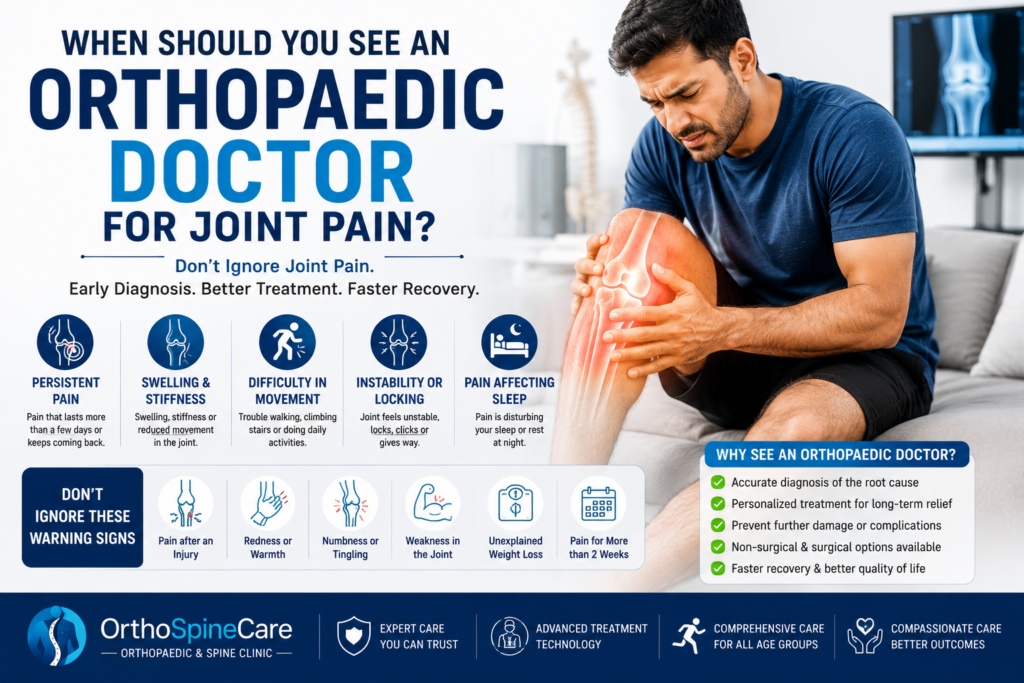
When Should You See an Orthopaedic Doctor for Joint Pain? Joint pain is something many people experience at some point in life. It may happen after a workout, a long day on your feet, an old injury, or simply because of age-related changes. Sometimes, a little rest is enough for the discomfort to settle. But what if the pain keeps coming back? What if your knee hurts every time you climb stairs, your shoulder becomes difficult to move, or your joints feel stiff every morning? These are signs that you may need more than home care. Knowing when to see an orthopaedic doctor for joint pain can help you identify problems early, understand the cause of your symptoms, and choose an appropriate treatment plan. What Causes Joint Pain? Joint pain can have many causes. It isn’t always caused by arthritis. Some common causes include: The location and pattern of your pain can provide clues, but a proper examination is often needed to identify the actual cause. Is All Joint Pain a Reason to See a Doctor? Not necessarily. If you have mild soreness after an unusually demanding workout and it gradually improves with rest, you may not need immediate medical attention. However, persistent, recurring, worsening, or activity-limiting joint pain deserves professional evaluation. A simple way to think about it is: If joint pain starts interfering with the way you walk, work, exercise, sleep, or perform everyday activities, it’s worth getting checked. 1. Your Joint Pain Lasts for Several Weeks Occasional discomfort isn’t always concerning. However, if pain continues for several weeks despite rest and reasonable activity modification, don’t simply keep putting up with it. Persistent pain may indicate an underlying joint, tendon, ligament, cartilage, or bone problem. An orthopaedic doctor can assess the symptoms and determine whether further investigation is needed. 2. Pain Keeps Coming Back Does your knee hurt every few weeks? Does your shoulder become painful whenever you exercise? Does your ankle repeatedly become uncomfortable after walking or playing sports? Recurring pain shouldn’t be ignored. Repeated symptoms may indicate an underlying problem that hasn’t been addressed properly. Instead of repeatedly treating the pain temporarily, finding the cause can help you manage the condition more effectively. 3. You Have Swelling Around the Joint Swelling can occur after injuries or inflammation. For example, a swollen knee after a sports injury may be associated with damage to structures inside or around the joint. See an orthopaedic doctor if swelling: 4. Your Joint Feels Stiff Some stiffness after sitting for a long time can be normal. But persistent stiffness can be a sign of an underlying joint condition. Pay attention if you regularly find it difficult to: An evaluation can help determine whether arthritis, inflammation, injury, or another condition is contributing to the stiffness. 5. You Have Difficulty Walking or Using the Joint Joint pain becomes more significant when it affects normal function. If knee or hip pain makes walking difficult, or shoulder pain prevents you from lifting your arm, consider consulting an orthopaedic specialist. The goal of treatment isn’t simply to reduce pain. It is also to help you maintain or regain mobility and function. 6. Your Joint Feels Unstable Does your knee suddenly give way? Does your ankle feel as though it might twist again? Does your shoulder feel like it is slipping out of place? These sensations may indicate joint instability or ligament-related problems. Continuing sports or strenuous activity without evaluation could potentially increase the risk of further injury. 7. You Hear Clicking, Catching, or Locking Not every clicking sound means there is a serious problem. Some joints can make harmless sounds during movement. However, clicking accompanied by: should be assessed by a healthcare professional. This is particularly important for the knee and shoulder. 8. You Have Pain After an Injury If joint pain began after a fall, accident, sports injury, or sudden twisting movement, don’t assume it’s just a minor strain. Some injuries may involve: If pain is significant or movement is restricted, an orthopaedic evaluation can help determine the extent of the injury. 9. Your Joint Pain Is Getting Worse Pain that gradually becomes more frequent or intense deserves attention. For example, you might initially notice knee pain only after long walks. Later, it may appear while climbing stairs and eventually during normal daily activities. This progression shouldn’t be ignored. Getting evaluated earlier can help you understand what’s happening and discuss appropriate treatment options. 10. Joint Pain Is Affecting Your Sleep Pain that wakes you up at night or makes it difficult to find a comfortable sleeping position can significantly affect your quality of life. If joint pain is repeatedly disturbing your sleep, speak with an orthopaedic doctor rather than relying only on temporary pain relief. 11. You Notice Reduced Strength Pain isn’t the only symptom that matters. If you notice that one arm or leg has become weaker than usual, especially after an injury, seek medical evaluation. Weakness may sometimes indicate a problem involving the muscles, tendons, nerves, or joint structures. 12. You Have Numbness or Tingling Joint pain combined with numbness, tingling, or burning sensations may require further assessment. These symptoms can sometimes indicate nerve involvement, particularly when pain originates around the spine, shoulder, hip, or limb. Which Joints Commonly Need Orthopaedic Care? Knee Pain Knee pain can result from arthritis, ligament injuries, cartilage problems, tendon conditions, or overuse. You should consider an evaluation if you have persistent pain, swelling, locking, instability, or difficulty walking. Shoulder Pain Shoulder problems may develop because of rotator cuff injuries, frozen shoulder, arthritis, tendon problems, or sports-related strain. Persistent pain or difficulty raising your arm deserves attention. Hip Pain Hip pain may originate from the hip joint itself or sometimes from surrounding muscles or even the lower back. Pain while walking, stiffness, or difficulty getting up from a chair may warrant evaluation. Ankle Pain Ankle sprains are common, particularly among athletes. However, recurring sprains, persistent swelling, instability, or difficulty bearing weight should be evaluated. Hand and Wrist Pain

Orthopaedic Specialist in Bangalore
Orthopedic Doctor, Orthospine Doctor

How to Choose the Best Orthopaedic & Spine Specialist in Bangalore

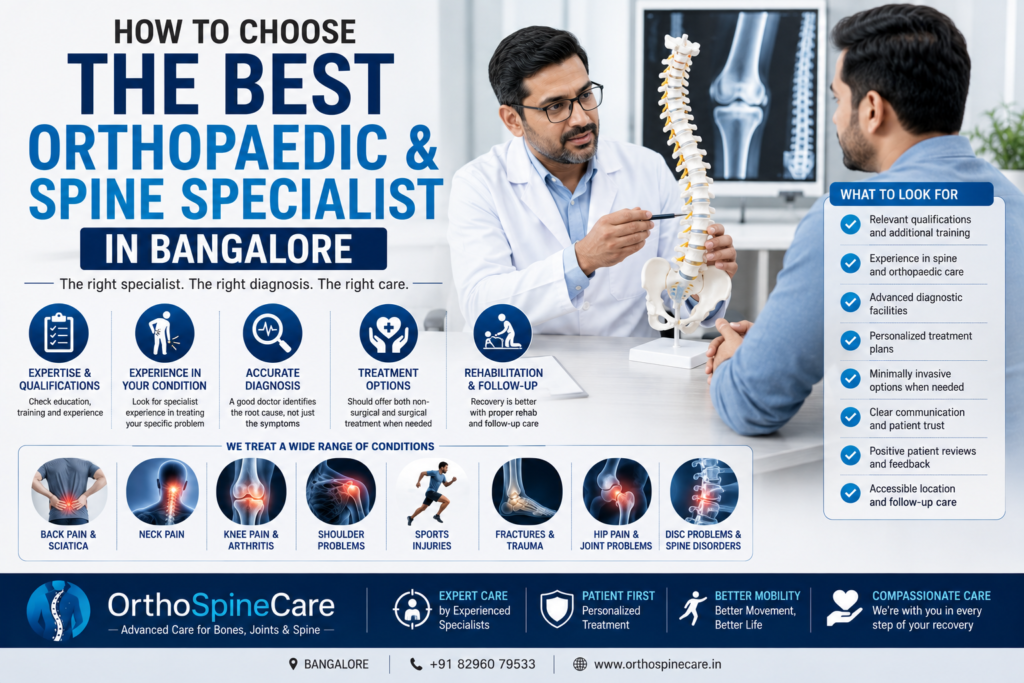
How to Choose the Best Orthopaedic & Spine Specialist in Bangalore Choosing an orthopaedic and spine specialist is an important decision, especially when pain starts affecting your daily life. Whether you’re dealing with persistent back pain, sciatica, a sports injury, arthritis, or a spinal condition, the right specialist can help you understand the cause of your symptoms and explore suitable treatment options. With so many hospitals, clinics, and specialists in Bangalore, knowing what to look for can make the decision easier. The best orthopaedic and spine specialist isn’t necessarily the person with the most advertisements or the longest list of services. Instead, look for a doctor with relevant qualifications, experience in your condition, a clear approach to diagnosis, and a treatment plan that matches your needs. Why Choosing the Right Specialist Matters Bone, joint, and spine problems can have very different causes even when the symptoms appear similar. For example, lower back pain may result from muscle strain, disc problems, arthritis, nerve compression, or other conditions. Similarly, knee pain could come from arthritis, ligament damage, cartilage problems, or an injury. A specialist can evaluate the symptoms and determine whether you need: Getting the right diagnosis before starting treatment can help you avoid unnecessary procedures and focus on the approach that suits your condition. 1. Check the Doctor’s Qualifications Start by looking at the specialist’s educational background and professional training. For orthopaedic and spine problems, you may want to consider doctors with: Additional training can be particularly valuable if you have a complex spinal condition or require specialized treatment. 2. Consider Experience With Your Specific Condition A doctor may be highly qualified but may not focus equally on every orthopaedic condition. Before booking a consultation, check whether the specialist regularly treats the problem you’re experiencing. For example, if you’re looking for treatment for: look for a specialist with relevant experience in that area. 3. Look for a Doctor Who Focuses on Diagnosis First A good consultation should begin with understanding your symptoms rather than immediately discussing treatment. Your doctor should take time to understand: A physical examination can then help the specialist understand your movement, strength, flexibility, reflexes, and pain patterns. If necessary, the doctor may recommend imaging or other tests. 4. Don’t Assume You Need Surgery Many people hesitate to visit an orthopaedic or spine specialist because they believe the consultation will automatically lead to surgery. That’s not necessarily true. Depending on the diagnosis, treatment may begin with non-surgical options such as: Surgery may become appropriate when significant structural problems exist or when suitable conservative treatment doesn’t provide adequate improvement. A specialist who discusses different treatment options can help you make a more informed decision. 5. Ask About Non-Surgical Treatment Options If your condition allows conservative treatment, ask your specialist what options are available. For example, patients with certain types of back pain may benefit from a combination of physical therapy, activity modification, strengthening exercises, and medication. Likewise, some joint conditions can improve with weight management, strengthening, physiotherapy, and lifestyle changes. The appropriate treatment depends on the diagnosis, so avoid choosing a doctor solely because they promise a particular treatment. 6. Consider the Specialist’s Approach to Spine Care Spine problems can be particularly complex because symptoms may originate from bones, discs, joints, muscles, or nerves. A good spine consultation should consider the complete picture. If you’re experiencing back or neck pain with symptoms such as: the specialist should evaluate whether nerve involvement may be contributing to your symptoms. For complex conditions, look for a specialist with specific training and experience in spine care. 7. Ask About Diagnostic Facilities Accurate diagnosis often requires appropriate investigations. Depending on your symptoms, your specialist may recommend: You don’t necessarily need advanced imaging for every case of back or joint pain. A good doctor should recommend tests based on clinical findings rather than ordering unnecessary investigations. 8. Look for a Personalized Treatment Plan Every patient is different. A treatment plan that works well for an athlete may not suit an older adult with arthritis. Similarly, an office worker with chronic back pain may need a different approach from someone who developed pain after an accident. Your treatment plan should consider: Personalized care makes it easier to understand what you need to do during recovery. 9. Consider Rehabilitation and Follow-Up Care Treatment doesn’t always end after your first consultation. Rehabilitation can be an important part of recovering from an injury, surgery, or chronic musculoskeletal condition. Depending on your problem, rehabilitation may help improve: Ask whether the clinic provides or coordinates rehabilitation and follow-up care. 10. Read Patient Reviews Carefully Online reviews can give you an idea about other patients’ experiences, but don’t rely on reviews alone. Look for patterns in feedback regarding: At the same time, consider the doctor’s qualifications and experience with your specific condition. A large number of reviews doesn’t automatically mean a doctor is the right choice for your medical needs. 11. Consider Location and Accessibility Bangalore’s traffic can make frequent appointments challenging. If your condition requires physiotherapy or regular follow-ups, consider choosing a clinic that is reasonably convenient for you. Accessibility becomes even more important if you’re recovering from: A convenient location can make it easier to stay consistent with treatment and rehabilitation. 12. Pay Attention to Communication Your specialist should make you feel comfortable asking questions. During your consultation, don’t hesitate to ask: A doctor who explains your condition clearly can help you participate more confidently in your treatment decisions. Questions to Ask Before Choosing a Spine Specialist If you’re specifically looking for a spine specialist in Bangalore, consider asking: Does the doctor treat my specific spine condition? Experience with your particular problem matters. Does the doctor offer non-surgical treatment? Ask about physiotherapy, rehabilitation, medication, and other conservative options where appropriate. What happens if conservative treatment doesn’t work? Understanding the next steps can help you make an informed decision. Does the specialist perform minimally invasive procedures when appropriate? If you eventually need a procedure, understanding the available techniques can be

Best Orthopaedic Doctor in Bangalore
Orthopedic Doctor

Best Orthopaedic Doctor in Bangalore for Bone and Joint Problems

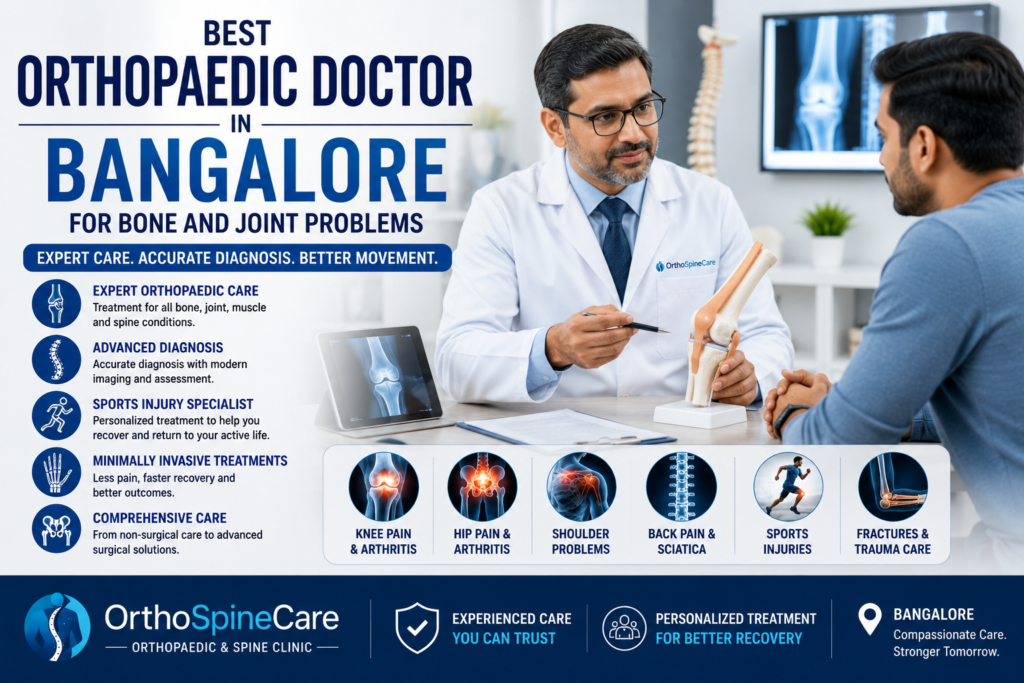
Best Orthopaedic Doctor in Bangalore for Bone and Joint Problems Bone and joint pain can affect much more than your physical comfort. A painful knee can make climbing stairs difficult. Shoulder pain can interfere with dressing or reaching overhead. Hip pain can change the way you walk, while persistent back or neck problems can affect work, sleep, and everyday activities. When these problems continue, choosing the right orthopaedic doctor becomes an important decision. A good orthopaedic consultation should do more than identify where it hurts. It should help determine why you are experiencing pain, whether the condition needs treatment, and which treatment approach is appropriate for you. For patients looking for orthopaedic and spine care in Bangalore, OrthoSpineCare provides evaluation and treatment for bone, joint, spine, fracture, and sports-related conditions. The clinic is led by Dr. Prajwal G S, an orthopaedic and spine surgeon with qualifications including MBBS, MS (Orthopaedics), Fellowship in Spine Surgery, Fellowship in Orthopaedic Rheumatology, and training in minimally invasive spine surgery. What Does an Orthopaedic Doctor Treat? Orthopaedic specialists diagnose and treat problems affecting the musculoskeletal system, including: Common conditions include arthritis, fractures, sports injuries, ligament and tendon problems, knee pain, shoulder problems, hip conditions, back pain, sciatica, and other spine disorders. The right treatment depends on the specific diagnosis rather than simply the location of your pain. When Should You See an Orthopaedic Doctor? You don’t need to wait until pain becomes severe. Consider an orthopaedic consultation if you experience: Early evaluation can help you understand the problem and explore suitable treatment options. Why Is an Accurate Diagnosis Important? Several different conditions can cause similar symptoms. For example, knee pain may result from arthritis, a meniscus injury, ligament damage, tendon problems, or other conditions. Treating the pain without identifying its cause may provide only temporary relief. An orthopaedic consultation usually begins with a discussion about your symptoms, medical history, previous injuries, lifestyle, and activity level. Your doctor may then examine your movement, joint stability, muscle strength, and areas of tenderness. Depending on the findings, imaging or other diagnostic tests may be recommended. Orthopaedic Care Doesn’t Always Mean Surgery One common concern among patients is that visiting an orthopaedic specialist automatically means undergoing surgery. That isn’t necessarily the case. Many bone and joint conditions can initially be managed with non-surgical approaches such as: The American Academy of Orthopaedic Surgeons also recognizes both non-surgical and surgical approaches for conditions such as knee osteoarthritis, with treatment decisions depending on the individual patient and condition. Surgery becomes an option when the condition warrants it or when appropriate conservative treatment does not provide sufficient improvement. Common Bone and Joint Problems Treated by Orthopaedic Specialists Knee Pain and Arthritis Knee problems are among the most common reasons people seek orthopaedic care. Symptoms may include: Treatment depends on the cause and severity of the condition. Hip Pain Hip problems can make walking, sitting, standing, and sleeping uncomfortable. An evaluation can help determine whether the pain originates from the hip joint, surrounding muscles and tendons, or another area such as the lower back. Shoulder Pain Shoulder pain can result from injuries, rotator cuff problems, frozen shoulder, arthritis, or overuse. Persistent pain or difficulty raising your arm deserves professional assessment. Sports Injuries Active people can experience ligament injuries, tendon problems, muscle strains, cartilage injuries, and fractures. Appropriate diagnosis and rehabilitation can help athletes return to activity more safely. Fractures and Trauma Falls and accidents can result in fractures or other orthopaedic injuries. Some injuries are obvious, while others may initially appear less serious. Proper evaluation helps determine the most appropriate method of treatment and rehabilitation. Spine Problems Orthopaedic and spine specialists also manage conditions such as back pain, sciatica, slipped discs, spinal injuries, and other degenerative spine disorders. OrthoSpineCare specifically lists spine care, fracture and trauma care, bone and joint treatment, and sports injury management among its services. Why Choose Dr. Prajwal G S for Orthopaedic and Spine Care? Choosing a doctor involves more than looking at a title. Patients should consider the doctor’s education, areas of specialization, treatment philosophy, and experience with the condition they are dealing with. Dr. Prajwal G S has completed an MBBS from Kempegowda Institute of Medical Sciences in Bengaluru and MS in Orthopaedics from JJM Medical College, Davangere. His further training includes fellowships in spine surgery and orthopaedic rheumatology, along with fellowship training in minimally invasive spine surgery. His professional profile also includes research and academic work in areas related to orthopaedics and spine care. At OrthoSpineCare, the stated approach emphasizes accurate diagnosis, personalized treatment, non-surgical options where appropriate, minimally invasive procedures, and rehabilitation support. What Can You Expect During Your First Consultation? Your first appointment is an opportunity to understand your condition rather than simply receive a prescription. Your doctor may ask about: A physical examination may then assess your joint movement, strength, stability, posture, and pain patterns. If additional information is necessary, your doctor may recommend appropriate diagnostic tests. Why Personalized Treatment Matters There is no single treatment that works for every patient. A 30-year-old athlete with knee pain may need a very different treatment plan from a 65-year-old patient with knee arthritis. Similarly, back pain in an office worker may have a different cause from back pain following an accident. A personalized plan considers factors such as: This helps your doctor select treatment that fits your specific situation. The Importance of Rehabilitation Treatment doesn’t always end when pain improves. After an injury or procedure, muscles may remain weak and joints may remain stiff. Rehabilitation can help restore: A structured rehabilitation plan can also help patients gradually return to work, exercise, and sports. How Can You Maintain Better Bone and Joint Health? Your daily habits can influence your musculoskeletal health. Stay Physically Active Regular movement helps maintain muscle strength and joint mobility. Maintain a Healthy Weight Managing body weight can reduce stress on weight-bearing joints such as the knees and hips. Strengthen Your Muscles Strong muscles provide support and stability around your joints. Eat a

Early Orthopaedic Treatment
Orthopedic Doctor

Benefits of Early Orthopaedic Treatment for Bone and Joint Problems

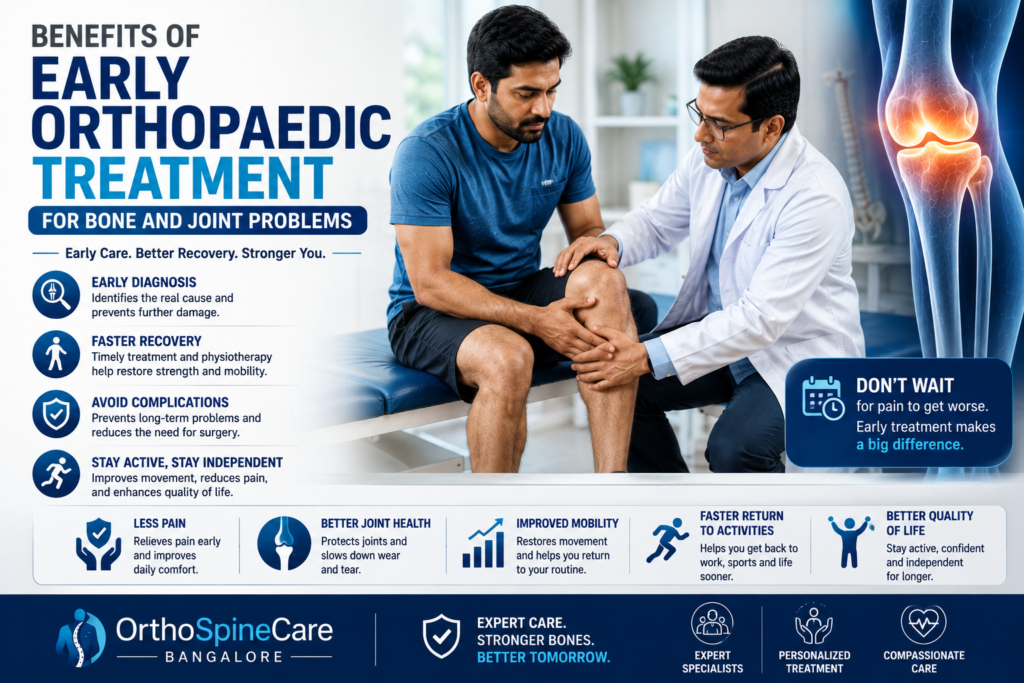
Benefits of Early Orthopaedic Treatment for Bone and Joint Problems A little knee pain after a long day, occasional back stiffness, or shoulder discomfort may seem easy to ignore. Many people assume the problem will disappear with rest. Sometimes it does. But when pain keeps returning, movement becomes difficult, or an injury doesn’t heal properly, waiting too long can make the problem harder to manage. Early orthopaedic treatment gives you an opportunity to understand what’s causing the problem and address it before it starts affecting your mobility and quality of life. Whether you’re dealing with arthritis, a sports injury, persistent joint pain, a fracture, or a spine problem, timely evaluation can help you choose the right treatment and recovery plan. At OrthoSpineCare in Bangalore, orthopaedic specialists evaluate bone, joint, muscle, ligament, tendon, and spine conditions and create treatment plans based on each patient’s individual needs. What Is Early Orthopaedic Treatment? Early orthopaedic treatment means seeking professional medical evaluation when symptoms first appear rather than waiting until pain becomes severe or movement becomes significantly restricted. Depending on the condition, early treatment may include: The goal isn’t always to use the most aggressive treatment. Instead, your specialist chooses an approach that addresses the underlying problem while supporting long-term function. Why Do People Delay Orthopaedic Treatment? Several reasons can cause people to postpone an appointment. Some believe: “It’s just normal ageing.” Others wait because: While occasional aches may not require medical attention, persistent or worsening symptoms deserve evaluation. 1. Early Diagnosis Helps Identify the Real Cause Pain is a symptom, not a diagnosis. For example, knee pain can result from arthritis, ligament damage, meniscus problems, tendon injuries, or other conditions. Similarly, shoulder pain may come from a rotator cuff problem, frozen shoulder, arthritis, or an injury. An orthopaedic specialist can evaluate your symptoms, movement, strength, medical history, and injury history to determine what may be causing the pain. Depending on your symptoms, your doctor may recommend X-rays, MRI, CT scans, blood tests, or other investigations. An accurate diagnosis helps prevent guesswork and unnecessary treatment. 2. Early Treatment May Prevent the Problem From Getting Worse Some musculoskeletal conditions gradually progress. For example, untreated joint instability after an injury may place additional stress on the joint. Persistent inflammation can also affect movement and everyday function. Early treatment gives your doctor an opportunity to manage the condition before it causes significant limitations. This doesn’t mean every condition will worsen without treatment, but addressing persistent symptoms early is generally better than waiting until the problem severely affects your life. 3. You May Be Able to Avoid Unnecessary Surgery One of the biggest concerns people have about seeing an orthopaedic specialist is the fear of surgery. However, seeing an orthopaedic specialist does not automatically mean you need surgery. Many conditions can improve with appropriate non-surgical treatment, including: The appropriate treatment depends on the diagnosis. When patients seek help early, doctors may have more opportunities to use conservative treatment before considering more invasive options. 4. Early Physiotherapy Can Restore Movement Pain often causes people to move less. Reduced activity can weaken muscles and make joints stiffer. A physiotherapist can develop exercises that gradually improve: Starting appropriate rehabilitation at the right stage can help you regain function while reducing the risk of further injury. 5. Early Treatment Can Help You Stay Active Your joints and muscles are designed for movement. Persistent pain can make you avoid walking, exercising, playing sports, or even performing household activities. Over time, reduced activity can affect muscle strength and overall fitness. Early treatment aims to help you return to safe movement and maintain an active lifestyle. Your doctor may recommend low-impact activities such as: The right activity depends on your condition. 6. It Can Reduce the Impact on Everyday Life Bone and joint problems don’t only cause physical discomfort. They can affect your entire routine. Knee pain may make stairs difficult. Shoulder pain can make dressing or reaching overhead uncomfortable. Hip pain may interfere with walking or sleeping. Early treatment can help prevent pain from taking over these everyday activities. The objective is not simply to make the pain disappear for a few hours. It is to improve your ability to move, work, exercise, and live comfortably. 7. Early Care Can Help With Sports Injuries Athletes often try to continue playing despite pain. This can be risky, particularly when the injury involves a ligament, tendon, cartilage, or joint. An orthopaedic specialist can determine whether you need: A structured return-to-sport program can help reduce the risk of returning to activity before your body is ready. 8. Early Management Can Protect Joint Health Conditions such as arthritis can gradually affect joint function. While treatment cannot always reverse established joint damage, early management can help control symptoms and maintain mobility. A treatment plan may include: Your specialist can monitor your condition and adjust treatment as your needs change. 9. Early Treatment Can Help Prevent Muscle Weakness When a painful joint limits movement, the muscles around it may become weaker. For example, someone with chronic knee pain may gradually reduce walking and physical activity. Over time, weaker muscles can make the knee feel less stable. Appropriate strengthening exercises can help rebuild support around the affected joint. 10. It Helps You Understand Your Condition Knowing what’s causing your symptoms can reduce uncertainty. During an orthopaedic consultation, you can learn: An informed patient can make better decisions about their health. Common Bone and Joint Problems That Need Attention Consider an orthopaedic evaluation for persistent symptoms related to: Knee Pain Possible causes include arthritis, ligament injuries, meniscus problems, tendon injuries, and overuse. Hip Pain Hip pain can result from arthritis, injuries, bursitis, tendon problems, or other conditions. Shoulder Pain Rotator cuff problems, frozen shoulder, arthritis, and sports injuries are common causes. Back and Neck Pain Persistent symptoms may be associated with muscle problems, disc conditions, arthritis, or nerve compression. Sports Injuries Sprains, strains, ligament injuries, cartilage damage, and fractures may require professional assessment. Fractures A suspected fracture should receive appropriate medical

When to Visit an Orthopaedic Specialist
Orthopedic Doctor

When Should You Visit an Orthopaedic Specialist?

When Should You Visit an Orthopaedic Specialist? Pain in your bones, joints, muscles, or spine can sometimes feel like something you should simply “wait out.” A little soreness after exercise may settle on its own, but persistent or recurring pain deserves more attention. Many people delay seeing an orthopaedic specialist because they hope the discomfort will disappear. Unfortunately, ignoring symptoms can sometimes allow a minor injury or early joint problem to become a more difficult condition. Knowing when to visit an orthopaedic specialist can help you get the right diagnosis early, start appropriate treatment, and protect your mobility for the future. At OrthoSpineCare in Bangalore, orthopaedic and spine specialists evaluate a wide range of bone, joint, muscle, ligament, and spine conditions and develop treatment plans based on each patient’s needs. What Does an Orthopaedic Specialist Treat? Orthopaedic specialists diagnose and manage conditions affecting the musculoskeletal system, including: You may need orthopaedic care for problems such as arthritis, sports injuries, fractures, back pain, neck pain, ligament injuries, joint degeneration, and nerve-related conditions. 1. Your Pain Doesn’t Go Away One of the clearest reasons to consult an orthopaedic specialist is persistent pain. If knee, hip, shoulder, neck, or back pain continues for several weeks despite rest and basic home care, don’t keep putting off an evaluation. Persistent pain may indicate an underlying problem that requires specific treatment. 2. You Keep Getting the Same Pain Pain that repeatedly returns can be a sign that the underlying problem hasn’t been addressed. For example, recurring knee pain after running may indicate an overuse injury, muscle imbalance, ligament problem, or early joint degeneration. Instead of repeatedly treating the symptoms, an orthopaedic specialist can investigate the cause. 3. You Have Difficulty Moving a Joint Have you noticed that you can no longer bend your knee fully, raise your arm comfortably, or rotate your hip as easily as before? Reduced range of motion can occur because of arthritis, inflammation, tendon injuries, frozen shoulder, or other joint conditions. Early assessment can help prevent further loss of mobility. 4. Your Joint Is Swollen or Stiff Swelling, warmth, or persistent stiffness can indicate inflammation or injury. Morning stiffness is particularly important to discuss with a doctor, especially when it lasts for a prolonged period or affects multiple joints. Conditions such as osteoarthritis and rheumatoid arthritis can cause these symptoms. 5. You Experienced a Sports Injury Sports injuries can range from mild muscle strains to significant ligament or cartilage damage. Common injuries include: Even if you can still walk or move after an injury, persistent pain or swelling deserves professional evaluation. Returning to sports too quickly can increase the risk of reinjury. 6. You Fell or Experienced an Accident A fall, road accident, or other trauma can cause fractures, ligament injuries, joint dislocations, and soft tissue damage. Seek medical attention after significant trauma, particularly if you experience severe pain, swelling, deformity, or difficulty putting weight on the affected limb. Some fractures are not immediately obvious, so persistent pain after an accident should not be ignored. 7. You Have Persistent Back or Neck Pain Back and neck pain are extremely common, but persistent symptoms can sometimes indicate a disc problem, spinal arthritis, nerve compression, or another spinal condition. An orthopaedic and spine specialist can assess your symptoms and determine whether you need imaging, physiotherapy, medication, injections, or another treatment. 8. Pain Travels Into Your Arm or Leg Pain that travels from your back or neck into an arm or leg may indicate nerve irritation or compression. You may also experience: These symptoms deserve medical evaluation, particularly when they persist or worsen. 9. You Notice Muscle Weakness Pain is not the only warning sign. If you suddenly notice weakness in your hand, arm, leg, or foot, seek medical attention. Nerve compression and certain musculoskeletal conditions can affect muscle strength. Early assessment can help identify the underlying problem. 10. Your Joint Feels Unstable Does your knee suddenly give way while walking? Does your shoulder feel as if it might come out of place? Joint instability can occur after ligament injuries, dislocations, muscle weakness, or structural problems. Ignoring repeated instability can increase the risk of additional injury. 11. You Hear Painful Clicking or Grinding Joint sounds are not always a cause for concern. Many healthy joints make occasional clicking or popping sounds. However, if clicking, grinding, or popping occurs together with pain, swelling, stiffness, or reduced movement, an orthopaedic evaluation may be helpful. 12. Everyday Activities Are Becoming Difficult You don’t have to wait until pain becomes severe before seeking help. If joint or muscle pain makes it difficult to: it’s time to consider professional evaluation. The goal of orthopaedic care isn’t simply to reduce pain. It is also to help you maintain independence and mobility. When Is Orthopaedic Care Urgent? Some symptoms require prompt medical attention. Seek urgent evaluation if you experience: These symptoms can indicate a serious injury or neurological problem and should not be ignored. What Happens During an Orthopaedic Consultation? Many people postpone a consultation because they don’t know what to expect. Your specialist will usually begin by discussing: The doctor will then perform a physical examination to assess movement, strength, tenderness, swelling, and joint stability. Depending on the findings, you may need diagnostic tests such as X-rays, MRI, CT scans, or blood tests. You don’t necessarily need an MRI or other advanced scan for every type of pain. Your doctor can determine which investigations are appropriate. Does Seeing an Orthopaedic Specialist Mean You Need Surgery? No. Many orthopaedic conditions respond well to non-surgical treatment. Depending on your diagnosis, treatment may include: Physiotherapy Targeted exercises can strengthen muscles, improve flexibility, restore movement, and support recovery. Medication Appropriate medications may help control pain and inflammation. Lifestyle Changes Weight management, improved posture, ergonomic changes, and activity modification can reduce stress on joints and the spine. Rehabilitation A structured rehabilitation program can help you safely return to work, sports, or normal activities after an injury. Injections For selected conditions, image-guided injections may help reduce

Scroll to Top
Call Now Button