
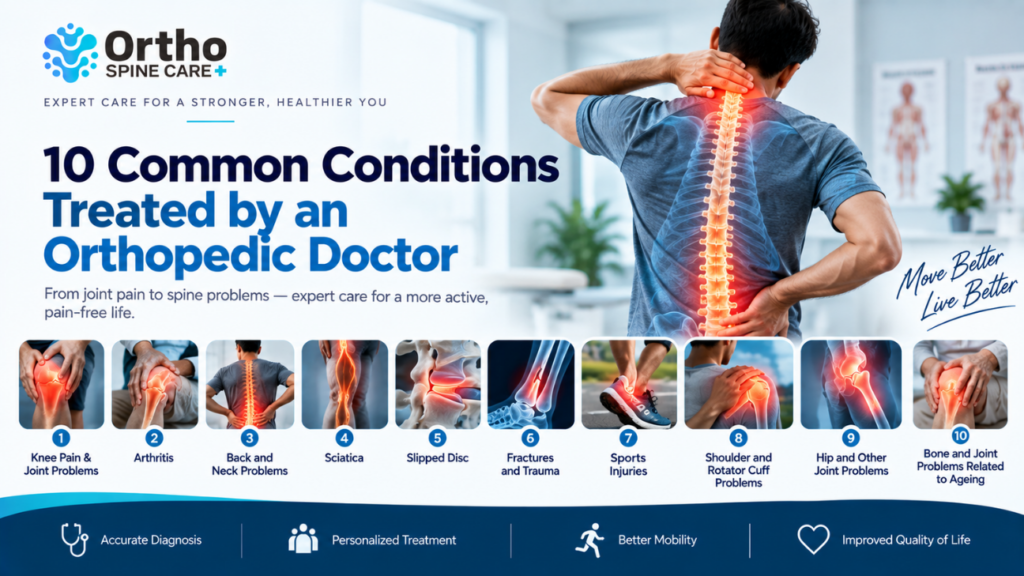
10 Common Conditions Treated by an Orthopedic Doctor
Pain in your knee after climbing stairs, stiffness in your back after sitting all day, or shoulder pain that makes it difficult to lift your arm can quickly become part of your daily routine.
Sometimes these problems improve with rest and appropriate care. But when pain continues, movement becomes difficult, or an injury affects your normal activities, it may be time to consult an orthopedic doctor.
An orthopedic doctor specializes in conditions affecting the musculoskeletal system, including the bones, joints, muscles, ligaments, tendons, and spine. Treatment depends on the underlying condition and may include medication, physiotherapy, rehabilitation, injections, lifestyle changes, minimally invasive procedures, or surgery when appropriate.
If you are looking for an orthopedic doctor in Bangalore, here are 10 common conditions that may require orthopedic care.
- Knee Pain and Joint Problems
Knee pain is one of the most common reasons people seek orthopedic care.
It can develop after an injury, because of arthritis, overuse, or other joint problems. You may notice pain while:
Walking
Climbing stairs
Squatting
Getting up from a chair
Exercising
Standing for long periods
Treatment depends on the underlying cause. Some patients may benefit from medication, physiotherapy, exercise-based rehabilitation, activity modification, or injections. In more advanced cases, surgical options may be considered.
The important thing is to identify why your knee hurts before deciding on treatment.
- Arthritis
Arthritis can cause pain, stiffness, swelling, and reduced movement in different joints.
It may affect the:
Knee
Hip
Shoulder
Ankle
Hand
Wrist
Other joints
For some people, symptoms develop gradually. Activities that were once easy may slowly become uncomfortable.
Orthopedic care can help assess the condition and discuss appropriate ways to manage symptoms and maintain mobility. Depending on the situation, treatment may involve medication, physiotherapy, joint-preservation approaches, injections, or joint replacement for selected patients.
- Back and Neck Problems
Back and neck pain are common, particularly among people who spend long hours sitting, driving, working at a computer, or performing repetitive activities.
While occasional discomfort may improve, persistent or recurring pain deserves attention.
Orthopedic and spine specialists may evaluate conditions such as:
Spondylosis
Spinal injuries
Disc-related problems
Sciatica
Scoliosis
Other spine conditions
Treatment may range from non-surgical care and rehabilitation to minimally invasive procedures or surgery when appropriate.
- Sciatica
Sciatica generally refers to pain that travels along the path of the sciatic nerve, often extending from the lower back through the buttock and into the leg.
People may describe it as:
Shooting pain
Burning pain
Tingling
Numbness
Electric-like sensations
The underlying cause needs to be assessed because similar symptoms can occur with different spine conditions.
An orthopedic or spine specialist can evaluate your symptoms and determine whether further investigation or treatment is appropriate.
- Slipped Disc
The discs between the vertebrae help cushion the spine. When a disc bulges or becomes damaged, it can sometimes irritate nearby nerves.
A slipped disc may cause:
Back or neck pain
Pain extending into the arm or leg
Tingling
Numbness
Weakness
Not every slipped disc requires surgery. Depending on the symptoms and diagnosis, treatment may include conservative care, physiotherapy, pain management, injections, or other interventions. Surgery may be considered in selected cases.
- Fractures and Trauma
Fractures can happen because of falls, accidents, sports injuries, or other trauma.
Some fractures are obvious, while others may initially seem like a less serious injury.
Symptoms that may require medical assessment include:
Significant pain
Swelling
Difficulty moving the affected area
Difficulty putting weight on a limb
Visible deformity
Orthopedic fracture care can include assessment, casting, splinting, fracture reduction, fixation when required, and rehabilitation.
Prompt evaluation is particularly important after a significant injury.
- Sports Injuries
You don’t have to be a professional athlete to experience a sports injury.
Running, cycling, cricket, football, badminton, gym workouts, and other activities can place stress on muscles, tendons, ligaments, and joints.
Common sports-related problems include:
Ligament injuries
Tendonitis
Soft-tissue injuries
Rotator cuff injuries
Other joint and musculoskeletal injuries
The appropriate treatment depends on the type and severity of the injury. Rehabilitation can be an important part of returning to activity safely.
- Shoulder and Rotator Cuff Problems
The shoulder allows a wide range of movement, but that flexibility can also make it vulnerable to certain injuries and overuse problems.
Shoulder conditions may cause:
Pain while raising the arm
Difficulty reaching overhead
Weakness
Reduced movement
Discomfort while sleeping
Rotator cuff injuries are one example of a shoulder problem that may require orthopedic assessment.
Depending on the diagnosis, treatment may involve rehabilitation, medication, injections, or surgery in selected cases.
- Hip and Other Joint Problems
Hip pain can affect walking, standing, exercising, and even simple movements such as getting in and out of a chair.
People may experience pain around the hip, groin, thigh, or buttock.
Joint problems can have different causes, including injury and degeneration. An orthopedic assessment can help determine what may be contributing to the symptoms.
Treatment varies according to the diagnosis and may include conservative care, rehabilitation, injections, joint-preservation treatment, or joint replacement when appropriate.
- Bone and Joint Problems Related to Ageing
As we get older, changes in bone and joint health can affect mobility.
Older adults may experience:
Arthritis
Joint degeneration
Reduced mobility
Fractures
Balance difficulties
Fall-related injuries
Orthopedic care for older adults focuses on managing musculoskeletal problems while supporting mobility and independence.
Bone health also becomes increasingly important with age. Conditions such as osteoporosis can increase the risk of fractures and may require medical evaluation and appropriate management.
When Should You Visit an Orthopedic Doctor?
Not every ache requires a specialist consultation. However, consider getting evaluated if you experience:
Persistent bone or joint pain
Pain that keeps returning
Difficulty walking or moving a joint
Persistent swelling or stiffness
Pain after an injury
A suspected fracture
Sports injuries that are not improving
Back or neck pain that continues
Pain that travels into an arm or leg
Numbness or tingling associated with musculoskeletal symptoms
Pain that affects your sleep or daily activities
A consultation can help identify the underlying problem and determine what treatment options may be suitable.
Does an Orthopedic Doctor Always Recommend Surgery?
No.
This is one of the most common misconceptions about orthopedic care.
Orthopedic doctors provide both surgical and non-surgical treatment.
Depending on the condition, treatment may include:
Medication
Physiotherapy
Rehabilitation
Activity modification
Pain management
Injections
Lifestyle changes
Minimally invasive procedures
Surgery when appropriate
The treatment should be based on the individual’s diagnosis, symptoms, examination findings, and overall circumstances.
Why Early Evaluation Can Be Helpful
Ignoring persistent pain can gradually change the way you move.
For example, someone with knee pain may start avoiding stairs. Someone with back pain may stop exercising. A person with a shoulder problem may avoid using the affected arm.
Over time, these changes can affect strength, mobility, and everyday activities.
Getting an appropriate evaluation can help you understand what is happening and whether treatment is needed.
What Happens During an Orthopedic Consultation?
Your first consultation generally starts with a discussion about your symptoms and medical history.
Your doctor may ask:
When did the problem start?
Was there an injury?
What makes the pain better or worse?
Does it affect your daily activities?
Have you tried any treatment?
Have you had similar problems before?
The doctor may then examine the affected area and assess movement, strength, tenderness, swelling, stability, or other relevant findings.
Depending on the symptoms, appropriate investigations such as X-rays or other imaging may be recommended.
Choosing an Orthopedic Doctor in Bangalore
If you are searching for an orthopedic doctor in Bangalore, consider factors such as qualifications, specialization, experience with your condition, treatment options, and rehabilitation support.
For patients in North Bangalore, OrthoSpineCare in Sadashivanagar provides orthopaedic and spine care under Dr. Prajwal GS.
Dr. Prajwal GS’s listed qualifications include MBBS, MS Orthopaedics, fellowship training in spine surgery, minimally invasive spine surgery and orthopaedic rheumatology, along with an AO Global Spine Diploma.
The clinic provides care for spine conditions, fractures, bone and joint problems, sports injuries, pain management, rehabilitation, diagnostic services, and surgical conditions.
Don’t Let Persistent Pain Become Your Normal
Bone and joint problems can affect much more than physical comfort. They can influence how you work, sleep, exercise, travel, and manage everyday activities.
The good news is that orthopedic care is not limited to surgery. Depending on the condition, there may be several treatment approaches available.
If you have persistent pain, reduced mobility, or an injury that isn’t improving, the first step is understanding what is causing the problem.
If you are looking for an orthopedic doctor in Bangalore, consider consulting a qualified specialist for an individual evaluation and treatment plan.
OrthoSpineCare
No. 2, 10th Cross Road, Sadashivanagar, Bangalore – 560080
Phone: 9740559577
This article is intended for general educational purposes and does not replace an individual medical consultation. Treatment recommendations depend on the patient’s condition and clinical assessment.