
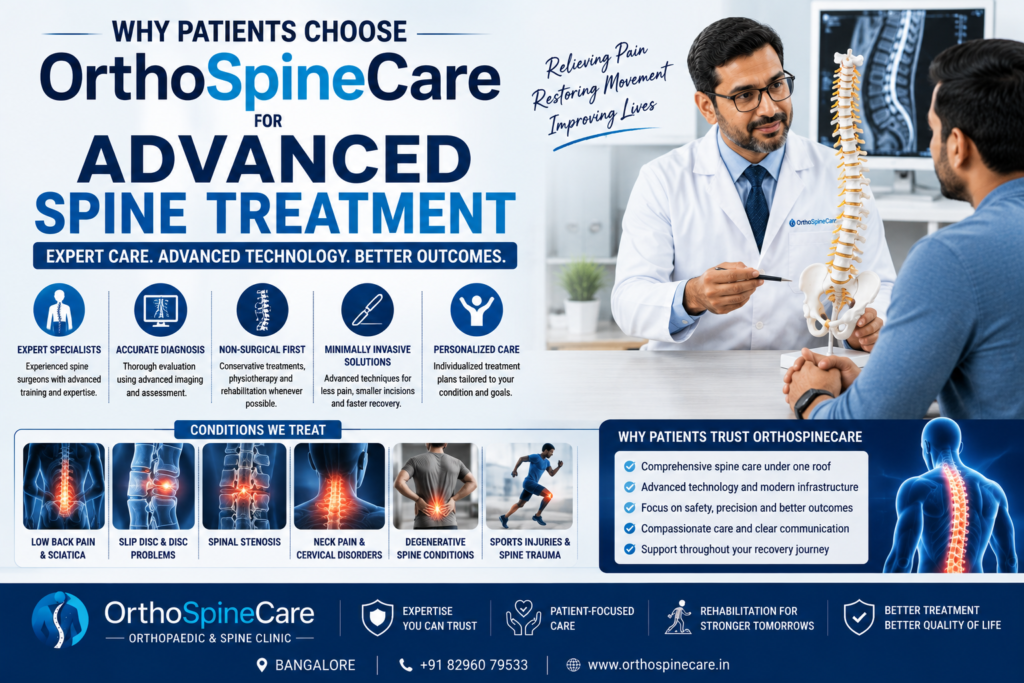
Why Patients Choose OrthoSpineCare for Advanced Spine Treatment
Why Patients Choose OrthoSpineCare for Advanced Spine Treatment Back and neck problems can affect almost every part of daily life. A simple task like sitting at work, driving, bending down, or getting a good night’s sleep can become uncomfortable when your spine isn’t functioning properly. For many patients, the biggest concern isn’t only the pain. They also want to know what is causing it, whether it can be treated without surgery, how long recovery may take, and where they can find experienced spine care in Bangalore. Choosing a spine specialist is therefore an important decision. Patients often look for a combination of medical expertise, accurate diagnosis, modern treatment options, personalized care, and proper follow-up. OrthoSpineCare is designed around these needs, providing orthopaedic and spine care with an emphasis on individualized diagnosis and treatment. What Makes Spine Care Different? The spine is a complex structure made up of bones, discs, joints, nerves, muscles, and supporting tissues. A problem in one area can sometimes produce symptoms somewhere else. For example, a patient may experience: Because several conditions can produce similar symptoms, treatment should ideally begin with identifying the underlying cause. This is where specialist evaluation becomes important. 1. Focus on Accurate Diagnosis One of the first things patients want from spine treatment is a clear explanation of what’s happening. At OrthoSpineCare, the evaluation process focuses on understanding the patient’s symptoms, medical history, physical findings, and functional limitations. Depending on the situation, diagnostic investigations such as X-rays or MRI may be recommended. Importantly, imaging is generally interpreted alongside the clinical examination. An abnormal scan doesn’t necessarily mean that surgery is required, and the treatment decision should take the patient’s symptoms and examination findings into account. 2. Experienced Spine-Focused Care Spine conditions can range from relatively simple muscular problems to complex nerve and structural disorders. OrthoSpineCare is associated with Dr. Prajwal G S, an orthopaedic and spine specialist. His professional qualifications include MBBS, MS in Orthopaedics, and additional fellowship training in spine surgery, orthopaedic rheumatology, and minimally invasive spine surgery. This additional spine-focused training can be particularly relevant for patients seeking specialist evaluation for conditions involving the discs, nerves, or spinal structures. 3. Non-Surgical Treatment When Appropriate One of the most common concerns patients have is: “Will I need spine surgery?” The answer isn’t always yes. Depending on the condition, many patients can initially be managed with conservative treatment. Treatment may include: The appropriate approach depends on the diagnosis and severity of the condition. At OrthoSpineCare, the treatment philosophy includes considering non-surgical approaches when they are medically appropriate rather than treating surgery as the first option for every patient. 4. Modern and Minimally Invasive Spine Treatment When surgery becomes necessary, patients often want to understand whether less invasive options are available. Minimally invasive spine procedures use specialized techniques designed to access the affected area while minimizing disruption to surrounding tissues. Depending on the condition, minimally invasive approaches may be considered for selected patients. However, minimally invasive surgery isn’t automatically better for every spine problem. The right procedure depends on factors such as the diagnosis, anatomy, severity, previous treatment, and overall health. A spine specialist can explain which options are appropriate for an individual patient. 5. Treatment for a Wide Range of Spine Conditions Spine pain doesn’t look the same for everyone. OrthoSpineCare provides evaluation and treatment for conditions such as: Slip Disc and Disc Problems A disc problem can sometimes irritate or compress nearby nerves, resulting in back pain or symptoms extending into the leg or arm. Sciatica Sciatica can cause pain, tingling, numbness, or weakness along the path of the sciatic nerve. Spinal Stenosis Narrowing of spaces around the spinal nerves can sometimes cause back or leg symptoms, particularly during standing or walking. Neck and Cervical Spine Problems Cervical spine conditions can cause neck pain, stiffness, and sometimes symptoms extending into the shoulder or arm. Degenerative Spine Conditions Age-related changes can affect the discs, joints, and other structures of the spine. Spinal Injuries Falls, accidents, and sports injuries can result in spinal trauma requiring specialist assessment. Each condition requires a different treatment strategy. 6. Personalized Treatment Plans No two patients experience back pain in exactly the same way. Consider two people with similar MRI findings. One might have mild symptoms and remain physically active, while another may have severe pain that prevents them from walking or working. Their treatment plans may therefore be very different. A personalized approach considers: This helps ensure that treatment is based on the individual rather than simply on a scan or diagnosis. 7. Rehabilitation Is Part of Recovery Spine treatment isn’t only about reducing pain. Long-term recovery may also require rebuilding strength and improving movement patterns. Depending on the patient’s condition, rehabilitation may focus on: Following a structured rehabilitation plan can help patients regain confidence in their movements. 8. Care for Both Young and Older Adults Spine problems can affect people at different stages of life. Younger Adults Back pain may be associated with: Middle-Aged Adults Patients may experience a combination of work-related strain, lifestyle factors, previous injuries, and degenerative changes. Older Adults Age-related changes, arthritis, spinal stenosis, osteoporosis, and other conditions may become more common. Treatment should therefore be adapted to the patient’s age, lifestyle, health, and functional goals. 9. Helping Office Workers Manage Spine Problems Long hours at a desk can contribute to neck and back discomfort. Common workplace habits include: Managing these factors can be an important part of spine care. Patients may benefit from advice about workstation setup, posture, movement breaks, strengthening, and appropriate exercise. 10. A Focus on Understanding the Patient Medical treatment is not only about tests and procedures. Patients also need clear communication. During a spine consultation, it can be helpful to understand: Clear answers can make the treatment journey less stressful. When Should You See a Spine Specialist? You don’t necessarily have to wait until back pain becomes severe. Consider a specialist consultation if you experience: Early assessment can help identify the underlying problem and determine whether specialist treatment