
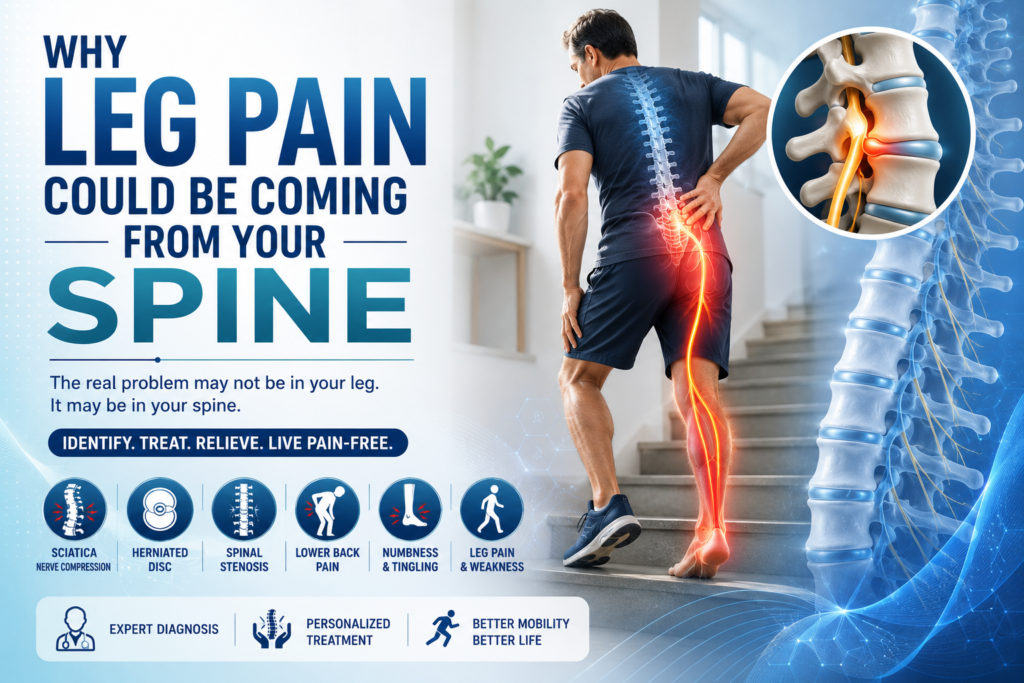
Why Leg Pain Could Be Coming From Your Spine
Leg pain is often associated with muscle strain, overuse, or injuries. However, what many people don’t realize is that the source of the pain may not be in the leg at all. In many cases, persistent leg pain actually begins in the spine. Problems affecting the lower back can irritate or compress spinal nerves, causing pain that travels down the hips, thighs, calves, or even into the feet.
Understanding the connection between your spine and leg pain is essential because treating only the symptoms in the leg may not solve the underlying problem. Early diagnosis and appropriate treatment can help relieve pain, restore mobility, and prevent long-term complications.
At OrthoSpineCare in Bangalore, experienced orthopedic and spine specialists diagnose the root cause of leg pain and provide personalized treatment plans to help patients return to an active, pain-free lifestyle.
How Is Your Spine Connected to Your Legs?
Your spinal cord sends nerve signals from your brain to every part of your body. In the lower back (lumbar spine), several nerves branch out and travel through the hips, buttocks, legs, and feet.
If one of these nerves becomes compressed or irritated, you may experience pain, numbness, tingling, or weakness in your leg—even though the actual problem originates in your spine.
This type of pain is known as referred pain or radicular pain, depending on the underlying condition.
Common Spine Conditions That Cause Leg Pain
Several spinal disorders can lead to pain that radiates into the legs.
Sciatica
Sciatica is one of the most common causes of leg pain originating from the spine.
It occurs when the sciatic nerve becomes compressed, usually due to a herniated disc or spinal narrowing.
Symptoms include:
- Sharp pain from the lower back into one leg
- Burning sensation
- Tingling or numbness
- Pain that worsens while sitting
- Difficulty walking comfortably
Herniated (Slipped) Disc
A spinal disc acts as a cushion between the vertebrae. When a disc bulges or ruptures, it may press against nearby nerves.
Depending on which nerve is affected, pain can travel into the thigh, calf, or foot.
Spinal Stenosis
Spinal stenosis is the narrowing of the spinal canal, which places pressure on the spinal nerves.
People with spinal stenosis often experience:
- Leg pain while walking
- Numbness
- Weakness
- Pain that improves when sitting or bending forward
Degenerative Disc Disease
As spinal discs naturally wear down with age, they lose flexibility and cushioning.
This can increase pressure on spinal nerves, causing recurring lower back and leg pain.
Spondylolisthesis
This condition occurs when one vertebra slips forward over another.
The displaced bone can compress nearby nerves, leading to leg pain, weakness, and numbness.
Symptoms That Suggest Your Leg Pain Is Coming From the Spine
Not every leg pain originates from the spine. However, certain symptoms strongly suggest a spinal cause.
These include:
- Pain starting in the lower back before moving into the leg
- Pain radiating below the knee
- Burning or electric shock-like pain
- Tingling or “pins and needles”
- Numbness in the foot or toes
- Muscle weakness
- Pain that worsens after sitting or standing for long periods
- Difficulty lifting the foot while walking
If you experience several of these symptoms together, it’s important to consult a spine specialist.
Risk Factors for Spine-Related Leg Pain
Several factors increase the likelihood of developing spine-related nerve pain.
Common risk factors include:
- Poor posture
- Long hours of sitting
- Heavy lifting
- Obesity
- Aging
- Lack of exercise
- Physically demanding jobs
- Previous back injuries
- Smoking
Making healthy lifestyle changes can reduce your risk of developing these conditions.
When Should You See a Spine Specialist?
You should seek medical attention if:
- Leg pain lasts more than two weeks.
- Pain keeps returning.
- Walking becomes difficult.
- Pain spreads below the knee.
- You notice numbness or tingling.
- Muscle weakness develops.
- Home remedies no longer provide relief.
- Pain affects your work, sleep, or daily routine.
Early treatment often leads to faster recovery and better outcomes.
How Spine Specialists Diagnose the Cause
At OrthoSpineCare, specialists perform a detailed evaluation to determine whether your leg pain originates from the spine.
Diagnosis may include:
- Medical history review
- Physical examination
- Neurological assessment
- Digital X-rays
- MRI scan
- CT scan when required
These investigations help identify nerve compression and other spinal abnormalities accurately.
Non-Surgical Treatment Options
The good news is that many patients recover without surgery.
Physiotherapy
Physiotherapy strengthens the muscles supporting the spine, improves flexibility, and reduces pressure on affected nerves.
Customized exercise programs also help prevent future episodes of pain.
Pain Management
Depending on the diagnosis, doctors may recommend medications to reduce inflammation and control pain.
Image-Guided Spine Injections
For persistent symptoms, image-guided injections around the affected nerve may provide significant pain relief while supporting rehabilitation.
Lifestyle Modifications
Simple changes often make a big difference.
Your doctor may recommend:
- Improving posture
- Maintaining a healthy weight
- Regular stretching
- Ergonomic workplace adjustments
- Safe lifting techniques
- Daily walking
These habits reduce stress on your spine and support long-term recovery.
PRP Therapy
For selected musculoskeletal conditions, Platelet-Rich Plasma (PRP) Therapy may be considered to promote healing as part of a personalized treatment plan.
When Is Surgery Needed?
Surgery is usually recommended only when:
- Conservative treatment fails.
- Severe nerve compression is present.
- Progressive muscle weakness develops.
- Walking becomes increasingly difficult.
- Bladder or bowel function is affected.
Modern minimally invasive spine surgery often allows faster recovery with smaller incisions and less postoperative discomfort.
Tips to Prevent Spine-Related Leg Pain
Healthy daily habits can help protect both your spine and your nerves.
- Maintain good posture.
- Exercise regularly.
- Strengthen your core muscles.
- Avoid prolonged sitting.
- Lift heavy objects correctly.
- Stay physically active.
- Maintain a healthy body weight.
- Stretch before and after exercise.
- Sleep on a supportive mattress.
These simple habits help reduce pressure on your spinal nerves and improve overall spine health.
Why Choose OrthoSpineCare in Bangalore?
At OrthoSpineCare, every patient receives personalized care based on their symptoms, lifestyle, and medical condition.
The clinic offers:
- Experienced orthopedic and spine specialists
- Advanced diagnostic technology
- Personalized treatment plans
- Evidence-based non-surgical therapies
- Image-guided pain management procedures
- Physiotherapy and rehabilitation
- Minimally invasive spine surgery when required
The focus is always on identifying the root cause of pain and providing long-term relief rather than simply treating symptoms.
Conclusion
Leg pain isn’t always caused by a problem in the leg itself. In many cases, the real cause lies in the spine, where compressed or irritated nerves send pain signals down the leg. Recognizing the warning signs early and seeking expert evaluation can prevent complications and improve recovery.
If you’re experiencing persistent leg pain, numbness, tingling, or lower back discomfort, consult the experienced spine specialists at OrthoSpineCare in Bangalore. With advanced diagnostic facilities, personalized treatment plans, and comprehensive rehabilitation, you can find lasting relief and get back to doing the activities you enjoy.