
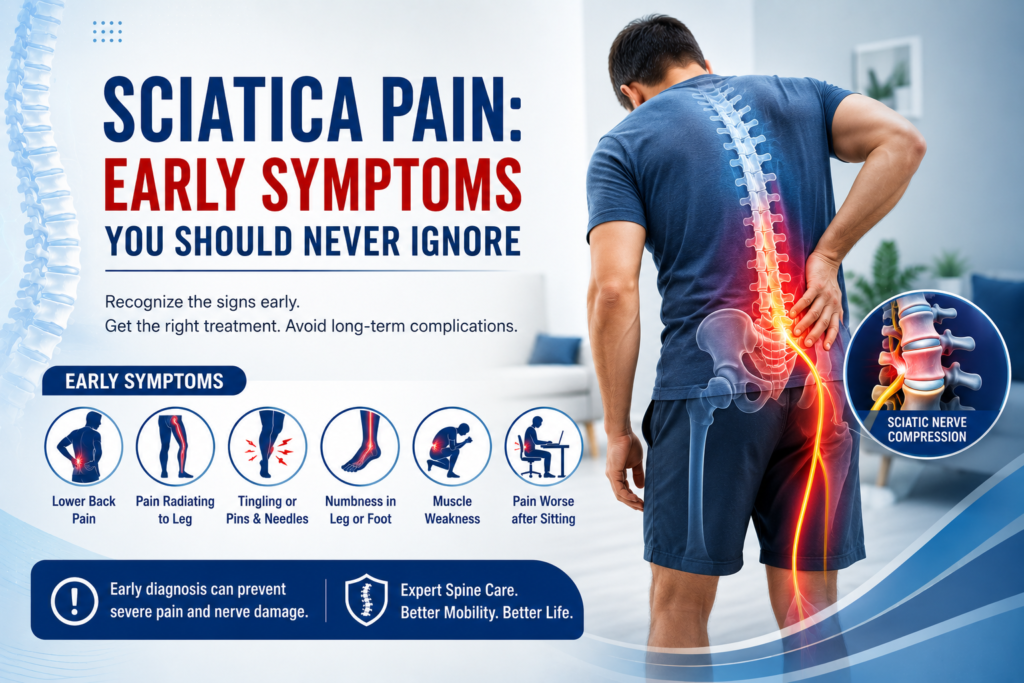
Sciatica Pain: Early Symptoms You Should Never Ignore
Sciatica is one of the common reasons people get leg pain but a lot of people think it is just regular back pain or a pulled muscle. Actually sciatica happens when the sciatic nerve, which is the nerve in our body gets irritated or squeezed. This can cause pain that starts in the back and goes down through the buttock, thigh and leg.
It is really important to know the symptoms of sciatica because if you get treated right away you can stop the problem from getting worse and prevent long-term nerve damage. Luckily a lot of people get better with treatment that does not involve surgery long as they get diagnosed early.
If you have leg pain or lower back discomfort that will not go away OrthoSpineCare in Bangalore has experts who can diagnose your problem and create a treatment plan that’s just for you to help you get back to your normal life without pain.
What Is Sciatica?
Sciatica is not a disease it is a symptom of a problem that affects the sciatic nerve. The sciatic nerve starts in the spine and goes down through the hips, buttocks and down each leg.
When this nerve gets squeezed or inflamed it can cause pain, numbness, tingling and weakness in the areas it touches.
Usually sciatica only affects one side of the body. In bad cases it can affect both legs.
Common Causes of Sciatica
There are spine problems that can cause sciatica.
Herniated or Slipped Disc
A herniated disc is the common reason for sciatica. When a spinal disc bulges or breaks it can push on the nerve and cause pain.
Spinal Stenosis
Spinal stenosis happens when the spinal canal gets narrower which puts pressure on the nerves.
This problem is more common in people and can cause chronic leg pain and numbness.
Degenerative Disc Disease
As spinal discs get older they can lose their ability to cushion which increases the chance of nerve compression.
Bone Spurs
Bone spurs from arthritis can make the spaces around nerves smaller which can irritate the sciatic nerve.
Muscle Tightness
Sometimes muscles, especially the piriformis muscle in the buttock can squeeze the sciatic nerve and cause symptoms.
Symptoms of Sciatica You Should Never Ignore
If you know what sciatica is early on you can get treated faster and feel better sooner.
Pain That Travels Down One Leg
Unlike back pain sciatica often causes pain that starts in the lower back or buttock and goes down the back of the thigh and into the calf or foot.
This kind of pain is one of the signs of sciatica.
Tingling or “Pins and Needles”
A lot of people notice a tingling feeling in their leg or foot before the pain gets really bad.
This usually means the sciatic nerve is irritated.
Numbness in the Leg or Foot
If the nerve is squeezed you might lose feeling in one leg or foot.
If you have numbness that will not go away you should see a specialist.
Burning or Sharp Pain
Sciatica pain can feel like it is burning, shooting or like a shock, rather than a dull ache.
The pain can get worse when you sit, cough or sneeze.
Muscle Weakness
If you have trouble lifting your foot climbing stairs or walking normally it might mean the nerve is not working right.
If you have muscle weakness you should see a doctor away.
Lower Back Pain
Even though leg pain is usually more noticeable a lot of people also have back discomfort.
The amount of pain varies from person to person.
Pain That Worsens After Sitting
If you sit for a time it can put more pressure on your lower spine, which can make sciatica symptoms worse.
A lot of people who work at desks notice their pain gets worse after sitting for a time.
Risk Factors for Sciatica
There are some lifestyle and health things that can increase your chance of getting sciatica.
These include:
- Long hours of sitting
- Poor posture
- lifting
- Being overweight
- Getting older
- Having diabetes
- Having a job that is physically demanding
- Not exercising regularly
If you make lifestyle changes you can lower your risk.
When Should You See a Spine Specialist?
You should see a doctor if:
- Your pain lasts than two weeks
- Your pain keeps coming
- Your leg pain gets really bad
- Your numbness or tingling gets worse
- You have muscle weakness
- You have trouble walking
- Your pain is getting in the way of your work. Sleep
If you get treated early you can prevent long-term nerve damage and feel better faster.
When Is Sciatica a Medical Emergency?
Even though most cases are not emergencies you should get help right away if you have:
- Lost control of your bladder or bowels
- Bad weakness in both legs
- Numbness around your groin or buttocks
- Suddenly cannot walk
These symptoms might mean you have Cauda Equina Syndrome, which needs to be treated away.
How Is Sciatica Diagnosed?
At OrthoSpineCare the specialists will do a check to figure out what is causing your symptoms.
The diagnosis might include:
- Looking at your history
- A physical exam
- A neurological assessment
- Digital X-rays
- An MRI scan
- A CT scan if needed
If the diagnosis is accurate the doctors can decide on the treatment.
Non-Surgical Treatment Options
Most people get better without surgery.
Treatment might include:
- Physiotherapy
A rehabilitation program can help strengthen your muscles improve your flexibility and reduce pressure on the nerve.
- Pain Management
Medicine can help with pain and inflammation while you heal.
- Lifestyle Modifications
Improving your posture staying at a weight being active and not sitting for too long can all help you get better.
- Image-Guided Spine Injections
If your symptoms persist, injections around the affected nerve can reduce inflammation. Help with pain.
- PRP Therapy
For some patients treatments like Platelet-Rich Plasma Therapy might help certain musculoskeletal problems heal.
When Is Surgery Needed?
Surgery is only considered when:
- The nerve is really compressed
- Muscle weaknesss getting worse
- Other treatments do not work after weeks or months
- You have problems with your bladder or bowels
spine surgery is less invasive and can help patients recover faster and have better outcomes.
Why Choose OrthoSpineCare in Bangalore?
Patients trust OrthoSpineCare because they take care of everything related to health.
The clinic offers:
- Experienced orthopedic and spine specialists
- Advanced diagnostic technology
- Personalized treatment plans
- Evidence-based non-surgical care
- invasive spine procedures
- Physiotherapy and rehabilitation
- Treatment that focuses on the patient and helps them recover in the term
The team works closely with each patient to relieve pain help them move better and improve their quality of life.
Tips to Prevent Sciatica
There are some habits that can help lower your chance of getting sciatica.
- Maintain posture when sitting and standing
- Exercise regularly
- Strengthen your core muscles
- Lift things correctly
- Do not sit for too long
- Stay at a weight
- Stretch before and after you exercise
- Stay active throughout the day
Healthy habits can help keep your spine and sciatic nerve
Sciatica often starts with symptoms like tingling, leg pain or lower back discomfort but if you ignore these signs it can lead to more serious nerve problems. If you know what sciatica is on and get treated you can recover faster and might not need surgery.
If you have leg pain, numbness or lower back pain that will not go away do not wait for it to get worse. The spine specialists at OrthoSpineCare in Bangalore can diagnose your problem give you non-surgical treatments and create a rehabilitation program that is just for you to help you recover safely and get back, to your normal life.