
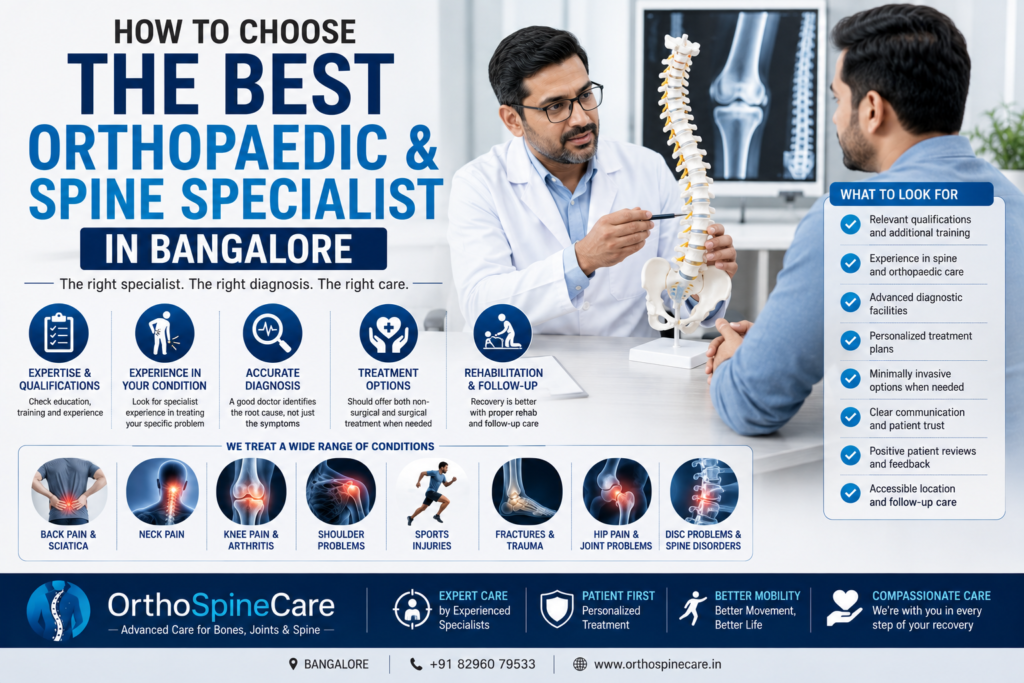
How to Choose the Best Orthopaedic & Spine Specialist in Bangalore
Choosing an orthopaedic and spine specialist is an important decision, especially when pain starts affecting your daily life. Whether you’re dealing with persistent back pain, sciatica, a sports injury, arthritis, or a spinal condition, the right specialist can help you understand the cause of your symptoms and explore suitable treatment options.
With so many hospitals, clinics, and specialists in Bangalore, knowing what to look for can make the decision easier.
The best orthopaedic and spine specialist isn’t necessarily the person with the most advertisements or the longest list of services. Instead, look for a doctor with relevant qualifications, experience in your condition, a clear approach to diagnosis, and a treatment plan that matches your needs.
Why Choosing the Right Specialist Matters
Bone, joint, and spine problems can have very different causes even when the symptoms appear similar.
For example, lower back pain may result from muscle strain, disc problems, arthritis, nerve compression, or other conditions. Similarly, knee pain could come from arthritis, ligament damage, cartilage problems, or an injury.
A specialist can evaluate the symptoms and determine whether you need:
- Conservative treatment
- Physiotherapy
- Medication
- Rehabilitation
- Injections
- Minimally invasive procedures
- Surgery
Getting the right diagnosis before starting treatment can help you avoid unnecessary procedures and focus on the approach that suits your condition.
1. Check the Doctor’s Qualifications
Start by looking at the specialist’s educational background and professional training.
For orthopaedic and spine problems, you may want to consider doctors with:
- An MBBS degree
- Postgraduate training in orthopaedics
- Additional spine-related training or fellowships
- Relevant surgical training when required
- Experience treating your specific condition
Additional training can be particularly valuable if you have a complex spinal condition or require specialized treatment.
2. Consider Experience With Your Specific Condition
A doctor may be highly qualified but may not focus equally on every orthopaedic condition.
Before booking a consultation, check whether the specialist regularly treats the problem you’re experiencing.
For example, if you’re looking for treatment for:
- Sciatica
- Slip disc
- Spinal stenosis
- Back pain
- Neck pain
- Sports injuries
- Knee arthritis
- Ligament injuries
- Fractures
- Joint problems
look for a specialist with relevant experience in that area.
3. Look for a Doctor Who Focuses on Diagnosis First
A good consultation should begin with understanding your symptoms rather than immediately discussing treatment.
Your doctor should take time to understand:
- When your symptoms started
- What makes them better or worse
- Previous injuries
- Your daily activities
- Your occupation
- Previous treatments
- Relevant medical history
A physical examination can then help the specialist understand your movement, strength, flexibility, reflexes, and pain patterns.
If necessary, the doctor may recommend imaging or other tests.
4. Don’t Assume You Need Surgery
Many people hesitate to visit an orthopaedic or spine specialist because they believe the consultation will automatically lead to surgery.
That’s not necessarily true.
Depending on the diagnosis, treatment may begin with non-surgical options such as:
- Physiotherapy
- Exercise therapy
- Medication
- Activity modification
- Weight management
- Posture correction
- Rehabilitation
- Bracing
- Selected injections
Surgery may become appropriate when significant structural problems exist or when suitable conservative treatment doesn’t provide adequate improvement.
A specialist who discusses different treatment options can help you make a more informed decision.
5. Ask About Non-Surgical Treatment Options
If your condition allows conservative treatment, ask your specialist what options are available.
For example, patients with certain types of back pain may benefit from a combination of physical therapy, activity modification, strengthening exercises, and medication.
Likewise, some joint conditions can improve with weight management, strengthening, physiotherapy, and lifestyle changes.
The appropriate treatment depends on the diagnosis, so avoid choosing a doctor solely because they promise a particular treatment.
6. Consider the Specialist’s Approach to Spine Care
Spine problems can be particularly complex because symptoms may originate from bones, discs, joints, muscles, or nerves.
A good spine consultation should consider the complete picture.
If you’re experiencing back or neck pain with symptoms such as:
- Tingling
- Numbness
- Burning pain
- Pain radiating into an arm or leg
- Muscle weakness
the specialist should evaluate whether nerve involvement may be contributing to your symptoms.
For complex conditions, look for a specialist with specific training and experience in spine care.
7. Ask About Diagnostic Facilities
Accurate diagnosis often requires appropriate investigations.
Depending on your symptoms, your specialist may recommend:
- X-rays
- MRI
- CT scans
- Bone density testing
- Blood tests
- Other specialized investigations
You don’t necessarily need advanced imaging for every case of back or joint pain.
A good doctor should recommend tests based on clinical findings rather than ordering unnecessary investigations.
8. Look for a Personalized Treatment Plan
Every patient is different.
A treatment plan that works well for an athlete may not suit an older adult with arthritis. Similarly, an office worker with chronic back pain may need a different approach from someone who developed pain after an accident.
Your treatment plan should consider:
- Your age
- Diagnosis
- Pain severity
- Lifestyle
- Occupation
- Physical activity
- Previous treatment
- Overall health
- Personal recovery goals
Personalized care makes it easier to understand what you need to do during recovery.
9. Consider Rehabilitation and Follow-Up Care
Treatment doesn’t always end after your first consultation.
Rehabilitation can be an important part of recovering from an injury, surgery, or chronic musculoskeletal condition.
Depending on your problem, rehabilitation may help improve:
- Muscle strength
- Flexibility
- Balance
- Joint movement
- Stability
- Posture
- Walking patterns
Ask whether the clinic provides or coordinates rehabilitation and follow-up care.
10. Read Patient Reviews Carefully
Online reviews can give you an idea about other patients’ experiences, but don’t rely on reviews alone.
Look for patterns in feedback regarding:
- Communication
- Consultation experience
- Clinic organization
- Follow-up
- Professionalism
At the same time, consider the doctor’s qualifications and experience with your specific condition.
A large number of reviews doesn’t automatically mean a doctor is the right choice for your medical needs.
11. Consider Location and Accessibility
Bangalore’s traffic can make frequent appointments challenging.
If your condition requires physiotherapy or regular follow-ups, consider choosing a clinic that is reasonably convenient for you.
Accessibility becomes even more important if you’re recovering from:
- A fracture
- Surgery
- A major sports injury
- Knee or hip problems
- A spine condition that makes travelling difficult
A convenient location can make it easier to stay consistent with treatment and rehabilitation.
12. Pay Attention to Communication
Your specialist should make you feel comfortable asking questions.
During your consultation, don’t hesitate to ask:
- What is causing my symptoms?
- Do I need imaging?
- What treatment options are available?
- Can we try non-surgical treatment first?
- How long might recovery take?
- What activities should I avoid?
- When can I return to work or exercise?
- What symptoms should make me seek urgent care?
A doctor who explains your condition clearly can help you participate more confidently in your treatment decisions.
Questions to Ask Before Choosing a Spine Specialist
If you’re specifically looking for a spine specialist in Bangalore, consider asking:
Does the doctor treat my specific spine condition?
Experience with your particular problem matters.
Does the doctor offer non-surgical treatment?
Ask about physiotherapy, rehabilitation, medication, and other conservative options where appropriate.
What happens if conservative treatment doesn’t work?
Understanding the next steps can help you make an informed decision.
Does the specialist perform minimally invasive procedures when appropriate?
If you eventually need a procedure, understanding the available techniques can be useful.
How is rehabilitation handled?
Recovery often requires more than the procedure itself.
When Should You See an Orthopaedic & Spine Specialist?
Consider booking a consultation if you have:
- Back pain lasting several weeks
- Recurrent neck pain
- Sciatica symptoms
- Numbness or tingling
- Persistent joint pain
- Reduced mobility
- Repeated sports injuries
- Pain following an accident
- Joint swelling or instability
- Muscle weakness
- Pain that interferes with sleep or everyday activities
You don’t have to wait until the pain becomes unbearable.
When Is Spine Pain an Emergency?
Some symptoms require urgent medical attention.
Seek immediate medical care if severe back pain occurs with:
- New bladder or bowel control problems
- Significant or rapidly worsening weakness
- Loss of sensation around the groin or inner thighs
- Severe symptoms following major trauma
These symptoms can indicate a serious neurological problem and require prompt evaluation.
Why Consider OrthoSpineCare in Bangalore?
OrthoSpineCare focuses on orthopaedic and spine care, including conditions affecting the bones, joints, muscles, and spine.
The clinic’s services include treatment for conditions such as:
- Back pain
- Sciatica
- Spine disorders
- Knee problems
- Hip problems
- Shoulder conditions
- Sports injuries
- Fractures and trauma
- Arthritis
- Nerve-related spine problems
Dr. Prajwal G S is an orthopaedic and spine specialist associated with OrthoSpineCare. His qualifications include MBBS, MS in Orthopaedics, and additional training in spine surgery, orthopaedic rheumatology, and minimally invasive spine surgery.
The clinic emphasizes individualized evaluation and treatment, including non-surgical care and rehabilitation where appropriate.
A Simple Checklist Before Booking Your Appointment
Before choosing an orthopaedic and spine specialist in Bangalore, check these points:
✓ Relevant orthopaedic qualifications
✓ Experience with your specific condition
✓ Spine-specific training if you have a spine problem
✓ Clear diagnosis and explanation
✓ Non-surgical options when appropriate
✓ Access to suitable diagnostic facilities
✓ Personalized treatment plans
✓ Rehabilitation and follow-up support
✓ Good communication
✓ Convenient clinic location
This checklist can help you compare specialists based on factors that actually matter to your treatment.
Conclusion
Choosing the best orthopaedic and spine specialist in Bangalore requires more than searching for the highest-rated doctor online. Look at qualifications, experience, specialization, diagnostic approach, treatment options, communication, and follow-up care.
Whether you’re dealing with knee pain, arthritis, a sports injury, chronic back pain, sciatica, or another spine condition, start by finding out what’s actually causing your symptoms.
The right specialist should help you understand your condition, explain your options, and create a treatment plan that fits your individual needs.
If you’re looking for orthopaedic and spine care in Bangalore, OrthoSpineCare provides comprehensive evaluation and treatment for bone, joint, sports, trauma, and spine conditions. Early professional assessment can help you take the right step toward reducing pain and getting back to the activities you enjoy.