
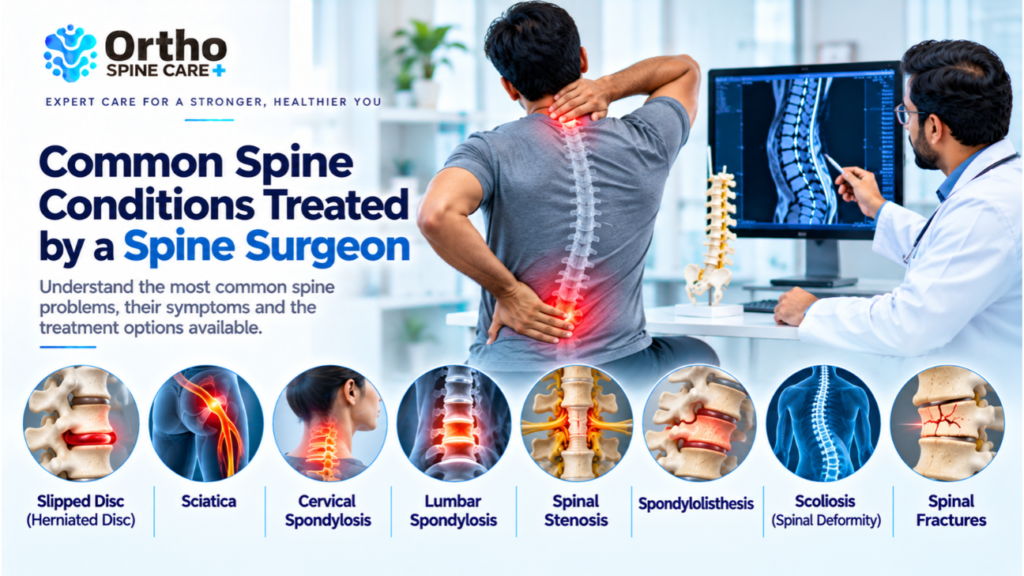
Common Spine Conditions Treated by a Spine Surgeon
Your spine plays an important role in almost everything you do. From sitting and standing to walking, bending, and lifting objects, it provides support, stability, and flexibility to your body. However, when something affects the spine, even simple daily activities can become uncomfortable.
Back pain, neck stiffness, tingling in the legs, or difficulty walking are symptoms many people experience at some point. While occasional discomfort may improve with rest and appropriate care, persistent symptoms can sometimes indicate an underlying spinal condition that needs medical attention.
Fortunately, several spine-related conditions can be managed through medication, physiotherapy, rehabilitation, or other non-surgical treatments. In certain situations, surgery may also be necessary.
If you are looking for a spine surgeon in Bangalore, understanding the common conditions treated by these specialists can help you recognize symptoms early and seek appropriate care.
Let’s explore some of the most common spine conditions, their symptoms, and the treatment approaches available.
What Does a Spine Surgeon Treat?
A spine surgeon is a specialist who evaluates and treats conditions affecting the spinal bones, intervertebral discs, joints, spinal cord, and surrounding nerves.
These conditions may develop because of ageing, injuries, disc degeneration, structural abnormalities, or other medical factors.
Depending on their training and specialty, spine surgeons may manage:
- Slipped and herniated discs
- Sciatica and nerve compression
- Cervical and lumbar spondylosis
- Spinal stenosis
- Spondylolisthesis
- Spinal fractures
- Scoliosis and spinal deformities
- Certain causes of chronic back and neck pain
Importantly, consulting a spine surgeon does not automatically mean you need an operation. Many patients can initially be treated using appropriate non-surgical approaches.
1. Slipped Disc or Herniated Disc
When a slipped disc causes persistent nerve compression and non-surgical treatments do not provide sufficient relief, surgery may be considered in selected cases. Learn more about the benefits and recovery of minimally invasive spine surgery and the techniques used to treat certain spinal conditions.
A slipped disc, medically known as a herniated or prolapsed disc, is one of the commonly encountered spinal conditions.
Your spine contains small cushioning structures called intervertebral discs between the vertebrae. These discs help absorb pressure and allow the spine to move comfortably.
However, when the soft inner material of a disc pushes through its outer covering, it may irritate or compress nearby nerves.
Common Symptoms
Depending on the location of the affected disc, symptoms may include:
- Lower back or neck pain
- Pain travelling into the legs or arms
- Tingling or numbness
- Muscle weakness
- Discomfort while sitting, bending, or lifting
For example, a herniated disc in the lower back may cause pain that travels through the buttock and down the leg.
Treatment Options
Many patients improve with non-surgical treatments such as physiotherapy, appropriate medication, and activity modification.
However, when symptoms remain severe, nerve function is affected, or conservative treatment has not provided sufficient improvement, a spine surgeon may consider procedures such as discectomy or selected minimally invasive techniques.
2. Sciatica
Have you ever experienced pain that starts in your lower back or buttock and travels down one leg?
This may be associated with sciatica.
Sciatica describes symptoms caused by irritation or compression of the sciatic nerve or its nerve roots. A herniated disc is one possible cause, although other conditions can also produce similar symptoms.
Common Symptoms
- Sharp or shooting pain in the leg
- Burning sensations
- Tingling in the foot or toes
- Numbness
- Weakness in the affected leg
- Pain that becomes worse with certain movements
Unlike ordinary muscle soreness, sciatica often follows a particular pathway from the lower back through the buttock and into the leg.
Treatment Options
Treatment depends on the underlying cause and severity.
Your doctor may recommend physiotherapy, medication, suitable exercises, activity modification, or selected injections.
If significant nerve compression causes persistent symptoms or neurological problems, surgery may be considered in appropriate cases.
3. Cervical Spondylosis
Cervical spondylosis refers to age-related degenerative changes affecting the bones, discs, and joints in the neck.
As people grow older, the spinal structures may gradually undergo changes. Although these changes are common, not everyone develops symptoms.
However, when symptoms occur, they can affect neck movement and sometimes involve nearby nerves or the spinal cord.
Common Symptoms
- Neck pain and stiffness
- Reduced neck movement
- Pain spreading towards the shoulders
- Tingling in the arms or hands
- Numbness in the fingers
- Weakness in the arms in some cases
If the spinal cord becomes compressed, symptoms may also include balance difficulties, hand coordination problems, or changes in walking.
Treatment Options
Depending on the severity, treatment may include physiotherapy, medication, activity modification, and other appropriate pain management approaches.
In cases involving significant spinal cord or nerve compression, a spine surgeon may recommend surgical treatment to relieve pressure and protect neurological function.
4. Lumbar Spondylosis
Lumbar spondylosis refers to degenerative changes affecting the lower portion of the spine.
Because the lower back supports much of the body’s weight and experiences considerable movement, it is commonly affected by age-related changes.
Some people have these changes without experiencing any discomfort. Others may develop persistent lower back pain or stiffness.
Common Symptoms
- Lower back pain
- Stiffness after sitting or sleeping
- Discomfort while bending
- Reduced flexibility
- Pain that increases with certain activities
- Leg symptoms if nearby nerves are affected
Treatment Options
Most patients do not require surgery simply because an X-ray or MRI shows degenerative changes.
Depending on symptoms, treatment may include exercise-based physiotherapy, medication, posture and activity adjustments, and rehabilitation.
Surgical treatment may be considered when there is significant nerve compression, instability, or another condition requiring an operation.
5. Spinal Stenosis
Spinal stenosis occurs when spaces within the spinal canal or nerve passageways become narrower, potentially placing pressure on the spinal nerves or spinal cord.
It is commonly associated with degenerative changes, although other causes are possible.
The condition can develop in different parts of the spine, particularly the lower back and neck.
Common Symptoms
Depending on the location, patients may experience:
- Back or neck pain
- Numbness in the legs or arms
- Tingling sensations
- Muscle weakness
- Difficulty walking for longer distances
- Leg discomfort that worsens while standing or walking
Some people with lumbar spinal stenosis notice that walking becomes easier when they sit down or lean forward.
Treatment Options
Depending on the severity, non-surgical treatment may include physiotherapy, medication, and activity modification.
However, when symptoms significantly affect mobility or there is concerning neurological compression, a surgeon may consider decompression surgery to create more space for the affected nerves.
6. Spondylolisthesis
Spondylolisthesis is a condition in which one vertebra slips forward relative to the vertebra below it.
This may occur because of degenerative changes, a stress-related defect in part of the vertebra, or other structural problems.
Not every person with spondylolisthesis experiences symptoms. However, when symptoms develop, they may affect movement and daily activities.
Common Symptoms
- Lower back pain
- Pain that travels into the legs
- Muscle tightness
- Numbness or tingling
- Difficulty standing or walking for extended periods
- Symptoms associated with nerve compression
Treatment Options
Milder cases may be managed with appropriate medication, physiotherapy, and activity modification.
In selected cases involving significant instability, nerve compression, or persistent symptoms, surgical options such as decompression or spinal fusion may be considered.
The appropriate approach depends on the degree of vertebral slippage and the patient’s clinical condition.
7. Spinal Fractures
Spinal fractures involve breaks in one or more vertebrae. They may occur following road accidents, falls, sports injuries, or conditions that weaken the bones, such as osteoporosis.
Unlike ordinary back pain, some spinal fractures require immediate medical assessment because they may affect spinal stability or nearby nerves.
Common Symptoms
- Sudden or severe back pain
- Pain after a fall or accident
- Difficulty moving comfortably
- Tenderness around the injured area
- Numbness or weakness if nerves are affected
Treatment Options
Treatment depends on the type, location, and stability of the fracture.
Some fractures may be managed with appropriate pain control, activity modification, and medical monitoring. Others may require bracing or surgical stabilization.
If you experience severe back pain after a significant injury, seek urgent medical evaluation rather than attempting to manage it at home.
8. Scoliosis and Spinal Deformities
Scoliosis is a condition in which the spine develops an abnormal sideways curvature.
It may develop during childhood or adolescence, although adults can also develop scoliosis due to degenerative changes.
Depending on the severity and progression, the condition may affect posture, spinal balance, and movement.
Common Symptoms
- Uneven shoulders
- One hip appearing higher than the other
- Visible spinal curvature
- Uneven waistline
- Back discomfort
- Changes in posture
In more significant cases, the curvature may affect overall physical function.
Treatment Options
Treatment depends on the patient’s age, the degree of curvature, symptoms, and whether the condition is progressing.
Options may include observation, selected exercises, bracing in appropriate growing children, or surgical treatment for certain severe or progressive cases.
A specialist assessment helps determine whether treatment is necessary and which approach is appropriate.
9. Degenerative Disc Disease
Degenerative disc disease refers to changes in spinal discs that occur over time.
As discs age, they may lose some of their water content and flexibility. Consequently, they may become less effective at absorbing pressure during everyday movements.
Although these changes are common with ageing, they do not always cause pain.
Common Symptoms
- Persistent lower back or neck discomfort
- Pain that increases with certain movements
- Stiffness
- Reduced flexibility
- Pain associated with prolonged sitting or physical activity
Treatment Options
Treatment generally focuses on managing symptoms and maintaining function.
Depending on the individual, this may include physiotherapy, strengthening exercises, medication, and activity modification.
Surgery is considered only in selected cases when symptoms and clinical findings support an operative approach.
10. Spinal Cord and Nerve Compression
The spinal cord and spinal nerves carry important signals between the brain and the rest of the body.
When these structures become compressed, patients may experience changes in sensation, muscle strength, coordination, or movement.
Compression can occur because of disc herniation, spinal stenosis, injuries, or other spinal abnormalities.
Common Symptoms
- Persistent numbness
- Tingling in the arms or legs
- Muscle weakness
- Difficulty maintaining balance
- Problems with hand coordination
- Changes in walking pattern
When the spinal cord is involved, early evaluation is particularly important because prolonged or severe compression can result in lasting neurological problems.
Depending on the cause, treatment may involve medication, rehabilitation, or surgical decompression.
New loss of bladder or bowel control, numbness around the groin or saddle area, or rapidly worsening weakness requires emergency medical assessment.
11. Chronic Back Pain
Chronic back pain is generally defined as pain lasting longer than three months.
It can develop because of several conditions, including disc degeneration, joint problems, muscle-related issues, or other spinal disorders.
Sometimes, the exact cause is not immediately clear, which is why a proper medical evaluation is important.
Common Symptoms
- Persistent lower back discomfort
- Stiffness after waking up
- Pain while sitting or standing
- Difficulty bending
- Reduced physical activity
- Sleep disturbances due to discomfort
Treatment Options
Treatment depends on the underlying cause and may involve physiotherapy, exercise-based rehabilitation, medication, pain management, and lifestyle adjustments.
A spine surgeon may become involved if investigations suggest a structural problem that requires specialist treatment.
Recovery after spine surgery varies depending on the procedure, the patient’s health, and the severity of the spinal condition. If surgery has been recommended, understanding the recovery time after spine surgery can help you prepare for the different stages of healing and rehabilitation.
When Should You Consult a Spine Surgeon?
Occasional back or neck discomfort does not always indicate a serious spinal problem. However, While occasional back or neck discomfort may improve with appropriate care, persistent symptoms should not be ignored. Understanding when to consult a spine surgeon can help you recognize warning signs and seek timely medical evaluation.
Consider consulting a spine specialist if you experience:
- Back pain that continues despite appropriate treatment
- Persistent neck pain or stiffness
- Pain travelling into your arms or legs
- Recurring sciatica
- Numbness or tingling
- Muscle weakness
- Difficulty walking or maintaining balance
- Symptoms following a significant injury
- A diagnosed spinal condition requiring specialist evaluation
In addition, certain symptoms require emergency care. New bladder or bowel dysfunction, numbness around the groin or saddle area, or rapidly worsening weakness alongside back pain may indicate serious nerve compression.
Do not wait for a routine appointment if these symptoms occur.
Does Every Spine Condition Require Surgery?
Not every spinal condition requires an operation. Depending on the diagnosis and severity, medication, physiotherapy, rehabilitation, and other conservative treatments may be sufficient. Read more about spine surgery vs non-surgical treatment to understand the differences and factors that influence treatment decisions.
No. This is one of the most important things patients should understand.
Many spinal conditions can initially be managed without surgery, depending on the diagnosis and severity.
Non-surgical treatment options may include:
- Physiotherapy and rehabilitation
- Medication when appropriate
- Activity modification
- Posture and movement guidance
- Selected pain management injections
- Strengthening exercises
However, surgery may be necessary for certain fractures, significant nerve compression, spinal instability, or other conditions where an operation offers meaningful clinical benefits.
The decision should always be based on an individual medical assessment rather than symptoms or scan reports alone.
How Does a Spine Surgeon Diagnose Spinal Conditions?
Before recommending treatment, a spine surgeon generally evaluates your symptoms, medical history, and physical condition.
The assessment may involve:
1. Medical History: Understanding when the symptoms started, how they developed, and what activities make them better or worse.
2. Physical Examination: Checking movement, muscle strength, sensation, reflexes, and other relevant neurological signs.
3. X-rays: These may help assess bone alignment, certain fractures, and structural changes.
4. MRI Scans: These can provide detailed images of spinal discs, nerves, and other soft tissues.
5. CT Scans: These may be useful for assessing bone structures and certain complex spinal problems.
Not every patient needs all these investigations. Your doctor will recommend tests according to your symptoms and examination findings.
Spine Care at OrthoSpineCare, Bangalore
If you are experiencing persistent back pain, neck discomfort, sciatica, or other spine-related symptoms, choosing an appropriate specialist can help you understand your condition and available treatment options.
OrthoSpineCare, located in Sadashivanagar, Bangalore, provides orthopaedic and spine care under Dr. Prajwal GS.
Dr. Prajwal GS’s listed qualifications include:
- MBBS – Kempegowda Institute of Medical Sciences, Bangalore
- MS Orthopaedics – J.J.M. Medical College, Davanagere
- Fellowship in Spine Surgery – Mallika Spine Centre, Guntur
- Fellowship in Minimally Invasive Spine Surgery – Mumbai
- Fellowship in Orthopaedic Rheumatology
- AO Global Spine Diploma – AO Spine, Davos, Switzerland
The clinic’s listed services include spine care, minimally invasive spine procedures, fracture and trauma management, bone and joint treatment, sports injury management, pain management, and rehabilitation guidance.
If you have already undergone an MRI or received a diagnosis, bringing your previous medical reports can help make your consultation more productive.
Book a Consultation
OrthoSpineCare
No. 2, 10th Cross Road, Sadashivanagar, Bangalore – 560080 (Near Rashtrotthana Yoga Centre)
Phone: 9740559577
Website: https://orthospinecare.in/
Final Thoughts
Spinal conditions can affect people of different ages and activity levels. While some problems cause only occasional discomfort, others may lead to persistent pain, restricted movement, or nerve-related symptoms.
Understanding common spine conditions and recognizing their warning signs can help you seek medical attention at the right time.
Most importantly, remember that a spinal diagnosis does not automatically mean surgery. Many conditions can be managed with appropriate non-surgical treatments, while others may benefit from surgical intervention.
If back pain, neck pain, numbness, or difficulty walking is affecting your daily routine, consider consulting a qualified spine specialist to understand the cause and explore suitable treatment options.
Medical Disclaimer: This article is intended for general educational purposes and does not replace professional medical advice, diagnosis, or treatment. Treatment recommendations depend on the patient’s symptoms, examination findings, medical history, investigations, and clinical circumstances.