
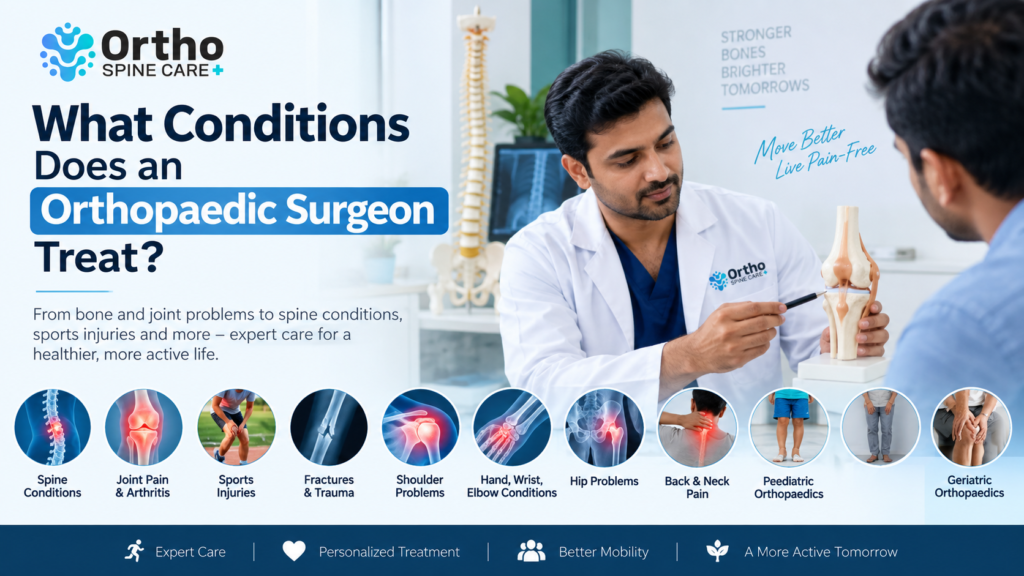
What Conditions Does an Orthopaedic Surgeon Treat?
When you hear the word orthopaedic surgeon, you might immediately think of broken bones or surgery. However, orthopaedic care covers much more than that.
Orthopaedic surgeons diagnose and treat conditions affecting the bones, joints, muscles, ligaments, tendons, and spine. Depending on the problem, treatment may involve physiotherapy, medication, rehabilitation, injections, lifestyle changes, or surgery.
From persistent knee pain and back problems to sports injuries and fractures, an orthopaedic surgeon can help identify the cause of your symptoms and recommend an appropriate treatment plan.
If you are looking for an orthopaedic surgeon in Bangalore, understanding the conditions these specialists treat can help you decide when it may be time to seek professional advice.
What Does an Orthopaedic Surgeon Do?
An orthopaedic surgeon specializes in the diagnosis and treatment of problems affecting the musculoskeletal system.
This includes:
- Bones
- Joints
- Muscles
- Ligaments
- Tendons
- Spine
Not every orthopaedic condition requires surgery. In fact, many problems can initially be managed with non-surgical treatments and rehabilitation.
The treatment approach depends on your symptoms, diagnosis, severity of the condition, lifestyle, age, and overall health.
1. Spine Conditions and Back Problems
Spine-related problems are among the common reasons people seek orthopaedic care.
Long hours at a desk, poor posture, injuries, age-related changes, and other factors can contribute to back and neck problems.
An orthopaedic and spine specialist may evaluate conditions such as:
- Sciatica
- Slipped disc or disc prolapse
- Spondylosis
- Spinal injuries
- Spinal deformities
- Scoliosis
- Nerve-related pain
- Certain conditions requiring spine surgery
Symptoms may include back pain, neck pain, stiffness, tingling, numbness, or pain that travels into the arm or leg.
Depending on the diagnosis, treatment may include conservative care, physiotherapy, pain management, spinal injections, minimally invasive procedures, or surgery when necessary.
2. Sciatica and Nerve Pain
Sciatica typically refers to pain that travels along the path of the sciatic nerve, often extending from the lower back through the buttock and into the leg.
Some people describe it as a sharp, shooting, burning, or electric-like pain.
You may also experience numbness or tingling.
Because several conditions can cause similar symptoms, it is important to identify the underlying problem rather than simply treating the pain.
An orthopaedic or spine specialist can assess your symptoms and determine whether further investigation or treatment is needed.
3. Slipped Disc and Disc Problems
The discs between the bones of your spine help provide cushioning and flexibility. When a disc becomes damaged or protrudes, it can sometimes irritate nearby nerves.
This may result in:
- Back pain
- Neck pain
- Leg or arm pain
- Tingling
- Numbness
- Weakness
Treatment depends on the severity of the condition and the symptoms you experience.
Many patients may initially be considered for non-surgical treatment. However, certain cases may require specialist procedures or surgery.
4. Arthritis and Joint Problems
Arthritis can affect different joints and may cause pain, stiffness, swelling, and difficulty with movement.
Orthopaedic care may help patients dealing with joint problems involving the:
- Knee
- Hip
- Shoulder
- Elbow
- Wrist
- Hand
- Ankle
- Foot
The goal is not simply to reduce pain but also to preserve mobility and help you remain active.
Depending on the condition, treatment may include medication, physiotherapy, activity modification, injections, joint preservation approaches, or joint replacement when appropriate.
5. Knee Pain
Knee pain can affect people of all ages.
For some, it may develop after an injury or sports activity. For others, it can gradually appear due to arthritis or other joint-related problems.
You may notice knee pain while:
- Walking
- Running
- Climbing stairs
- Squatting
- Getting up from a chair
- Exercising
Persistent knee pain should not automatically be assumed to require surgery.
An orthopaedic surgeon can evaluate the cause and discuss appropriate treatment options based on the condition.
6. Shoulder and Rotator Cuff Problems
The shoulder is a highly mobile joint, which also makes it vulnerable to injuries and overuse.
Shoulder problems may involve muscles, tendons, ligaments, or the joint itself.
Rotator cuff injuries are particularly common among people involved in sports or activities requiring repeated overhead movements.
Symptoms may include:
- Shoulder pain
- Difficulty raising the arm
- Weakness
- Reduced range of movement
- Pain while sleeping on the affected shoulder
Treatment depends on the nature and severity of the injury and may include rehabilitation, medication, injections, or surgical treatment in selected cases.
7. Sports Injuries
You don’t have to be a professional athlete to suffer a sports injury.
Running, cycling, gym workouts, cricket, football, badminton, and other physical activities can sometimes lead to injuries involving muscles, tendons, ligaments, and joints.
Orthopaedic surgeons may treat problems such as:
- Ligament injuries
- Soft tissue injuries
- Tendonitis
- Rotator cuff injuries
- Other musculoskeletal sports injuries
Proper diagnosis is important because returning to activity too quickly can sometimes worsen an injury or delay recovery.
8. Fractures and Trauma
Fractures can occur because of falls, road accidents, sports injuries, workplace accidents, or other trauma.
Orthopaedic fracture care may involve:
- Fracture assessment
- X-rays and other appropriate investigations
- Plaster casts
- Walker boots
- Splints
- Fracture reduction
- Fixation when required
- Post-fracture rehabilitation
The treatment depends on the type, location, and severity of the fracture.
If you have suffered a significant injury and are experiencing severe pain, swelling, deformity, or difficulty using the affected limb, prompt medical evaluation is important.
9. Osteoporosis and Bone Health
Bone strength can decrease with age and certain medical conditions.
Osteoporosis can make bones more vulnerable to fractures, particularly in older adults.
Orthopaedic care may include evaluation of bone health, osteoporosis screening guidance, treatment planning, and strategies to reduce fracture risk.
Maintaining bone health is particularly important as we get older because a fracture can significantly affect mobility and independence.
10. Paediatric Orthopaedic Conditions
Children’s bones and joints are still developing, so their orthopaedic needs can be different from those of adults.
Paediatric orthopaedic care may address conditions such as:
- Growth-related musculoskeletal problems
- Congenital deformities
- Clubfoot
- Bow legs
- Certain childhood injuries
Early assessment can be helpful when parents notice unusual walking patterns, limb alignment concerns, persistent pain, or other musculoskeletal changes.
11. Orthopaedic Problems in Older Adults
Ageing can bring changes in bone and joint health.
Older adults may experience:
- Joint pain
- Arthritis
- Reduced mobility
- Balance problems
- Fall-related injuries
- Fractures
- Joint degeneration
Orthopaedic care for older adults focuses not only on treating an existing condition but also on maintaining independence and mobility.
Fall prevention guidance and appropriate joint care can play an important role in helping older adults remain active.
12. Joint Replacement and Advanced Joint Care
When severe joint damage significantly affects movement and quality of life, joint replacement may be considered in selected patients.
Knee, hip, and shoulder replacement procedures can be used to address severe joint degeneration and other conditions when other treatment options are no longer providing adequate relief.
However, joint replacement is not automatically the first choice for every patient.
A specialist evaluates the condition, symptoms, functional limitations, and available treatment options before recommending surgery.
13. Pain Management and Joint Injections
Some orthopaedic conditions may benefit from targeted injections.
Depending on the diagnosis, injections may be considered for certain joint and soft tissue problems or for pain associated with specific spine conditions.
The website’s services include intra-articular and soft tissue injections, as well as spinal injections such as nerve root blocks, facet blocks, and SI joint injections.
These treatments should be recommended based on an individual’s diagnosis and clinical assessment rather than simply because a particular treatment is available.
14. Physiotherapy and Rehabilitation
Orthopaedic treatment doesn’t necessarily end when pain improves.
Rehabilitation can be an important part of recovery after an injury or surgery.
Physiotherapy and rehabilitation may focus on:
- Restoring movement
- Improving strength
- Regaining function
- Returning to normal activities
- Supporting recovery after surgery
- Preventing future problems
A personalized rehabilitation plan can help patients gradually return to their daily activities and physical goals.
When Should You See an Orthopaedic Surgeon?
You may want to consider an orthopaedic consultation if you have:
- Persistent bone or joint pain
- Recurring back or neck pain
- Pain that travels into your arm or leg
- Difficulty walking or moving a joint
- A sports injury that isn’t improving
- A suspected fracture
- Persistent swelling or stiffness
- Reduced mobility
- Pain that affects sleep or daily activities
- Symptoms that continue despite initial treatment
You don’t necessarily have to wait until the pain becomes severe.
A timely evaluation can help identify the underlying cause and determine what treatment options may be appropriate.
Do Orthopaedic Surgeons Always Perform Surgery?
No.
This is one of the most common misconceptions about orthopaedic surgeons.
Orthopaedic surgeons are trained to diagnose and manage musculoskeletal conditions. Depending on the problem, treatment can include non-surgical approaches such as physiotherapy, medication, activity modification, rehabilitation, pain management, or injections.
Surgery may be considered when it is appropriate for the specific condition and when other treatment approaches are not sufficient or suitable.
The objective should always be to choose an appropriate treatment based on the patient’s individual needs.
Choosing an Orthopaedic Surgeon in Bangalore
If you are searching for an orthopaedic surgeon in Bangalore, look beyond the title alone.
Consider the doctor’s qualifications, areas of specialization, experience with your particular condition, treatment options, and approach to patient care.
For patients in North Bangalore, OrthoSpineCare in Sadashivanagar provides orthopaedic and spine care under Dr. Prajwal GS.
Dr. Prajwal GS has qualifications and specialized training in orthopaedics, spine surgery, minimally invasive spine surgery, and orthopaedic rheumatology. His areas of care include spine conditions, joint problems, fractures, sports injuries, and other musculoskeletal conditions.
Take the First Step Toward Better Mobility
Bone, joint, and spine problems can affect much more than physical comfort. They can influence your work, sleep, exercise, independence, and everyday life.
The good news is that many orthopaedic conditions have several treatment options.
The first step is understanding what’s causing the problem.
If you have persistent pain, an injury, reduced mobility, or symptoms that are affecting your daily life, consider consulting a qualified orthopaedic surgeon in Bangalore for an appropriate evaluation.
OrthoSpineCare
No. 2, 10th Cross Road, Sadashivanagar, Bangalore – 560080
Phone: 9740559577
This article is for general educational purposes and does not replace an individual medical consultation. Treatment options vary depending on the patient’s condition and clinical assessment.