
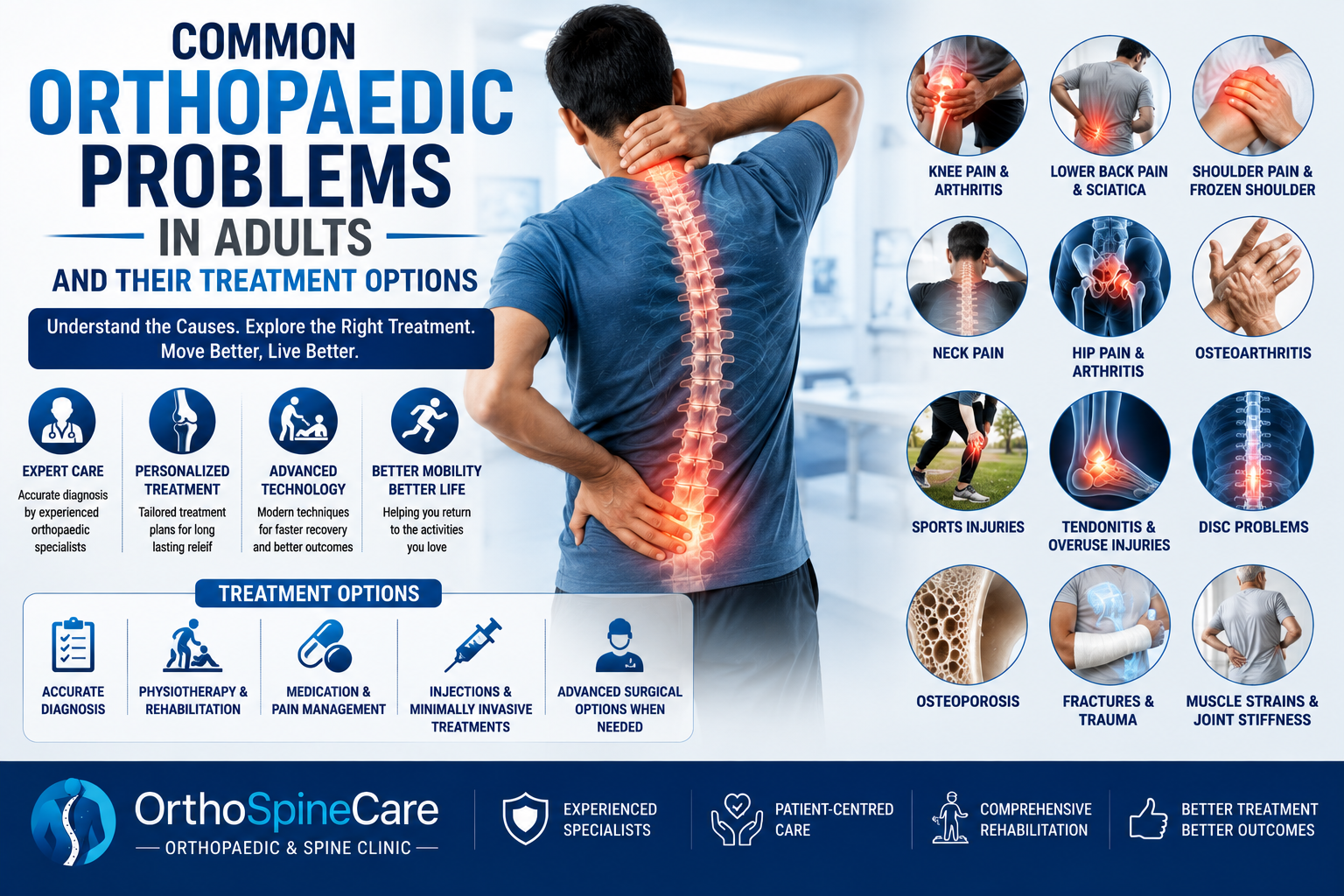
Common Orthopaedic Problems in Adults and Their Treatment Options
As we grow older, it is common to experience occasional aches, stiffness, or discomfort. A sore knee after climbing stairs, shoulder pain while lifting something, or back stiffness after sitting for long hours may seem like minor problems. However, when these symptoms keep coming back or start affecting daily activities, they may be signs of an underlying orthopaedic condition.
Orthopaedic problems can affect the bones, joints, muscles, ligaments, tendons, and spine. They can develop because of ageing, injuries, repetitive movements, poor posture, sports activities, arthritis, or everyday wear and tear.
The good news is that many orthopaedic conditions can be managed effectively with the right diagnosis and timely treatment. In this article, let’s look at some of the most common orthopaedic problems in adults and their treatment options.
What Are Orthopaedic Problems?
Orthopaedic problems affect the musculoskeletal system, which helps your body move and stay stable.
This system includes:
- Bones
- Joints
- Muscles
- Ligaments
- Tendons
- Cartilage
- Spine
When any of these structures become injured, inflamed, weak, or damaged, you may experience symptoms such as pain, stiffness, swelling, weakness, numbness, or difficulty moving.
An orthopaedic specialist can help identify the cause of these symptoms and recommend an appropriate treatment plan.
1. Osteoarthritis
Osteoarthritis is one of the most common joint problems in adults. It occurs when the cartilage that cushions a joint gradually changes over time.
It commonly affects the:
- Knees
- Hips
- Hands
- Spine
Common Symptoms
People may experience:
- Joint pain
- Stiffness, especially after rest
- Reduced range of motion
- Difficulty walking
- Swelling around the joint
- A grinding or clicking sensation
Treatment Options
Treatment depends on the severity of symptoms and the affected joint. Options may include:
- Weight management
- Physiotherapy
- Strengthening exercises
- Low-impact physical activity
- Pain-relief medication when appropriate
- Selected joint injections
- Joint replacement surgery in advanced cases when medically indicated
Early treatment can help maintain mobility and improve daily function.
2. Chronic Back Pain
Back pain is extremely common among adults, particularly those who spend long hours sitting, perform repetitive physical work, or have age-related changes in the spine.
Chronic back pain can have several causes, including:
- Muscle strain
- Poor posture
- Degenerative spine changes
- Disc problems
- Facet joint problems
- Spinal stenosis
- Nerve compression
Common Symptoms
Symptoms can range from a dull ache to persistent pain that affects movement.
Some people may also experience:
- Stiffness
- Pain while sitting or standing
- Pain radiating into the buttocks or legs
- Tingling or numbness
- Muscle weakness
Treatment Options
Depending on the diagnosis, treatment may include:
- Activity modification
- Physiotherapy
- Posture correction
- Core strengthening
- Medication when appropriate
- Pain management
- Selected injections
- Minimally invasive procedures or surgery for specific conditions
Persistent back pain should be properly evaluated rather than repeatedly treated with temporary pain relief alone.
3. Knee Pain
Knee pain can affect adults of all ages. It may develop because of injury, arthritis, overuse, ligament problems, cartilage damage, or other conditions.
Common Symptoms
- Pain while walking
- Difficulty climbing stairs
- Swelling
- Stiffness
- Clicking or locking
- A feeling that the knee may give way
Treatment Options
Treatment depends on the cause. An orthopaedic specialist may recommend:
- Rest from aggravating activities
- Physiotherapy
- Strengthening exercises
- Weight management
- Bracing when appropriate
- Medication
- Selected injections
- Surgery for significant structural problems
The right treatment begins with understanding what is causing the knee pain.
4. Shoulder Pain
The shoulder is a highly mobile joint, which makes it more vulnerable to overuse and injury.
Common causes of shoulder pain include:
- Rotator cuff problems
- Frozen shoulder
- Arthritis
- Tendon inflammation
- Sports injuries
- Shoulder instability
Common Symptoms
You may notice:
- Pain while lifting your arm
- Pain at night
- Stiffness
- Weakness
- Reduced range of motion
Treatment Options
Depending on the cause, treatment may involve:
- Physiotherapy
- Mobility exercises
- Strengthening exercises
- Activity modification
- Medication
- Selected injections
- Surgical treatment in selected cases
Early treatment can be especially helpful when shoulder stiffness begins affecting everyday activities.
5. Neck Pain
Neck pain is another common problem, particularly among people who spend long hours using computers or mobile devices.
Possible causes include:
- Muscle strain
- Poor posture
- Cervical disc problems
- Age-related spine changes
- Nerve compression
- Injuries
Common Symptoms
- Neck stiffness
- Headaches
- Pain radiating into the shoulder or arm
- Tingling or numbness
- Reduced neck movement
Treatment Options
Treatment may include:
- Improving posture and workstation ergonomics
- Physiotherapy
- Neck and upper-back exercises
- Medication when appropriate
- Activity modification
- Further evaluation for nerve-related symptoms
Persistent numbness, weakness, or radiating pain should not be ignored.
6. Sciatica
Sciatica describes pain that travels along the path of the sciatic nerve, often from the lower back into the buttock and leg.
It can occur when a nerve root in the lower spine becomes irritated or compressed.
Common Symptoms
- Pain travelling from the lower back into one leg
- Burning or sharp pain
- Tingling
- Numbness
- Weakness in some cases
Treatment Options
Depending on the underlying cause, treatment may include:
- Activity modification
- Physiotherapy
- Stretching and strengthening exercises
- Medication when appropriate
- Pain management
- Selected injections
- Surgical treatment for certain conditions
A proper diagnosis is important because leg pain can have causes other than sciatica.
7. Hip Pain
Hip pain can make walking, sitting, standing, and sleeping uncomfortable.
Common causes include:
- Osteoarthritis
- Muscle or tendon problems
- Bursitis
- Injuries
- Hip joint conditions
- Pain referred from the lower back
Common Symptoms
- Groin or outer hip pain
- Pain while walking
- Stiffness
- Difficulty getting up from a chair
- Reduced mobility
Treatment Options
Depending on the diagnosis, treatment may include:
- Physiotherapy
- Strengthening exercises
- Activity modification
- Weight management
- Medication
- Selected injections
- Surgery when medically required
Because hip and back problems can sometimes produce similar symptoms, an accurate evaluation is important.
8. Arthritis
Arthritis is a broad term for conditions that affect the joints. Osteoarthritis is common, but other inflammatory joint conditions can also cause pain and swelling.
Common Symptoms
- Joint pain
- Morning stiffness
- Swelling
- Warmth
- Reduced movement
Treatment Options
Treatment depends on the type of arthritis.
An orthopaedic specialist or other appropriate healthcare professional may recommend further tests to identify the cause. Management can involve exercise, physiotherapy, medication, lifestyle changes, and other treatments based on the diagnosis.
Persistent swelling involving multiple joints should receive medical evaluation.
9. Osteoporosis
Osteoporosis weakens bones and can increase the risk of fractures.
It often develops without obvious symptoms until a fracture occurs.
Risk Factors May Include
- Increasing age
- Low bone density
- Family history
- Certain medications
- Low physical activity
- Nutritional factors
Treatment and Prevention
Your doctor may recommend:
- Bone density testing for appropriate patients
- Weight-bearing exercise
- Strength training
- Adequate calcium and vitamin D intake
- Fall prevention strategies
- Medication for selected patients
Treatment should be individualized based on fracture risk and overall health.
10. Tendon Problems
Tendons connect muscles to bones. Repetitive movements, overuse, or sudden increases in activity can lead to tendon-related pain.
Common examples include problems affecting the:
- Shoulder
- Elbow
- Knee
- Achilles tendon
Common Symptoms
- Pain during movement
- Local tenderness
- Stiffness
- Weakness
- Pain after repeated activity
Treatment Options
Treatment may involve:
- Temporary activity modification
- Physiotherapy
- Gradual strengthening
- Movement correction
- Pain management
- Other treatments depending on the specific tendon involved
Returning to intense activity too quickly can delay recovery.
11. Sports and Exercise Injuries
Adults who play sports or exercise regularly can experience:
- Muscle strains
- Ligament sprains
- Meniscus injuries
- ACL injuries
- Tendon injuries
- Stress fractures
Treatment Options
The first step is determining the severity of the injury.
Treatment may include:
- Rest from painful activities
- Physiotherapy
- Bracing
- Rehabilitation
- Gradual return-to-sport training
- Surgery for selected injuries
A structured rehabilitation program can help restore strength and reduce the risk of reinjury.
12. Fractures and Trauma
Falls, accidents, and sports injuries can cause fractures.
Some fractures are obvious, while others, including stress fractures, may initially cause only localized pain.
Possible Symptoms
- Severe pain
- Swelling
- Bruising
- Difficulty moving
- Inability to bear weight
- Visible deformity in severe cases
Treatment Options
Treatment depends on the location and type of fracture and may include:
- Immobilization
- Casting
- Bracing
- Surgical fixation
- Rehabilitation
Suspected fractures should receive appropriate medical evaluation.
When Should You See an Orthopaedic Specialist?
You don’t need to ignore pain until it becomes severe.
Consider consulting an orthopaedic specialist if you have:
- Pain lasting more than a few weeks
- Repeated or worsening joint pain
- Persistent swelling
- Stiffness that affects movement
- Difficulty walking
- Joint instability
- Reduced range of motion
- Numbness or tingling
- Muscle weakness
- Pain after a significant injury
- Pain affecting sleep or daily activities
Early evaluation can help identify the cause and guide appropriate treatment.
When Is Immediate Medical Attention Necessary?
Seek urgent medical attention if you experience:
- A visibly deformed bone or joint
- Severe pain after significant trauma
- Inability to move or bear weight on a limb
- An open wound over a suspected fracture
- Loss of sensation after an injury
- Rapidly worsening weakness
For back problems, urgent assessment is important if severe pain occurs with new bladder or bowel control problems, significant weakness, or loss of sensation around the groin or inner thighs.
How Can You Reduce the Risk of Orthopaedic Problems?
While not every condition can be prevented, healthy habits can support bone and joint health.
Stay Physically Active
Regular movement helps maintain strength, flexibility, and balance.
Maintain a Healthy Weight
A healthy weight can reduce stress on the knees, hips, and other weight-bearing joints.
Build Muscle Strength
Strong muscles support and stabilize your joints.
Focus on Good Posture
Proper posture can reduce unnecessary strain on the neck and back.
Increase Exercise Gradually
Avoid suddenly increasing your workout intensity or duration.
Eat a Balanced Diet
A nutritious diet that provides adequate protein and essential nutrients supports overall health.
Address Injuries Early
Don’t repeatedly ignore pain or return to demanding activity before an injury has recovered.
Why Choose OrthoSpineCare for Orthopaedic Treatment in Bangalore?
At OrthoSpineCare, patients can receive evaluation and treatment for a wide range of orthopaedic and spine conditions.
Care may include:
- Bone and joint evaluation
- Back and neck pain treatment
- Sciatica and nerve-related spine care
- Arthritis management
- Knee, hip, and shoulder care
- Sports injury treatment
- Fracture and trauma care
- Non-surgical treatment options
- Rehabilitation
- Surgical consultation when necessary
The treatment approach focuses on understanding the cause of the problem and recommending a personalized plan based on the patient’s condition and recovery goals.
Conclusion
Orthopaedic problems are common among adults, but persistent pain should not become something you simply learn to live with. Knee pain, back pain, shoulder stiffness, arthritis, sciatica, fractures, and sports injuries can all affect your ability to move comfortably and enjoy everyday life.
The first step toward effective treatment is understanding what is causing your symptoms. Depending on your diagnosis, treatment may involve physiotherapy, exercise, lifestyle changes, medication, rehabilitation, or other appropriate medical care.
If you are experiencing persistent bone, joint, or spine pain in Bangalore, consulting an orthopaedic specialist at OrthoSpineCare can help you understand your condition and explore suitable treatment options.
Early attention and the right treatment plan can help you protect your mobility and get back to doing the things you enjoy.