
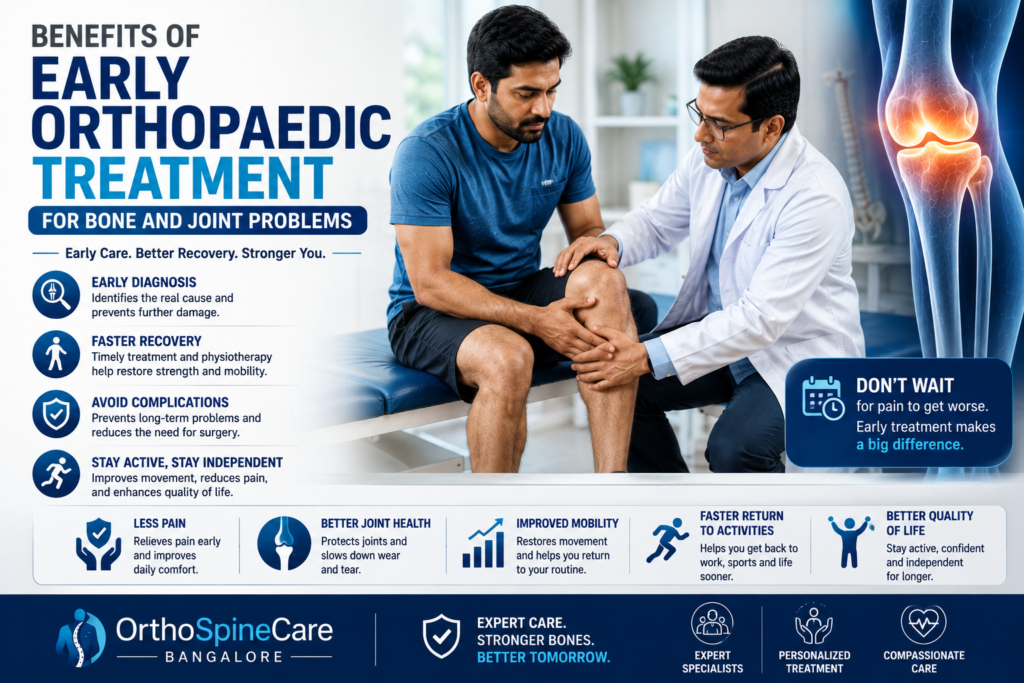
Benefits of Early Orthopaedic Treatment for Bone and Joint Problems
A little knee pain after a long day, occasional back stiffness, or shoulder discomfort may seem easy to ignore. Many people assume the problem will disappear with rest. Sometimes it does. But when pain keeps returning, movement becomes difficult, or an injury doesn’t heal properly, waiting too long can make the problem harder to manage.
Early orthopaedic treatment gives you an opportunity to understand what’s causing the problem and address it before it starts affecting your mobility and quality of life.
Whether you’re dealing with arthritis, a sports injury, persistent joint pain, a fracture, or a spine problem, timely evaluation can help you choose the right treatment and recovery plan.
At OrthoSpineCare in Bangalore, orthopaedic specialists evaluate bone, joint, muscle, ligament, tendon, and spine conditions and create treatment plans based on each patient’s individual needs.
What Is Early Orthopaedic Treatment?
Early orthopaedic treatment means seeking professional medical evaluation when symptoms first appear rather than waiting until pain becomes severe or movement becomes significantly restricted.
Depending on the condition, early treatment may include:
- Activity modification
- Physiotherapy
- Targeted exercises
- Medication
- Bracing or support
- Lifestyle changes
- Rehabilitation
- Selected injections
- Surgery when medically necessary
The goal isn’t always to use the most aggressive treatment. Instead, your specialist chooses an approach that addresses the underlying problem while supporting long-term function.
Why Do People Delay Orthopaedic Treatment?
Several reasons can cause people to postpone an appointment.
Some believe:
“It’s just normal ageing.”
Others wait because:
- The pain isn’t constant.
- Painkillers provide temporary relief.
- They are worried about surgery.
- They don’t have time for a consultation.
- They think the injury will heal on its own.
- They don’t realize that early symptoms can indicate a larger problem.
While occasional aches may not require medical attention, persistent or worsening symptoms deserve evaluation.
1. Early Diagnosis Helps Identify the Real Cause
Pain is a symptom, not a diagnosis.
For example, knee pain can result from arthritis, ligament damage, meniscus problems, tendon injuries, or other conditions. Similarly, shoulder pain may come from a rotator cuff problem, frozen shoulder, arthritis, or an injury.
An orthopaedic specialist can evaluate your symptoms, movement, strength, medical history, and injury history to determine what may be causing the pain.
Depending on your symptoms, your doctor may recommend X-rays, MRI, CT scans, blood tests, or other investigations.
An accurate diagnosis helps prevent guesswork and unnecessary treatment.
2. Early Treatment May Prevent the Problem From Getting Worse
Some musculoskeletal conditions gradually progress.
For example, untreated joint instability after an injury may place additional stress on the joint. Persistent inflammation can also affect movement and everyday function.
Early treatment gives your doctor an opportunity to manage the condition before it causes significant limitations.
This doesn’t mean every condition will worsen without treatment, but addressing persistent symptoms early is generally better than waiting until the problem severely affects your life.
3. You May Be Able to Avoid Unnecessary Surgery
One of the biggest concerns people have about seeing an orthopaedic specialist is the fear of surgery.
However, seeing an orthopaedic specialist does not automatically mean you need surgery.
Many conditions can improve with appropriate non-surgical treatment, including:
- Physiotherapy
- Exercise therapy
- Weight management
- Activity modification
- Medication
- Rehabilitation
- Bracing
- Selected injections
The appropriate treatment depends on the diagnosis.
When patients seek help early, doctors may have more opportunities to use conservative treatment before considering more invasive options.
4. Early Physiotherapy Can Restore Movement
Pain often causes people to move less. Reduced activity can weaken muscles and make joints stiffer.
A physiotherapist can develop exercises that gradually improve:
- Strength
- Flexibility
- Balance
- Joint movement
- Stability
- Coordination
Starting appropriate rehabilitation at the right stage can help you regain function while reducing the risk of further injury.
5. Early Treatment Can Help You Stay Active
Your joints and muscles are designed for movement.
Persistent pain can make you avoid walking, exercising, playing sports, or even performing household activities. Over time, reduced activity can affect muscle strength and overall fitness.
Early treatment aims to help you return to safe movement and maintain an active lifestyle.
Your doctor may recommend low-impact activities such as:
- Walking
- Swimming
- Cycling
- Stretching
- Strength training
The right activity depends on your condition.
6. It Can Reduce the Impact on Everyday Life
Bone and joint problems don’t only cause physical discomfort. They can affect your entire routine.
Knee pain may make stairs difficult. Shoulder pain can make dressing or reaching overhead uncomfortable. Hip pain may interfere with walking or sleeping.
Early treatment can help prevent pain from taking over these everyday activities.
The objective is not simply to make the pain disappear for a few hours. It is to improve your ability to move, work, exercise, and live comfortably.
7. Early Care Can Help With Sports Injuries
Athletes often try to continue playing despite pain.
This can be risky, particularly when the injury involves a ligament, tendon, cartilage, or joint.
An orthopaedic specialist can determine whether you need:
- Temporary rest
- Bracing
- Physiotherapy
- Strengthening
- Rehabilitation
- Imaging
- Surgical treatment
A structured return-to-sport program can help reduce the risk of returning to activity before your body is ready.
8. Early Management Can Protect Joint Health
Conditions such as arthritis can gradually affect joint function.
While treatment cannot always reverse established joint damage, early management can help control symptoms and maintain mobility.
A treatment plan may include:
- Exercise
- Weight management
- Physiotherapy
- Medication
- Lifestyle modifications
- Joint injections for selected patients
Your specialist can monitor your condition and adjust treatment as your needs change.
9. Early Treatment Can Help Prevent Muscle Weakness
When a painful joint limits movement, the muscles around it may become weaker.
For example, someone with chronic knee pain may gradually reduce walking and physical activity. Over time, weaker muscles can make the knee feel less stable.
Appropriate strengthening exercises can help rebuild support around the affected joint.
10. It Helps You Understand Your Condition
Knowing what’s causing your symptoms can reduce uncertainty.
During an orthopaedic consultation, you can learn:
- What may be causing your pain
- Whether the condition is temporary or chronic
- Which activities you should avoid
- Which exercises are safe
- What treatment options are available
- Whether you need further investigations
- What recovery may look like
An informed patient can make better decisions about their health.
Common Bone and Joint Problems That Need Attention
Consider an orthopaedic evaluation for persistent symptoms related to:
Knee Pain
Possible causes include arthritis, ligament injuries, meniscus problems, tendon injuries, and overuse.
Hip Pain
Hip pain can result from arthritis, injuries, bursitis, tendon problems, or other conditions.
Shoulder Pain
Rotator cuff problems, frozen shoulder, arthritis, and sports injuries are common causes.
Back and Neck Pain
Persistent symptoms may be associated with muscle problems, disc conditions, arthritis, or nerve compression.
Sports Injuries
Sprains, strains, ligament injuries, cartilage damage, and fractures may require professional assessment.
Fractures
A suspected fracture should receive appropriate medical attention to ensure proper healing and alignment.
Signs You Shouldn’t Ignore
You don’t necessarily need to visit a specialist for every minor ache. However, an appointment becomes more important when symptoms persist or interfere with your life.
Consider seeing an orthopaedic specialist if you experience:
- Pain that lasts for several weeks
- Repeated joint pain
- Persistent swelling
- Joint stiffness
- Reduced range of motion
- Difficulty walking
- Joint instability
- Repeated sports injuries
- Pain that affects sleep
- Numbness or tingling
- Muscle weakness
- Pain following an accident or significant injury
When Is Immediate Medical Attention Necessary?
Some symptoms after an injury require urgent evaluation.
Seek prompt medical attention if you have:
- A visibly deformed limb or joint
- Severe pain after major trauma
- Inability to bear weight
- Sudden significant swelling
- Loss of sensation
- New or worsening weakness
- An open wound associated with a suspected fracture
For severe back pain accompanied by new bladder or bowel problems or significant weakness, seek urgent medical care.
What Can You Do to Protect Your Bone and Joint Health?
Early treatment works best when combined with healthy daily habits.
Stay Active
Regular physical activity helps maintain muscle strength and joint mobility.
Maintain a Healthy Weight
Managing body weight can reduce stress on weight-bearing joints such as the knees and hips.
Eat a Balanced Diet
Adequate protein, calcium, vitamin D, fruits, vegetables, and other nutrients support overall musculoskeletal health.
Strengthen Your Muscles
Strong muscles provide better support for your joints and can improve stability.
Warm Up Before Exercise
A proper warm-up prepares your muscles and joints for activity.
Don’t Ignore Injuries
Give injuries appropriate time to heal and seek professional advice when symptoms persist.
Avoid Prolonged Inactivity
If your doctor says movement is safe, staying gently active can help prevent stiffness and muscle weakness.
Why Choose OrthoSpineCare in Bangalore?
At OrthoSpineCare, the focus is on identifying the underlying cause of your symptoms and creating a personalized treatment plan.
Patients can receive comprehensive care for:
- Knee and hip problems
- Shoulder conditions
- Arthritis
- Sports injuries
- Fractures
- Ligament and tendon injuries
- Back and neck pain
- Spine conditions
- Nerve compression
- Rehabilitation needs
Depending on the condition, treatment may include conservative care, physiotherapy, rehabilitation, injections, or surgical consultation.
The goal is to help patients reduce pain, restore movement, and return to their normal activities safely.
Conclusion
Bone and joint problems can start with something as simple as mild stiffness or occasional pain. While some symptoms may settle on their own, persistent or recurring problems deserve attention.
Early orthopaedic treatment can help identify the cause of your symptoms, begin appropriate rehabilitation, protect joint function, and help you stay active. It doesn’t automatically mean surgery—in many cases, treatment starts with conservative options such as physiotherapy, exercise, medication, lifestyle changes, and rehabilitation.
If you’re experiencing persistent bone or joint pain in Bangalore, consider consulting an orthopaedic specialist at OrthoSpineCare. Getting the right diagnosis early can help you make informed treatment decisions and protect your mobility for the years ahead.