
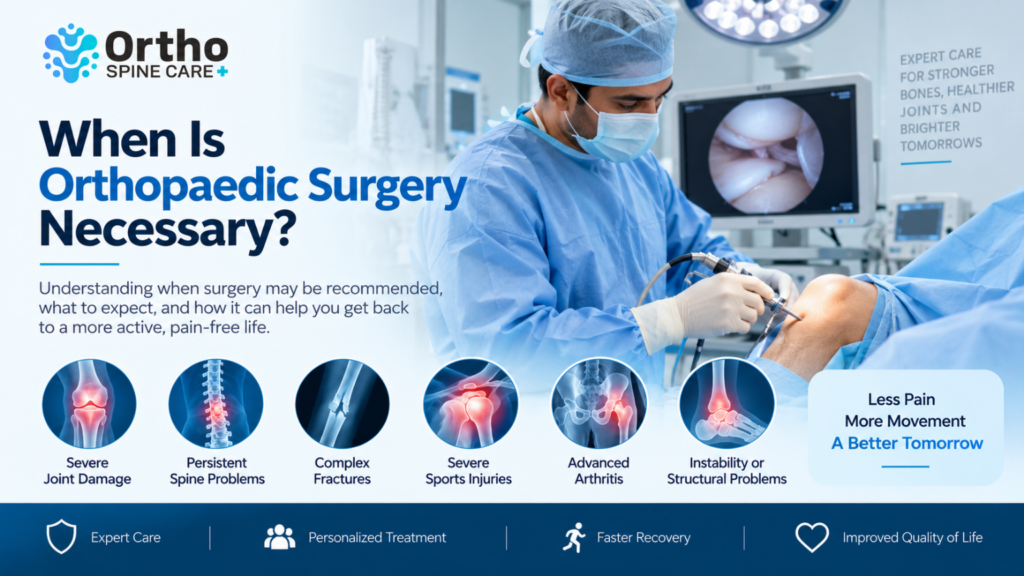
What Services Should You Expect From an Orthopaedic Clinic?
Bone, joint, muscle, and spine problems can affect almost every part of your daily routine. Whether it is persistent knee pain, difficulty walking, a sports injury, or recurring back discomfort, these conditions can make even simple activities challenging.
For example, climbing stairs may become uncomfortable because of knee pain, while prolonged sitting can aggravate certain back problems. Similarly, a shoulder injury may make it difficult to lift your arm or perform everyday tasks.
When these problems arise, visiting an orthopaedic clinic can help you understand the underlying cause and explore suitable treatment options.
However, many patients are unsure about the services an orthopaedic clinic actually provides. Is it only for fractures and surgery? Can orthopaedic doctors treat joint pain, spine conditions, and sports injuries? Do these clinics also provide rehabilitation guidance?
The answer is that orthopaedic care covers a wide range of medical services, from initial diagnosis and non-surgical treatment to surgical procedures and recovery support.
If you are searching for an orthopaedic clinic in Bangalore, understanding the services offered can help you choose the right specialist for your healthcare needs.
What Is an Orthopaedic Clinic?
An orthopaedic clinic is a medical facility that evaluates and manages conditions affecting the musculoskeletal system.
The musculoskeletal system includes bones, joints, muscles, ligaments, tendons, and other structures responsible for supporting your body and allowing movement.
Orthopaedic specialists diagnose and treat different conditions that may develop because of ageing, injuries, physical activity, degenerative changes, or structural abnormalities.
Depending on the clinic’s facilities and specialist expertise, services may include:
- Bone and joint treatment
- Spine care
- Fracture and trauma management
- Sports injury treatment
- Pain management
- Minimally invasive procedures
- Surgical treatment
- Physiotherapy and rehabilitation guidance
The exact services available vary between clinics. Therefore, it is important to check whether a clinic offers the specialist care required for your particular condition.
Choosing the right healthcare provider is an important step towards managing bone, joint, and spine problems. Before booking an appointment, learn how to choose an orthopaedic clinic in Bangalore by considering the doctor’s qualifications, treatment options, diagnostic facilities, and patient care.
1. Bone and Joint Treatment
Bone and joint problems are among the common reasons people visit an orthopaedic clinic.
Conditions affecting the knees, hips, shoulders, elbows, wrists, and ankles can cause pain, stiffness, swelling, and restricted movement.
For example, someone experiencing knee pain may find it difficult to climb stairs, while a person with shoulder problems may struggle to lift objects.
An orthopaedic specialist evaluates these symptoms and recommends treatment according to the underlying condition.
Common Bone and Joint Conditions
- Osteoarthritis
- Knee pain
- Hip pain
- Shoulder pain
- Joint stiffness
- Joint inflammation
- Ligament injuries
- Cartilage-related problems
Available Treatment Approaches
Depending on the diagnosis, treatment may involve medication, physiotherapy, activity modification, rehabilitation, selected injections, or surgical procedures.
For instance, certain patients with early-stage osteoarthritis may benefit from appropriate exercise and conservative management, while advanced joint damage may require surgical evaluation.
The main objective is to reduce symptoms, improve joint function, and help patients maintain comfortable movement.
Orthopaedic specialists treat several conditions that can affect everyday movement, including arthritis, ligament injuries, joint stiffness, and fractures. Explore these 10 common conditions treated by an orthopaedic doctor to understand when specialist medical care may be necessary.
Joint discomfort can develop because of several underlying problems, ranging from age-related degeneration to sports injuries. Read more about common bone and joint problems to understand their symptoms, possible causes, and available treatment approaches.
2. Spine Care and Back Pain Treatment
Spine-related conditions can affect people of different ages and activity levels.
Prolonged sitting, age-related degeneration, injuries, and disc-related problems may contribute to back or neck discomfort.
In some cases, spinal conditions can also affect nearby nerves, resulting in pain, numbness, tingling, or weakness in the arms or legs.
An orthopaedic clinic with spine care expertise can evaluate these symptoms and identify possible underlying conditions.
Common Spine Conditions
- Slipped or herniated discs
- Sciatica
- Cervical spondylosis
- Lumbar spondylosis
- Spinal stenosis
- Spondylolisthesis
- Nerve compression
- Certain spinal injuries
Spine Treatment Services
Depending on the condition, treatment options may include:
- Non-surgical spine treatment
- Medication and pain management
- Physiotherapy and rehabilitation guidance
- Selected spinal injections
- Minimally invasive spine procedures
- Endoscopic spine surgery
- Other appropriate spine surgeries
Not every patient with back pain requires surgery. In fact, many spinal conditions can initially be managed through conservative treatment.
However, when significant nerve compression, spinal instability, or other serious problems are present, surgical treatment may be considered.
A proper medical assessment helps determine the most suitable approach.
Spinal problems can involve discs, nerves, vertebrae, and surrounding structures. Understanding the common spine conditions treated by a spine surgeon can help patients recognize different spinal disorders and understand when specialist evaluation may be appropriate.
3. Fracture and Trauma Care
Accidents, falls, sports injuries, and other unexpected incidents can result in bone fractures or joint injuries.
Depending on the severity, these injuries may cause severe pain, swelling, bruising, deformity, and difficulty moving the affected area.
Orthopaedic specialists evaluate fractures and determine the appropriate treatment based on the location, type, and stability of the injury.
Common Injuries Managed
- Arm and leg fractures
- Wrist and ankle fractures
- Shoulder injuries
- Joint dislocations
- Sports-related fractures
- Accident-related bone injuries
- Certain spinal fractures
Fracture Treatment Options
Depending on the injury, treatment may involve:
Casting and Splinting: Used to support and protect certain fractures while the bone heals.
Bracing: Provides support and restricts movement when appropriate.
Closed Reduction: Involves repositioning certain displaced fractures without open surgery.
Surgical Fixation: Selected fractures may require plates, screws, rods, or other fixation devices to stabilize the bone.
Following treatment, appropriate follow-up and rehabilitation may help restore movement and function.
Severe injuries, suspected spinal fractures, open fractures, or injuries accompanied by numbness or loss of circulation require urgent medical attention.
4. Sports Injury Management
Sports and physical activities are beneficial for overall health. However, sudden movements, overuse, improper technique, and accidental falls can sometimes result in injuries.
Athletes and physically active individuals may experience injuries involving muscles, tendons, ligaments, and joints.
An orthopaedic clinic offering sports injury management can evaluate these problems and recommend appropriate treatment.
Common Sports Injuries
- ACL and other ligament injuries
- Meniscus tears
- Rotator cuff injuries
- Ankle sprains
- Tendon injuries
- Muscle strains
- Shoulder dislocations
- Sports-related fractures
Sports Injury Treatment
Treatment depends on the type and severity of the injury.
Available approaches may include:
- Initial injury assessment
- Appropriate pain and swelling management
- Physiotherapy
- Strengthening exercises
- Movement and flexibility training
- Selected surgical procedures
- Rehabilitation and return-to-sport guidance
For example, certain ligament injuries may improve with rehabilitation, while others involving significant instability may require surgical evaluation.
The goal is not simply to reduce pain but also to restore strength, stability, and functional movement.
Recovering from a sports injury involves more than simply reducing pain. The right treatment approach also focuses on restoring strength, stability, and movement. Learn how orthopaedic doctors treat sports injuries and what treatment options may be considered for different types of injuries.
5. Diagnosis and Medical Evaluation
Accurate diagnosis is an essential part of orthopaedic treatment.
Although two patients may experience similar symptoms, the underlying causes can be completely different.
For example, knee pain may be associated with arthritis, ligament damage, cartilage problems, or other conditions.
Similarly, back pain may originate from muscles, spinal discs, joints, or compressed nerves.
Therefore, a proper medical evaluation is important before selecting a treatment approach.
Your first appointment is an opportunity to discuss your symptoms, medical history, and treatment concerns with the specialist. If you are planning a visit, read our guide on what to expect during your first orthopaedic consultation to understand how to prepare for your appointment.
What Does an Orthopaedic Evaluation Include?
Medical History: The doctor discusses your symptoms, previous injuries, existing health conditions, and treatment history.
Physical Examination: The specialist evaluates joint movement, muscle strength, flexibility, sensation, and other relevant clinical findings.
X-rays: These help assess bones, joint alignment, and certain fractures.
MRI Scans: These provide detailed images of soft tissues, spinal discs, ligaments, and nerves.
CT Scans: These may be recommended to examine complex bone injuries and structural abnormalities.
Not every patient requires all these investigations. The doctor recommends tests according to the symptoms and examination findings.
6. Non-Surgical Orthopaedic Treatment
One important service to look for in an orthopaedic clinic is the availability of appropriate non-surgical treatment options.
Many bone, joint, and spine conditions can be managed without an operation, particularly when diagnosed early or when the condition is suitable for conservative treatment.
Depending on the diagnosis, your doctor may recommend:
- Medication for pain and inflammation
- Physiotherapy
- Activity modification
- Posture correction
- Strengthening exercises
- Selected pain management injections
- Rehabilitation programmes
For example, patients with certain types of lower back pain may improve through guided exercises and appropriate activity adjustments.
Similarly, some patients with mild joint problems may benefit from strengthening the muscles supporting the affected joint.
However, non-surgical treatment is not suitable for every condition. Your doctor should explain when further intervention may be necessary.
Many orthopaedic conditions can initially be managed through conservative approaches, depending on the diagnosis and severity. Explore these non-surgical orthopaedic treatments to understand how medication, physiotherapy, rehabilitation, and other approaches may help manage musculoskeletal problems.
7. Minimally Invasive Orthopaedic and Spine Procedures
Advancements in medical technology have introduced several minimally invasive techniques for treating selected orthopaedic and spinal conditions.
These procedures use specialized instruments and smaller access incisions to reach the affected structures.
Depending on the condition and the surgeon’s expertise, minimally invasive approaches may offer certain advantages, including:
- Smaller surgical incisions
- Less disruption to surrounding tissues in selected procedures
- Reduced blood loss in some operations
- Potentially shorter hospital stays
- Earlier return to certain daily activities
Examples include selected endoscopic spine procedures and minimally invasive spinal decompression techniques.
However, these procedures are not appropriate for every patient.
The choice of surgery should depend on the diagnosis, severity of the condition, expected benefits, and possible risks rather than the size of the incision alone.
8. Pain Management Services
Persistent bone, joint, and spine pain can affect sleep, work, mobility, and overall quality of life.
Pain management focuses on identifying the source of discomfort and developing an appropriate treatment plan.
Depending on the diagnosis, treatment may include:
- Medication
- Physiotherapy
- Activity modification
- Rehabilitation
- Selected joint injections
- Selected spinal injections
- Other specialist-directed pain management procedures
For example, certain patients with nerve-related pain may be considered for specific interventional procedures after a clinical evaluation.
However, pain management should address the underlying problem wherever possible rather than focusing only on temporary symptom relief.
9. Physiotherapy and Rehabilitation Guidance
Orthopaedic treatment does not always end once the initial pain improves.
In many cases, rehabilitation is an important part of regaining strength, flexibility, balance, and normal movement.
Patients recovering from fractures, ligament injuries, joint procedures, or spine surgery may benefit from an individualized rehabilitation programme.
Common Rehabilitation Goals
- Improve joint flexibility
- Strengthen supporting muscles
- Restore comfortable movement
- Improve balance and coordination
- Increase walking ability
- Regain functional independence
- Gradually return to everyday activities
For example, someone recovering from a knee injury may require exercises to improve muscle strength and joint stability.
Similarly, patients recovering from certain spine procedures may need a carefully planned programme to improve mobility and physical function.
The timing and intensity of rehabilitation depend on the medical condition and treatment performed.
Not every orthopaedic clinic provides physiotherapy directly. Some coordinate rehabilitation with separate physiotherapy centres.
Therefore, ask how rehabilitation and follow-up support are arranged.
10. Post-Surgical Care and Follow-Up
For patients who undergo orthopaedic or spine surgery, postoperative care is an important part of treatment.
After an operation, your medical team may monitor wound healing, pain levels, movement, and other aspects of recovery.
Follow-up appointments help the doctor assess progress and identify complications when they occur.
Post-surgical care may include:
- Wound-care instructions
- Medication guidance
- Activity restrictions
- Follow-up examinations
- Imaging when clinically necessary
- Physiotherapy recommendations
- Gradual return-to-work guidance
- Long-term recovery monitoring
For example, patients recovering from spinal fusion may require longer-term monitoring because bone healing continues over several months.
Following the surgeon’s instructions and attending scheduled appointments can help support a safer recovery.
11. Patient Education and Preventive Guidance
A good orthopaedic consultation should also help patients understand how to protect their bones, joints, and spine.
Although not every injury or degenerative condition can be prevented, certain lifestyle habits may support musculoskeletal health.
Your doctor may discuss:
- Maintaining appropriate physical activity
- Strengthening supporting muscles
- Maintaining a healthy body weight
- Using correct lifting techniques
- Avoiding prolonged poor posture
- Following appropriate exercise routines
- Taking precautions during sports activities
- Managing existing medical conditions
For example, people who spend long hours working at a desk may benefit from regular movement breaks and suitable ergonomic adjustments.
Similarly, strengthening exercises may help support joint function when performed appropriately.
Preventive guidance should be based on individual health needs rather than a one-size-fits-all exercise routine.
How to Choose an Orthopaedic Clinic With the Right Services
Not every clinic provides the same range of medical services. Therefore, it is important to understand your requirements before booking an appointment.
Here are some factors to consider.
1. Doctor’s Qualifications and Specialization
Check the doctor’s medical qualifications, postgraduate training, fellowships, and experience in treating your condition.
2. Range of Orthopaedic Services
Look for a clinic that offers the relevant services for your symptoms, whether they involve joint pain, spine problems, fractures, or sports injuries.
3. Diagnostic Support
Understand how the clinic evaluates patients and whether appropriate imaging and laboratory investigations can be arranged when necessary.
4. Surgical and Non-Surgical Treatment Options
A suitable clinic should discuss available treatment approaches and explain why a particular option is recommended.
5. Rehabilitation and Follow-Up
Check whether the clinic offers rehabilitation services or coordinates with physiotherapists and other healthcare professionals.
6. Patient Communication
Choose a doctor who listens to your concerns, explains the diagnosis clearly, and discusses the expected benefits and limitations of treatment.
7. Accessibility and Appointment Availability
Consider the clinic’s location, appointment timings, accessibility, and convenience for follow-up visits.
When Should You Visit an Orthopaedic Clinic?
You do not need to wait until pain becomes severe before seeking medical attention.
Consider consulting an orthopaedic specialist if you experience:
- Persistent knee, shoulder, or hip pain
- Repeated back or neck discomfort
- Joint stiffness or swelling
- Difficulty walking
- Pain following a sports injury
- Suspected fractures
- Recurring muscle or ligament injuries
- Numbness or tingling associated with spinal symptoms
- Reduced movement affecting everyday activities
If you experience a serious injury, visible deformity, an open fracture, or loss of sensation or circulation, seek urgent medical attention.
New bladder or bowel dysfunction, saddle-area numbness, or rapidly worsening weakness associated with back pain also requires emergency assessment.
Orthopaedic Care at OrthoSpineCare, Bangalore
If you are looking for an orthopaedic clinic in Bangalore, OrthoSpineCare provides orthopaedic and spine care under the guidance of Dr. Prajwal GS.
Located in Sadashivanagar, North Bangalore, the clinic focuses on evaluating and managing conditions affecting the bones, joints, and spine.
According to the clinic’s listed profile, Dr. Prajwal GS holds the following qualifications:
- MBBS – Kempegowda Institute of Medical Sciences, Bangalore
- MS Orthopaedics – J.J.M. Medical College, Davanagere
- Fellowship in Spine Surgery – Mallika Spine Centre, Guntur
- Fellowship in Minimally Invasive Spine Surgery – Mumbai
- Fellowship in Orthopaedic Rheumatology
- AO Global Spine Diploma – AO Spine, Davos, Switzerland
Services Listed at OrthoSpineCare
Spine Care and Pain Relief: Evaluation and treatment planning for slipped discs, sciatica, spinal disorders, and related conditions.
Bone and Joint Treatments: Care for joint pain, arthritis, and musculoskeletal conditions.
Fracture and Trauma Care: Management of fractures, injuries, and trauma-related orthopaedic problems.
Sports Injury Management: Evaluation and treatment of selected ligament, tendon, and sports-related injuries.
Minimally Invasive Procedures: Surgical approaches for suitable orthopaedic and spinal conditions.
Pain Management and Rehabilitation Guidance: Treatment planning and recovery support based on individual patient requirements.
The clinic emphasizes accurate diagnosis, personalized treatment planning, and consideration of both surgical and non-surgical approaches.
Book an Orthopaedic Consultation
If you are experiencing persistent joint pain, back discomfort, difficulty walking, or other orthopaedic symptoms, consider arranging a consultation to understand the underlying cause.
OrthoSpineCare
Address: No. 2, 10th Cross Road, Sadashivanagar, Bangalore – 560080 (Near Rashtrotthana Yoga Centre)
Phone: 9740559577
Email: prajwalgs1894@gmail.com
Website: https://orthospinecare.in/
Final Thoughts
An orthopaedic clinic provides much more than fracture treatment or surgical procedures. From diagnosing bone and joint problems to managing spine conditions, sports injuries, and rehabilitation, orthopaedic care covers several aspects of musculoskeletal health.
However, the services available vary between clinics. Therefore, before choosing one, check the doctor’s specialization, treatment options, diagnostic support, and follow-up arrangements.
Most importantly, remember that not every orthopaedic condition requires surgery. Many problems can be managed through appropriate non-surgical treatment, while others may require specialist intervention.
If pain, stiffness, or restricted movement is affecting your everyday life, consulting a qualified orthopaedic specialist can help you understand your condition and explore suitable treatment options.
Medical Disclaimer: This article is intended for general educational purposes and does not replace professional medical advice, diagnosis, or treatment. Treatment recommendations depend on individual symptoms, medical history, examination findings, and clinical circumstances.