
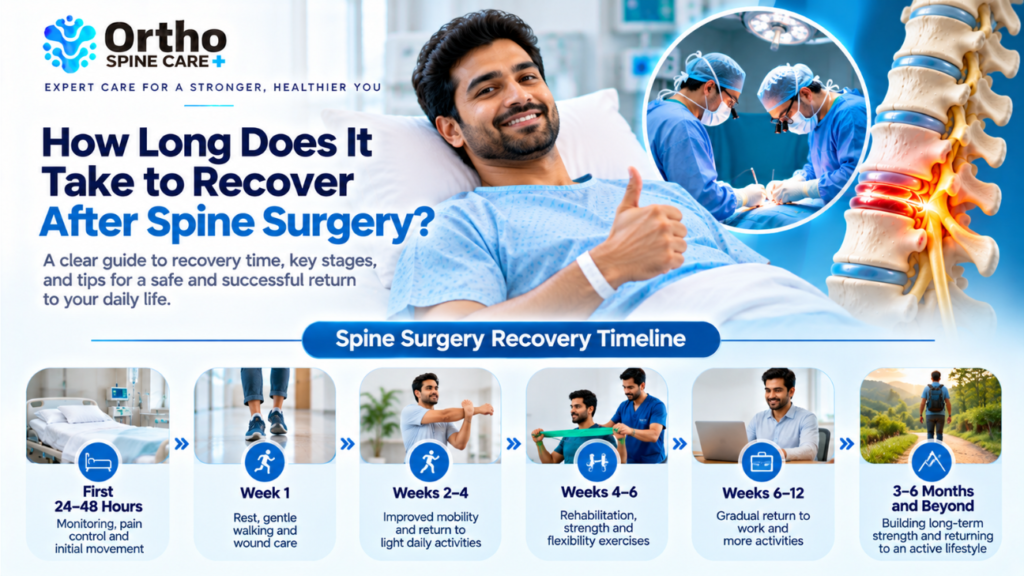
How Long Does It Take to Recover After Spine Surgery?
If you have been advised to undergo spine surgery, one of the first questions that may come to mind is, “How long will it take before I can return to my normal life?”
Whether you are dealing with a slipped disc, sciatica, spinal stenosis, or another spinal condition, the thought of surgery can bring several concerns. You may wonder when you can walk comfortably, return to work, drive, or start exercising again.
The good news is that recovery after spine surgery is often a gradual process, and many patients can begin moving relatively soon after certain procedures. However, the recovery timeline varies depending on the type of surgery, your overall health, and how your body responds to treatment.
For example, recovery after a minimally invasive discectomy may be considerably different from recovery after spinal fusion surgery.
If you are considering spine surgery in Bangalore, understanding the recovery process can help you prepare, set realistic expectations, and follow your doctor’s advice more confidently.
How Long Is the Recovery Period After Spine Surgery?
There is no single recovery timeline that applies to every patient. While some people return to light daily activities within a few weeks, others may require several months before resuming more demanding activities.
Generally, recovery depends on several factors, including:
- Type of spine surgery performed
- Severity of the spinal condition
- Number of spinal levels treated
- Age and overall health
- Existing medical conditions
- Physical fitness before surgery
- Nature of work and daily activities
- Postoperative rehabilitation
- Individual healing response
For instance, a patient undergoing a straightforward lumbar discectomy may resume certain activities sooner than someone recovering from a complex spinal fusion.
Therefore, rather than focusing on a fixed number of days, it is more helpful to understand the different stages of recovery.
Recovery Time After Different Types of Spine Surgery
Different spine procedures involve different levels of tissue healing, rehabilitation, and activity restrictions.
The following table provides general recovery estimates. These are broad ranges rather than guaranteed timelines.
| Type of Spine Surgery | General Recovery Expectations |
|---|---|
| Minimally invasive discectomy | Light activities may resume within days to a few weeks; fuller recovery may take several weeks |
| Endoscopic spine surgery | Some patients resume light activities within days to weeks, depending on the procedure |
| Lumbar decompression or laminectomy | Recovery commonly takes several weeks, with demanding activities taking longer |
| Spinal fusion surgery | Functional recovery may take several months; bone fusion can continue for 6–12 months or longer |
| Complex or multilevel spine surgery | Recovery may take several months or longer depending on the procedure |
These estimates can vary substantially. Your surgeon’s instructions should always take priority over general recovery timelines.
1. The First 24–48 Hours After Spine Surgery
The first stage of recovery begins immediately after the procedure.
Once surgery is completed, you will be moved to a recovery area where the medical team monitors your condition.
During this period, healthcare professionals may check:
- Blood pressure and heart rate
- Breathing and oxygen levels
- Pain and discomfort
- Movement and muscle strength
- Sensation in the arms or legs
- Surgical wound condition
- General postoperative stability
Depending on the procedure and your condition, you may be encouraged to sit, stand, or begin walking with assistance.
For example, after certain minimally invasive procedures, some patients may begin walking on the day of surgery.
However, more complex procedures may require a longer hospital stay and additional monitoring.
Will You Experience Pain After Surgery?
Some discomfort around the surgical area is expected during the early recovery period.
The intensity and duration vary depending on the procedure. Your doctor may prescribe appropriate medication to help manage postoperative pain.
Importantly, surgical wound discomfort and the nerve-related pain you experienced before surgery are not necessarily the same.
In some patients, nerve-related symptoms improve relatively quickly. However, numbness, weakness, or other neurological symptoms may take longer to improve, and complete recovery is not guaranteed.
2. The First Week: Rest and Gentle Movement
During the first week, your body begins healing from the procedure.
Although rest is important, prolonged bed rest is not usually recommended after many spine operations unless your surgeon gives specific instructions.
Instead, gentle movement and short walks may be encouraged when medically appropriate.
During this stage, you may be advised to:
- Take short walks as tolerated
- Follow prescribed medication instructions
- Keep the surgical wound clean and dry
- Avoid heavy lifting
- Avoid sudden twisting movements
- Change positions carefully
- Attend scheduled follow-up appointments
However, the exact restrictions depend on the procedure.
For instance, patients recovering from spinal fusion may have different precautions from those recovering after a simple discectomy.
What Should You Avoid During the First Week?
Depending on your surgeon’s advice, you may need to avoid:
- Heavy lifting
- Strenuous exercise
- Repetitive bending
- Sudden twisting
- High-impact activities
- Driving while taking sedating pain medication
Additionally, avoid forcing movements that cause significant pain.
Your recovery plan should focus on safe, gradual activity rather than trying to return to your usual routine immediately.
3. Weeks 2–4: Gradually Returning to Daily Activities
For some patients, the second to fourth week brings noticeable improvements in mobility and comfort.
You may find it easier to walk, sit for short periods, and complete certain household activities.
However, improvement is not always consistent. Some days may feel better than others, particularly when your activity level increases.
During this stage, your doctor may recommend:
- Gradually increasing walking distance
- Continuing gentle movement
- Avoiding activities that place excessive stress on the spine
- Following wound-care instructions
- Beginning selected rehabilitation exercises when appropriate
For patients who have undergone certain minimally invasive procedures, returning to light work may be possible during this period.
Nevertheless, the timing depends on the operation, symptoms, and physical demands of the job.
4. Weeks 4–6: Improving Strength and Mobility
As healing progresses, some patients begin feeling more confident about movement.
Walking may become easier, and postoperative discomfort may gradually decrease.
Depending on the surgery, your doctor may recommend a structured physiotherapy programme to support recovery.
Rehabilitation may focus on:
- Improving walking tolerance
- Restoring comfortable movement
- Strengthening supporting muscles
- Improving balance
- Gradually increasing physical activity
- Learning safer movement techniques
However, not every patient begins physiotherapy at the same time.
For example, certain spinal fusion procedures may require additional healing before more demanding exercises are introduced.
Therefore, follow the rehabilitation schedule recommended by your surgeon.
5. Weeks 6–12: Returning to More Activities
For some patients recovering from less extensive spine procedures, this period may involve a gradual return to a wider range of everyday activities.
Depending on your progress, you may be able to increase walking, resume certain exercises, and return to more normal work responsibilities.
However, patients recovering from spinal fusion or complex procedures may still have significant restrictions.
Before increasing your activity level, your healthcare team may consider:
- Pain and swelling
- Wound healing
- Muscle strength
- Walking ability
- Neurological symptoms
- Functional movement
- Findings from follow-up examinations or imaging, when necessary
Even if you feel better, it is important not to assume that all internal tissues have completely healed.
6. Three to Six Months: Building Long-Term Function
By three to six months, many patients have made meaningful progress in their recovery.
However, the amount of improvement depends on the surgery performed and the underlying condition.
For example, someone recovering from a discectomy may already have returned to many normal activities, while a patient recovering from spinal fusion may still be working toward greater strength and mobility.
During this stage, rehabilitation may focus on:
- Building endurance
- Improving muscle strength
- Increasing activity tolerance
- Restoring functional movement
- Gradually returning to suitable recreational activities
Nevertheless, some symptoms may continue improving over a longer period.
Nerves, in particular, may recover more slowly than the surgical wound. In certain cases, persistent numbness or weakness may not resolve completely.
7. Six to Twelve Months: Longer-Term Recovery
After certain major spine procedures, recovery continues for many months.
This is particularly relevant after spinal fusion surgery, where the body needs time to form new bone between the treated vertebrae.
Although patients may resume many activities before the fusion is fully mature, the bone-healing process can continue for six to twelve months or longer.
Your surgeon may recommend follow-up imaging to assess healing when clinically appropriate.
At this stage, some patients may be able to return to more demanding activities, while others may require continued rehabilitation or restrictions.
The appropriate timeline depends on your procedure, medical condition, and recovery progress.
Is Recovery Faster After Minimally Invasive Spine Surgery?
In selected patients, minimally invasive spine surgery may allow faster initial recovery compared with certain traditional open procedures.
These techniques use specialized instruments and relatively small incisions to access the affected spinal structures.
Potential advantages may include:
- Smaller surgical incisions
- Less disruption to surrounding muscles
- Reduced blood loss in selected procedures
- Shorter hospital stays in some cases
- Potentially faster return to light activities
However, minimally invasive surgery does not guarantee a shorter recovery for everyone.
For example, a minimally invasive spinal fusion still requires time for the bones to heal. Similarly, recovery from nerve compression depends partly on how severely and how long the nerve was affected.
Therefore, the procedure’s name alone should not determine your recovery expectations.
When Can You Walk After Spine Surgery?
Walking is often encouraged relatively early after many spine procedures.
Depending on the operation and your medical stability, your healthcare team may help you stand or walk on the day of surgery or shortly afterward.
Initially, walking distances may be short. However, as your strength and confidence improve, your doctor may recommend gradually increasing your activity.
Walking can help maintain mobility and reduce complications associated with prolonged inactivity.
Nevertheless, avoid increasing your walking distance too quickly if it causes significant pain, weakness, or other concerning symptoms.
When Can You Return to Work After Spine Surgery?
Returning to work depends on both the surgery and the physical demands of your job.
For instance, someone working at a computer may be able to return sooner than someone whose job involves lifting heavy objects, bending repeatedly, or prolonged physical activity.
Desk-Based Jobs
Some patients recovering from less extensive procedures may return to desk-based work within a few weeks, depending on pain, mobility, medication use, and their surgeon’s advice.
However, prolonged sitting may still be uncomfortable, so regular movement breaks may be helpful.
Physically Demanding Jobs
People working in construction, manufacturing, delivery services, or other physically demanding roles may require a longer recovery period.
In some cases, modified duties may be recommended before returning to full physical work.
After Spinal Fusion
Recovery after spinal fusion is generally more prolonged, particularly for jobs involving physical labour.
Your surgeon should provide individualized guidance about when it is safe to return to work.
When Can You Drive After Spine Surgery?
Driving should only be resumed when you can safely control the vehicle, react appropriately, and perform necessary movements without significant restriction.
You should also avoid driving while taking opioid pain medication or other medicines that cause drowsiness or impair reaction time.
Depending on the procedure, your doctor may recommend waiting for a particular period before driving.
Therefore, ask your surgeon for clearance rather than relying on a fixed timeline.
When Can You Exercise After Spine Surgery?
Exercise is an important part of long-term spinal health, but returning too early to demanding activities may interfere with recovery.
Initially, walking and gentle movement may be recommended.
Later, depending on your condition, rehabilitation may include:
- Core strengthening
- Gentle flexibility exercises
- Balance training
- Low-impact aerobic activities
- Gradual resistance exercises
- Functional movement training
However, running, heavy weightlifting, contact sports, and high-impact exercise may need to be postponed until your surgeon confirms that they are appropriate.
The safest approach is to increase activity gradually under professional guidance.
What Factors Can Delay Recovery After Spine Surgery?
Although every patient heals differently, certain factors may influence recovery.
Age and Overall Health
Age alone does not determine recovery, but general health and existing medical conditions can affect healing and rehabilitation.
Diabetes and Other Medical Conditions
Some medical conditions may influence wound healing, infection risk, or recovery progress.
Therefore, managing existing health problems is important before and after surgery.
Smoking and Nicotine Use
Smoking and nicotine exposure can interfere with tissue and bone healing, particularly after spinal fusion.
Your healthcare team can provide guidance about stopping smoking and nicotine use before and after surgery.
Complexity of Surgery
More extensive procedures, including certain multilevel operations and spinal fusion surgeries, may require longer recovery.
Rehabilitation and Activity Levels
Following an appropriate rehabilitation programme can help support functional recovery.
However, doing too much too soon may aggravate symptoms or interfere with healing.
Pre-existing Nerve Damage
If a nerve has been compressed or damaged for a prolonged period, recovery of sensation or strength may take longer.
In some cases, neurological symptoms may not fully resolve even after successful decompression.
Warning Signs During Spine Surgery Recovery
Although some discomfort is expected after surgery, certain symptoms should not be ignored.
Contact your surgical team promptly if you experience:
- Increasing redness or swelling around the wound
- Discharge from the surgical incision
- Fever
- Worsening pain that is not controlled by prescribed medication
- New or increasing numbness
- New muscle weakness
- Persistent wound-related concerns
Seek emergency medical care for new loss of bladder or bowel control, numbness around the groin or saddle area, rapidly worsening neurological weakness, severe breathing difficulty, chest pain, or other serious symptoms.
Sudden leg swelling or pain may also require urgent evaluation because it can indicate a blood clot.
If you are uncertain whether a symptom is normal, contact your healthcare team rather than waiting for your next appointment.
Tips for a Smoother Recovery After Spine Surgery
While recovery cannot be rushed, certain habits may help support healing and rehabilitation.
Follow Your Surgeon’s Instructions
Every procedure has different restrictions and recovery requirements. Therefore, follow the specific guidance provided by your surgical team.
Stay Appropriately Active
Gentle walking and suitable movement may support recovery. However, avoid activities that your doctor has restricted.
Attend Follow-Up Appointments
Regular follow-up visits allow your doctor to monitor healing, assess symptoms, and adjust your recovery plan when necessary.
Eat a Balanced Diet
Adequate nutrition, including sufficient protein and other essential nutrients, supports normal tissue healing.
Avoid Smoking
Smoking can interfere with healing and increase certain postoperative risks. If you smoke, ask your healthcare professional for help stopping.
Follow Your Rehabilitation Programme
If physiotherapy is recommended, complete the exercises according to professional guidance.
Most importantly, remember that recovery is gradual. Feeling better does not always mean your spine is ready for unrestricted activity.
Frequently Asked Questions About Spine Surgery Recovery
1. How many days of bed rest are needed after spine surgery?
Prolonged bed rest is not routinely recommended after many spine procedures. Patients are often encouraged to begin gentle movement early when medically appropriate. However, your surgeon will provide instructions based on your operation.
2. Is it normal to have pain after spine surgery?
Some postoperative discomfort is expected. Nevertheless, severe, increasing, or unusual pain should be discussed with your healthcare team.
3. How long does nerve pain take to improve after surgery?
Some patients experience relatively quick improvement in nerve-related pain, while others recover more gradually. Numbness and weakness may take months to improve, and complete recovery is not always possible.
4. Can I climb stairs after spine surgery?
Some patients can climb stairs relatively early with appropriate guidance. However, this depends on the procedure, balance, strength, and medical condition.
5. How long does spinal fusion take to heal?
Bone fusion commonly continues for six to twelve months or longer, although patients may regain functional mobility before the fusion process is complete.
6. Can I return to the gym after spine surgery?
Returning to the gym depends on the type of surgery, recovery progress, and exercises involved. Ask your surgeon or physiotherapist when specific activities can be resumed safely.
Spine Surgery and Recovery Care at OrthoSpineCare, Bangalore
If you are planning spine surgery or have concerns about your recovery, consulting a qualified spine specialist can help you understand what to expect.
OrthoSpineCare, located in Sadashivanagar, Bangalore, provides orthopaedic and spine care under Dr. Prajwal GS.
According to the clinic’s listed profile, Dr. Prajwal GS holds qualifications including:
- MBBS – Kempegowda Institute of Medical Sciences, Bangalore
- MS Orthopaedics – J.J.M. Medical College, Davanagere
- Fellowship in Spine Surgery – Mallika Spine Centre, Guntur
- Fellowship in Minimally Invasive Spine Surgery – Mumbai
- Fellowship in Orthopaedic Rheumatology
- AO Global Spine Diploma – AO Spine, Davos, Switzerland
The clinic’s listed services include spine care, minimally invasive spine procedures, bone and joint treatment, fracture and trauma management, pain management, and rehabilitation guidance.
If you have been advised to undergo spine surgery, an individual consultation can help you understand the recommended procedure, possible alternatives, recovery expectations, and follow-up requirements.
Book a Spine Consultation
OrthoSpineCare
No. 2, 10th Cross Road, Sadashivanagar, Bangalore – 560080 (Near Rashtrotthana Yoga Centre)
Phone: 9740559577
Website: https://orthospinecare.in/
Final Thoughts
Recovery after spine surgery is different for every patient. While some people return to light activities within a few weeks, others may need several months to regain strength, mobility, and confidence.
The type of surgery, severity of the spinal condition, overall health, and rehabilitation process all influence recovery.
Moreover, minimally invasive procedures may offer faster initial recovery in selected cases, but they do not eliminate the need for proper healing and postoperative care.
Rather than comparing your progress with someone else’s experience, focus on following your surgeon’s instructions, attending follow-up appointments, and gradually increasing activity when medically appropriate.
If you are considering spine surgery in Bangalore, consulting an experienced spine specialist can help you understand your treatment options and prepare for the recovery process.
Medical Disclaimer: This article is intended for general educational purposes only and does not replace professional medical advice, diagnosis, or treatment. Recovery timelines vary depending on the procedure and individual health circumstances. Always follow your treating surgeon’s instructions.