
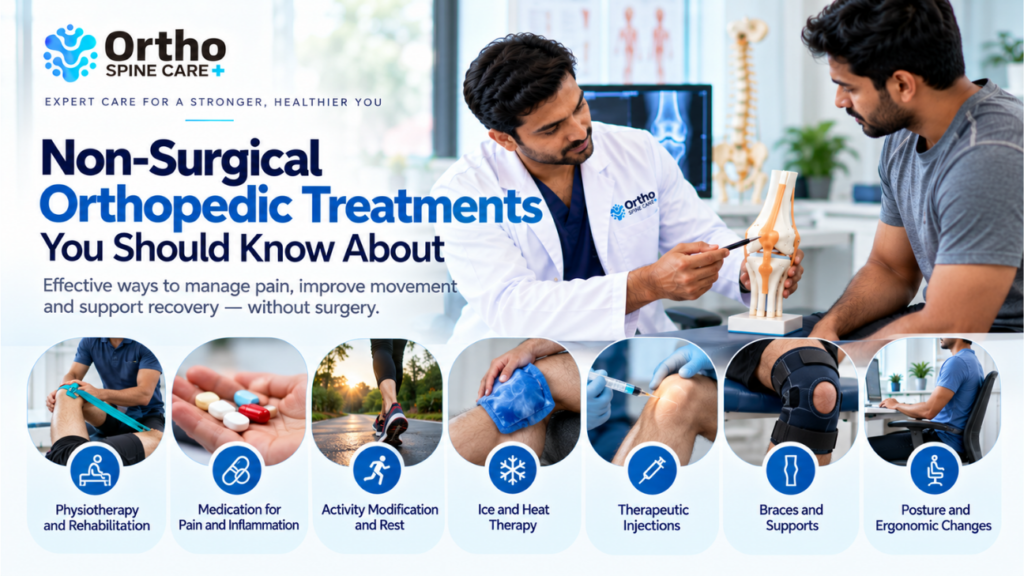
Non-Surgical Orthopedic Treatments You Should Know About
Joint pain, back pain, stiffness, or an old injury can make even simple daily activities feel difficult. For instance, climbing stairs may become uncomfortable because of knee pain, while shoulder stiffness can make it challenging to reach overhead. Over time, these problems may also affect your sleep, work, exercise routine, and overall quality of life.
When pain continues, many people worry that surgery is their only option. However, not every orthopedic condition requires surgery. In many cases, non-surgical treatments can help manage symptoms, improve mobility, and support recovery.
The right approach depends on the underlying condition, its severity, and your overall health. Therefore, understanding the available options can help you have a more productive conversation with your doctor.
If you are looking for an orthopedic doctor in Bangalore, this guide explains several non-surgical orthopedic treatments, how they work, and when they may be appropriate.
What Are Non-Surgical Orthopedic Treatments?
Non-surgical orthopedic treatments are medical and rehabilitation approaches used to manage problems affecting the bones, joints, muscles, ligaments, tendons, and spine without an operation.
For example, people experiencing knee pain, arthritis, certain sports injuries, back pain, or tendon problems may benefit from conservative treatment. Depending on the diagnosis, their treatment plan may include physiotherapy, medication, activity modification, injections, or other suitable approaches.
However, one treatment does not work for everyone. Consequently, an orthopedic doctor should assess the underlying problem before recommending a treatment plan.
1. Physiotherapy and Rehabilitation
Physiotherapy is one of the most commonly used approaches for managing many musculoskeletal conditions. It focuses on improving movement, strength, flexibility, balance, and physical function.
For example, someone recovering from a knee injury may need exercises to strengthen the muscles supporting the joint. Similarly, a person experiencing certain types of back pain may benefit from a structured exercise programme.
Depending on your condition, physiotherapy may include:
- Strengthening exercises
- Stretching and flexibility exercises
- Range-of-motion exercises
- Balance and coordination training
- Walking and movement training
- Gradual return-to-activity exercises
Moreover, rehabilitation can help you regain confidence in your movements after an injury or procedure. Nevertheless, exercises should be selected according to your diagnosis and recovery progress rather than followed without professional guidance.
2. Medication for Pain and Inflammation
When pain makes everyday activities uncomfortable, your doctor may recommend medication to help manage the symptoms.
Depending on the condition, this may include suitable pain-relieving or anti-inflammatory medicines. These medications can sometimes make it easier to participate in physiotherapy and continue necessary daily activities.
However, medication does not necessarily correct the underlying cause of joint or muscle pain. Therefore, your doctor may recommend combining it with rehabilitation, activity modification, or other treatments.
It is also important to remember that some medicines can cause side effects or interact with other medications. For this reason, avoid taking painkillers regularly without medical advice, particularly if you have existing health conditions.
3. Activity Modification and Appropriate Rest
Sometimes, joint pain develops or worsens because a particular activity places repeated stress on an affected area. In such cases, modifying your routine may help reduce discomfort while the body recovers.
For instance, if running aggravates knee pain, your doctor may recommend temporarily reducing high-impact exercise. Similarly, someone with shoulder discomfort may need to modify repetitive overhead movements.
Depending on the condition, useful adjustments may include:
- Reducing activities that worsen symptoms
- Taking regular breaks during repetitive tasks
- Adjusting workout intensity
- Avoiding painful movements temporarily
- Returning to normal activities gradually
However, rest does not always mean avoiding movement completely. In fact, prolonged inactivity may contribute to stiffness and muscle weakness in some conditions. Consequently, the goal is to balance protection and appropriate activity according to your doctor’s advice.
4. Ice and Heat Therapy
Ice and heat are simple approaches that may help relieve certain types of musculoskeletal discomfort.
Ice therapy may be useful after some recent injuries because it can help manage pain and swelling. Meanwhile, heat therapy may help reduce stiffness and muscle discomfort in selected situations.
Nevertheless, neither approach is suitable for every condition, and neither replaces a medical assessment when symptoms are severe or persistent.
If you use ice or heat, place a protective layer between the source and your skin. In addition, avoid these methods without professional advice if you have reduced sensation or circulation problems that could increase the risk of skin injury.
5. Therapeutic Injections
For certain joint and musculoskeletal conditions, an orthopedic doctor may recommend an injection as part of the treatment plan.
For example, corticosteroid injections may help reduce inflammation and relieve symptoms in selected patients. However, the expected benefit depends on the condition being treated, and relief may be temporary.
Injections do not automatically repair damaged cartilage, ligaments, or tendons. Therefore, your doctor should explain why an injection is being considered, what improvement you might expect, and whether other treatments would be more appropriate.
Although injections can be useful in specific situations, they are not necessary for everyone with joint pain.
6. Exercise-Based Treatment for Arthritis
Arthritis can cause joint pain, stiffness, swelling, and reduced mobility. As a result, everyday activities such as walking, climbing stairs, or getting up from a chair may become more difficult.
Although some forms of arthritis cannot be reversed, appropriate management can help many people maintain movement and function.
Depending on the affected joint and severity of symptoms, treatment may involve:
- Strengthening exercises
- Low-impact physical activity
- Physiotherapy
- Activity modification
- Medication when appropriate
- Weight management when beneficial
For example, people with knee or hip osteoarthritis may benefit from suitable exercises that strengthen supporting muscles and improve physical function.
However, exercise programmes should be adjusted to individual needs. If a movement causes significant or worsening pain, seek professional guidance rather than forcing yourself to continue.
7. Braces, Supports, and Orthotic Devices
In some situations, an orthopedic doctor may recommend a brace, splint, walking aid, or orthotic device to support recovery.
These devices may help stabilize an injured joint, limit certain movements temporarily, or make walking more manageable.
For instance, a brace may be recommended for selected knee injuries, while a splint may be used to protect a particular area during healing.
However, the type of support and the length of time it should be used depend on the condition. Using an unsuitable device or wearing it for longer than recommended may not provide the intended benefit.
Therefore, ask your doctor how the device should fit, when you should wear it, and when you can safely reduce or stop using it.
8. Manual Therapy
Manual therapy involves hands-on techniques performed by trained healthcare professionals to help address certain movement problems and musculoskeletal symptoms.
Depending on the condition, these techniques may be used alongside exercise and rehabilitation to improve movement or reduce discomfort.
For example, a physiotherapist may incorporate appropriate hands-on techniques into a programme for selected joint or muscle problems.
Nevertheless, manual therapy is not suitable for every patient. Certain fractures, unstable injuries, and some spine conditions require specific precautions. Consequently, a qualified professional should assess whether it is appropriate for your situation.
9. Posture and Ergonomic Changes
Your working environment and daily habits may contribute to discomfort in certain situations. For example, sitting for long periods without movement may aggravate back or neck symptoms, while repetitive overhead tasks may worsen some shoulder problems.
Fortunately, a few practical adjustments may help make everyday activities more comfortable.
Consider the following:
- Position your computer screen at a comfortable height.
- Adjust your chair and desk to suit your working position.
- Take regular movement breaks.
- Change positions throughout the day.
- Use appropriate techniques when lifting objects.
- Modify repetitive activities that aggravate your symptoms.
However, there is no single perfect posture for everyone. Instead, maintaining comfortable positions, moving regularly, and building appropriate physical strength may be more useful than trying to remain in one rigid position all day.
If the pain continues despite these adjustments, consider consulting an orthopedic specialist.
10. Gradual Return to Sports and Exercise
After an injury, it can be tempting to return to your usual workout routine as soon as the pain begins to improve. However, reduced pain does not always mean that the injured tissues have recovered sufficiently.
For this reason, a gradual return-to-activity plan may be important after sprains, muscle strains, tendon problems, and selected ligament injuries.
Your recovery programme may involve restoring movement, rebuilding strength, improving balance, and gradually increasing exercise intensity. In addition, sport-specific exercises may help prepare you for the physical demands of your chosen activity.
The recovery timeline varies depending on the injury. Therefore, follow your healthcare professional’s advice before returning to demanding sports or intense workouts.
11. Regenerative Treatments: What Should You Know?
You may have heard about treatments such as platelet-rich plasma (PRP) injections for certain tendon and joint conditions.
These treatments are sometimes considered in specific circumstances. However, the evidence supporting their effectiveness varies depending on the condition, and they should not be presented as guaranteed solutions.
Before considering a regenerative treatment, discuss the following with your doctor:
- What evidence supports its use for my condition?
- What benefits can reasonably be expected?
- What are the possible risks?
- How much might the treatment cost?
- Are established alternatives available?
Ultimately, your decision should be based on your diagnosis, the available evidence, potential risks, and realistic expectations.
Can Non-Surgical Treatment Help You Avoid Surgery?
In some cases, non-surgical treatment may provide enough improvement that surgery is no longer necessary. However, the outcome depends on the underlying condition and the extent of the damage.
For example, certain muscle strains and joint problems may improve with appropriate rehabilitation and activity modification. On the other hand, some severe fractures, significant ligament injuries, and advanced joint conditions may require surgical treatment.
When deciding on a treatment plan, your doctor will consider the diagnosis, severity of the problem, symptoms, previous treatments, and your everyday activity requirements.
If surgery is recommended, ask about the reasons for the recommendation, possible alternatives, expected benefits, and recovery requirements. This will help you make a more informed decision.
The goal is not to avoid surgery at all costs. Instead, it is to choose the treatment that is most appropriate for your individual condition.
When Should You Consult an Orthopedic Doctor?
Although some minor discomfort may improve with appropriate care, persistent symptoms should not be ignored.
Consider consulting an orthopedic specialist if you experience:
- Knee, shoulder, hip, or other joint pain that continues or returns
- Persistent back or neck pain
- Ongoing swelling or stiffness
- Difficulty walking or moving a joint
- A sports injury that is not improving
- Pain that interferes with sleep or daily activities
- Symptoms that continue despite appropriate initial treatment
In addition, seek prompt medical attention after a significant injury if you have severe pain, an obvious deformity, substantial swelling, or an inability to bear weight. A hot, red, swollen joint accompanied by fever also requires urgent assessment.
Non-Surgical Orthopedic Care at OrthoSpineCare, Bangalore
If pain or reduced mobility is affecting your everyday routine, an orthopedic evaluation can help identify the possible cause and determine whether non-surgical treatment may be suitable.
OrthoSpineCare, located in Sadashivanagar, Bangalore, provides orthopaedic and spine care under Dr. Prajwal GS.
The clinic’s listed services include bone and joint treatment, spine care, fracture and trauma management, sports injury treatment, pain management, rehabilitation guidance, diagnostic services, and surgical care.
When choosing an orthopedic specialist, consider their qualifications, experience with your condition, available treatment options, and approach to rehabilitation and follow-up care.
Book a Consultation
OrthoSpineCare
No. 2, 10th Cross Road, Sadashivanagar, Bangalore – 560080
Phone: 9740559577
Final Thoughts
Surgery is not the only treatment option for many orthopedic conditions. Depending on the diagnosis, physiotherapy, medication, rehabilitation, activity modification, injections, and other conservative approaches may help manage symptoms and improve movement.
However, the first step is to understand what is causing the problem. Once the underlying condition has been assessed, your doctor can recommend an appropriate treatment plan based on your needs and recovery goals.
If persistent joint pain, back pain, stiffness, or an injury is affecting your daily life, consider consulting a qualified orthopedic doctor to discuss the options available to you.
This article is intended for general educational purposes and does not replace an individual medical consultation. Treatment recommendations depend on your diagnosis, medical history, examination findings, and clinical circumstances.