
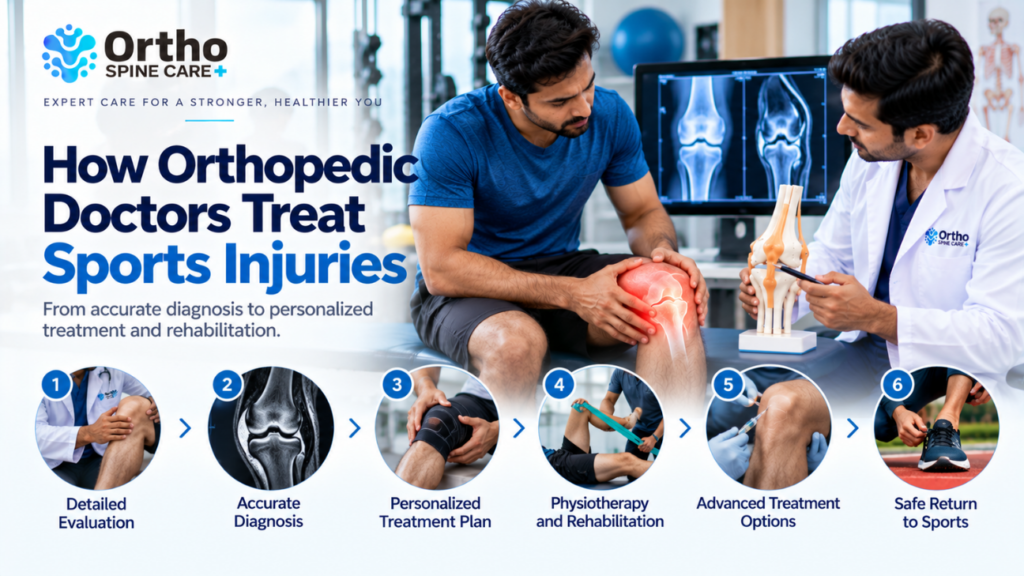
How Orthopedic Doctors Treat Sports Injuries
Whether you enjoy playing cricket on weekends, going to the gym, running in the morning, or participating in competitive sports, staying active is an important part of a healthy lifestyle. However, sports and physical activities can sometimes lead to injuries that affect your movement and daily routine.
A sudden twist of the knee, pain in the shoulder after a workout, or an ankle injury while running may seem minor initially. But when pain, swelling, weakness, or restricted movement continues, getting the right medical attention becomes important.
This is where an orthopedic doctor can help.
Orthopedic doctors diagnose and treat injuries affecting bones, joints, muscles, ligaments, and tendons. Depending on the type and severity of the injury, treatment may involve rest, physiotherapy, rehabilitation, medication, or surgery when necessary.
If you are looking for an orthopedic doctor in Bangalore, understanding how sports injuries are treated can help you make informed decisions about your recovery.
What Are Sports Injuries?
Sports injuries are injuries that occur during exercise, sports, workouts, or other physical activities. They can happen because of sudden accidents, repetitive movements, improper technique, or excessive stress on the body.
Some injuries occur instantly, while others develop gradually over time.
Common sports injuries include:
- Knee ligament injuries
- Ankle sprains
- Muscle strains
- Tendon injuries
- Shoulder injuries
- Rotator cuff injuries
- Fractures
- Cartilage injuries
- Overuse injuries
The right treatment depends on which structure is injured and how severely it has been affected.
1. Diagnosing the Injury
The first step in treating a sports injury is understanding what has happened.
During your consultation, an orthopedic doctor may ask:
- How did the injury occur?
- When did the pain begin?
- Did you hear or feel a pop during the injury?
- Is there swelling or bruising?
- Can you move the affected joint?
- Can you put weight on the injured leg?
- Have you experienced a similar injury before?
- What activities were you doing when the symptoms started?
Your doctor may then examine the affected area to assess movement, tenderness, swelling, strength, and joint stability.
For example, a knee injury sustained while playing football may require an examination to assess the ligaments and other structures around the joint.
Understanding the injury helps the doctor determine which investigations and treatments may be appropriate.
2. Using X-Rays and Other Diagnostic Tests
Not every sports injury requires imaging. However, your doctor may recommend investigations when they are necessary to clarify the diagnosis.
Depending on the suspected injury, these may include:
X-rays: Often used when a fracture or certain bone-related problems are suspected.
MRI scans: May be recommended to assess ligaments, tendons, cartilage, and other soft tissues.
Other investigations: Additional tests may be appropriate depending on the injury and clinical findings.
The choice of investigation depends on your symptoms, physical examination, and medical circumstances.
3. Treating Ankle Sprains and Muscle Strains
Ankle sprains and muscle strains are common among runners, football players, badminton players, and people who exercise regularly.
An ankle sprain occurs when the ligaments supporting the ankle are stretched or torn. A muscle strain involves damage to muscle fibres or their associated tendons.
Depending on the severity, treatment may include:
- Protecting the injured area
- Temporarily modifying activities
- Applying ice when appropriate
- Compression or support when recommended
- Elevation to help manage swelling
- Pain relief when medically appropriate
- Physiotherapy and gradual rehabilitation
More severe injuries may require additional evaluation or treatment.
Returning to sports too quickly can increase the risk of reinjury, so it is important to follow an appropriate recovery plan.
4. Treating Knee Ligament Injuries
The knee contains several ligaments that help stabilize the joint during movement.
Sports involving sudden changes of direction, jumping, landing, or twisting can sometimes injure these ligaments.
Symptoms may include:
- Knee pain
- Swelling
- A feeling of instability
- Difficulty walking
- Difficulty changing direction
- Reduced range of motion
Treatment depends on the specific ligament involved, the severity of the injury, and your activity requirements.
Some ligament injuries can be managed with rehabilitation, strengthening exercises, and activity modification. Others may require surgery, particularly when there is significant instability or additional structural damage.
An orthopedic doctor can help determine which approach is appropriate for your condition.
5. Managing Shoulder and Rotator Cuff Injuries
Shoulder injuries can occur during cricket, swimming, weightlifting, badminton, tennis, and other activities that involve repeated arm movements.
The rotator cuff is a group of muscles and tendons that helps stabilize and move the shoulder.
When these structures are injured, you may experience:
- Pain while lifting your arm
- Shoulder weakness
- Discomfort during overhead movements
- Restricted movement
- Pain when sleeping on the affected side
Treatment may involve activity modification, medication, physiotherapy, and rehabilitation. Certain injuries may require injections or surgery depending on their severity and the patient’s circumstances.
An appropriate assessment helps identify the injury and guide treatment.
6. Treating Fractures Caused by Sports Activities
Falls, collisions, and direct impacts can cause fractures during sports.
A fracture may be associated with severe pain, swelling, bruising, deformity, or difficulty using the affected limb.
Treatment depends on the location and nature of the fracture.
Some fractures can be treated with a cast, splint, or other immobilization method. Others may require fracture reduction or surgical fixation to restore alignment and stability.
After the fracture has healed sufficiently, rehabilitation may help restore strength, movement, and function.
If you suspect a fracture, seek prompt medical evaluation rather than attempting to continue playing. An obvious deformity, severe pain, or an open wound requires urgent medical attention.
7. Treating Tendon Injuries and Overuse Problems
Not all sports injuries happen suddenly.
Repeated stress from running, jumping, lifting, or performing the same movement can gradually irritate tendons and other tissues.
Examples include tendon problems around the knee, shoulder, ankle, and elbow.
Symptoms may include pain during activity, tenderness, stiffness, or discomfort that develops gradually.
Depending on the condition, treatment may involve:
- Modifying the activity that triggers pain
- Adjusting training intensity
- Physiotherapy
- Progressive strengthening exercises
- Appropriate pain management
- Gradual return to normal activity
Persistent tendon pain should not automatically be treated as a minor strain. A proper evaluation can help determine the underlying problem and suitable treatment.
8. When Is Surgery Necessary for a Sports Injury?
Many sports injuries improve with appropriate non-surgical treatment.
However, surgery may be considered for selected injuries involving significant structural damage, fractures, certain ligament tears, or joint problems that are unlikely to improve sufficiently with conservative care.
Before recommending surgery, an orthopedic doctor considers factors such as:
- The type and severity of the injury
- Joint stability
- Imaging and examination findings
- Your activity requirements
- Previous treatment
- Expected benefits and potential risks
For example, some anterior cruciate ligament (ACL) injuries may require surgical reconstruction, particularly when the knee is unstable and the patient wishes to return to activities involving pivoting and sudden changes of direction.
However, not every ligament tear requires surgery.
Your doctor should explain the available options, including appropriate alternatives, so you can make an informed decision.
9. Why Physiotherapy and Rehabilitation Matter
Treating the initial injury is only one part of recovery.
Rehabilitation helps you gradually rebuild the strength, movement, balance, and coordination needed to return to everyday activities and sports.
A rehabilitation plan may include:
- Range-of-motion exercises
- Muscle strengthening
- Balance training
- Flexibility exercises
- Joint stability exercises
- Sport-specific movement training
- Gradual increases in activity
For example, someone recovering from a knee injury may need to regain strength and balance before returning to running or playing football.
The rehabilitation plan should be tailored to the injury, the individual’s progress, and the physical demands of their chosen activity.
10. Returning to Sports Safely
One of the biggest mistakes people make after an injury is returning to sports as soon as the pain begins to improve.
Pain reduction alone does not always mean the injured tissue has recovered sufficiently.
Before returning to full activity, your healthcare team may assess:
- Pain and swelling
- Joint movement
- Muscle strength
- Balance and stability
- Functional movements
- Sport-specific requirements
Depending on the injury, your return may involve gradually increasing activity rather than immediately returning to your previous training intensity.
Following professional guidance can help reduce the risk of reinjury.
How Can You Reduce the Risk of Sports Injuries?
Although not every injury can be prevented, certain habits may help reduce risk.
Warm up properly: Prepare your muscles and joints before intense activity.
Build strength gradually: Increase workout intensity and duration at a manageable pace.
Use appropriate technique: Learn correct movement patterns for your sport or exercise.
Wear suitable equipment: Use appropriate footwear and protective equipment where required.
Allow time for recovery: Rest and recovery are important parts of training.
Avoid pushing through worsening pain: Persistent or increasing pain may indicate that an injury needs attention.
Follow your rehabilitation plan: If you have already been injured, return to activity according to your healthcare professional’s guidance.
When Should You See an Orthopedic Doctor for a Sports Injury?
Consider seeking an orthopedic evaluation if you experience:
- Persistent pain after exercise or sports
- Significant swelling
- Difficulty moving a joint
- Knee instability
- Shoulder weakness
- Pain that repeatedly returns during activity
- Difficulty bearing weight after an injury
- Symptoms that do not improve with appropriate initial care
Seek urgent medical attention for an obvious deformity, an open fracture, severe pain after an injury, a cold or numb limb, or an inability to bear weight following significant trauma.
Prompt evaluation can help determine the nature of the injury and whether additional treatment is required.
Sports Injury Treatment at OrthoSpineCare, Bangalore
If a sports injury is affecting your movement, work, exercise, or ability to participate in activities you enjoy, a specialist assessment can help you understand the available treatment options.
OrthoSpineCare, located in Sadashivanagar, Bangalore, provides orthopaedic and spine care under Dr. Prajwal GS.
The clinic’s listed services include sports injury management, treatment for ligament and soft-tissue injuries, tendonitis, rotator cuff injuries, fracture and trauma care, pain management, and rehabilitation guidance.
When choosing an orthopedic doctor, consider the doctor’s qualifications, experience with your type of injury, treatment options, and approach to rehabilitation and follow-up care.
Book a Consultation
OrthoSpineCare
No. 2, 10th Cross Road, Sadashivanagar, Bangalore – 560080
Phone: 9740559577
Final Thoughts
Sports injuries can affect beginners, recreational players, and professional athletes alike. While some injuries improve with appropriate rest and rehabilitation, others require specialist assessment and more structured treatment.
The most important step is to understand the injury rather than guessing its severity or returning to activity too soon.
With an appropriate diagnosis, a suitable treatment plan, and guided rehabilitation, many people can work toward restoring movement and returning to the activities they enjoy.
If you have a persistent sports injury or difficulty moving after an accident, consider consulting a qualified orthopedic doctor for an individual evaluation.
This article is intended for general educational purposes and does not replace an individual medical consultation. Treatment recommendations depend on the type and severity of the injury, examination findings, medical history, and clinical circumstances.