
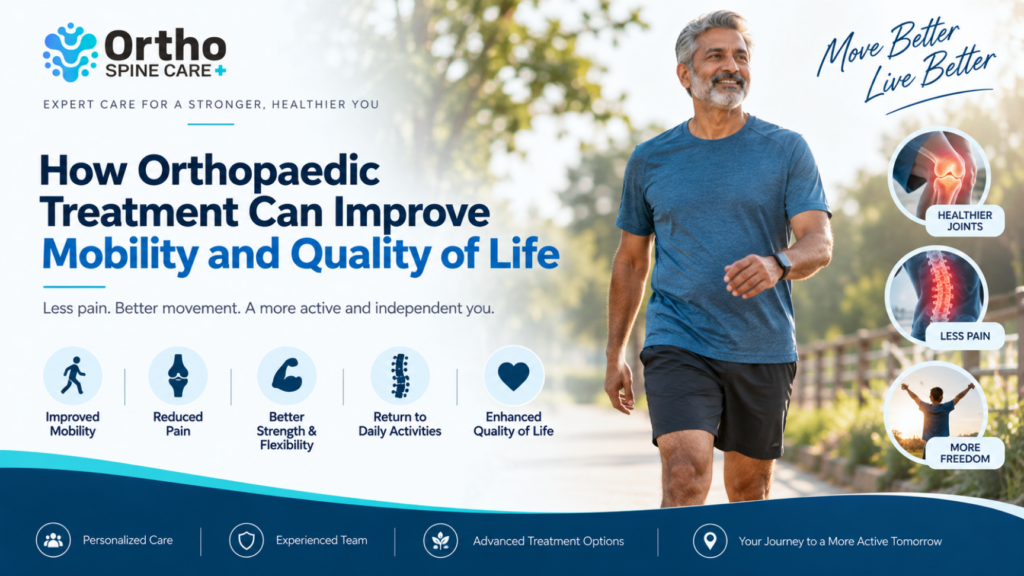
How Orthopaedic Treatment Can Improve Mobility and Quality of Life
Being able to walk comfortably, climb stairs, exercise, work without pain, or simply get out of bed in the morning can have a major impact on everyday life.
When bone, joint, muscle, ligament, tendon, or spine problems begin to interfere with these simple activities, it can affect much more than physical comfort. Pain may make you avoid exercise, change the way you move, disturb your sleep, or make everyday tasks feel difficult.
This is where appropriate orthopaedic treatment can make a meaningful difference.
Orthopaedic care focuses on diagnosing and managing conditions affecting the musculoskeletal system. Depending on the problem, treatment may include non-surgical care, physiotherapy, rehabilitation, pain management, injections, minimally invasive procedures, or surgery when appropriate.
For people searching for an orthopaedic surgeon in Bangalore, understanding how orthopaedic treatment can support mobility and quality of life is an important first step.
What Does Mobility Really Mean?
Mobility is more than simply being able to walk.
It includes your ability to:
- Move your joints comfortably
- Walk and climb stairs
- Bend, stretch, and reach
- Maintain balance
- Exercise
- Perform household activities
- Work comfortably
- Participate in hobbies and sports
- Move independently
When pain or stiffness limits these activities, people often start changing their routines.
You may stop going for your morning walk because of knee pain. You might avoid stairs because your joints hurt. Perhaps back pain makes sitting at work uncomfortable.
Over time, these changes can affect your confidence, activity levels, and overall quality of life.
How Orthopaedic Problems Affect Daily Life
A musculoskeletal problem can affect different aspects of your routine.
Pain can limit movement
When movement causes pain, you may naturally try to avoid it. This can make everyday activities more difficult.
Stiffness can reduce flexibility
Joint or spine problems may make bending, stretching, or changing positions uncomfortable.
Weakness can affect independence
Muscle weakness or joint problems can make walking, lifting, or maintaining balance more challenging.
Poor mobility can affect activity levels
When exercise becomes uncomfortable, people may become less active. This can make it harder to maintain strength and physical function.
Sleep can be affected
Persistent pain can make it difficult to find a comfortable sleeping position or remain comfortable through the night.
The right treatment approach depends on the underlying condition rather than simply the location of the pain.
1. Accurate Diagnosis Is the First Step
Before discussing treatment, it is important to understand what is causing the problem.
For example, knee pain could be associated with arthritis, an injury, overuse, or another joint condition. Back pain may have several possible causes, including muscle-related problems, disc conditions, or other spine disorders.
An orthopaedic evaluation may involve:
- Discussing your symptoms
- Reviewing your medical history
- Physical examination
- Assessing movement and function
- Reviewing previous medical reports
- Imaging or other investigations when appropriate
OrthoSpineCare provides diagnostic services including digital X-rays, standing X-rays for spine and joint assessment, and bone-density/DEXA scan guidance.
A clearer diagnosis helps the doctor determine which treatment options may be suitable.
2. Non-Surgical Treatment Can Help Restore Function
Orthopaedic treatment does not always mean surgery.
Depending on the condition, non-surgical treatment may include:
- Medication
- Physiotherapy
- Exercise-based rehabilitation
- Activity modification
- Posture correction
- Pain management
- Injections
- Lifestyle changes
For many patients, the goal is to control symptoms while improving movement and function.
At OrthoSpineCare, the listed services include non-surgical spine care, pain management, physiotherapy and rehabilitation guidance, and injections alongside surgical services.
3. Physiotherapy Can Support Better Movement
Physiotherapy can be an important part of orthopaedic recovery.
A personalized rehabilitation program may focus on:
- Improving strength
- Increasing flexibility
- Restoring joint movement
- Improving balance
- Regaining physical function
- Supporting recovery after injury
- Supporting recovery after surgery
For example, someone recovering from a knee injury may need to gradually rebuild strength and movement before returning to normal activities.
Similarly, rehabilitation can be important after orthopaedic surgery.
OrthoSpineCare provides post-injury recovery and post-surgical rehabilitation guidance as part of its services.
4. Treating Joint Problems Can Make Everyday Activities Easier
Joint problems can affect almost every part of your day.
Knee, hip, shoulder, ankle, wrist, and other joint problems may make simple activities uncomfortable.
For example, knee pain can make it difficult to:
- Climb stairs
- Walk long distances
- Squat
- Get up from a chair
- Exercise
Shoulder pain may make it difficult to:
- Reach overhead
- Lift objects
- Dress
- Perform certain exercises
- Sleep comfortably
Appropriate treatment aims to address the underlying problem while helping you regain useful movement.
OrthoSpineCare provides bone and joint treatment for conditions affecting areas including the shoulder, elbow, wrist, hand, hip, knee, ankle, and foot.
5. Spine Treatment Can Help With Movement and Function
Back and neck problems can affect almost everything you do.
Persistent back pain may make sitting, standing, walking, bending, or exercising difficult.
Some spine conditions may also cause symptoms that travel into an arm or leg.
Depending on the condition, treatment can include conservative care, rehabilitation, spinal injections, minimally invasive procedures, or surgery when appropriate.
OrthoSpineCare’s spine services include care for sciatica, slipped discs, spondylosis, spinal injuries, scoliosis, spinal deformities, and other spine-related conditions.
The objective of treatment is not simply to focus on pain. It is also to help the patient maintain or regain appropriate function.
6. Sports Injury Treatment Can Help You Return to Activity
An injury can temporarily take you away from the activities you enjoy.
A ligament injury, tendon problem, or rotator cuff injury may affect both recreational activities and everyday movement.
Appropriate assessment can help determine the extent of the injury and the treatment required.
Recovery may involve rehabilitation, strengthening, movement training, and a gradual return to activity.
OrthoSpineCare provides sports injury management for ligament and soft-tissue injuries, tendonitis, and rotator cuff injuries.
7. Fracture Care Helps Restore Stability and Function
A fracture can significantly affect mobility.
Depending on the injury, treatment may involve a cast, splint, walker boot, fracture reduction, fixation, and rehabilitation.
Once the injury has been treated, rehabilitation can help patients work toward restoring movement and function.
The type of treatment depends on the location and nature of the fracture.
OrthoSpineCare’s fracture management services include plaster casts, walker boots and splints, fracture reduction and fixation when required, emergency trauma care, and post-fracture rehabilitation.
8. Joint Replacement May Be Considered for Severe Joint Problems
When a joint becomes severely damaged, everyday movement can become increasingly difficult.
For selected patients with severe joint degeneration, joint replacement may be considered.
The purpose is to address the damaged joint and help improve movement and function when the procedure is considered appropriate.
OrthoSpineCare lists knee, hip, and shoulder replacement among its surgical services.
However, joint replacement is not automatically necessary for everyone with joint pain. A specialist assessment is important before making such a decision.
9. Minimally Invasive Procedures May Be an Option for Selected Patients
Modern orthopaedic care includes minimally invasive techniques for certain conditions.
These approaches may be appropriate for selected patients depending on their diagnosis and individual circumstances.
OrthoSpineCare provides minimally invasive and endoscopic spine procedures among its listed surgical services.
Your specialist can explain whether a particular procedure is appropriate for your condition and what recovery may involve.
10. Better Mobility Can Support Independence
Mobility becomes especially important as people get older.
Knee pain, arthritis, fractures, reduced balance, and other musculoskeletal problems can make everyday activities more difficult for older adults.
Maintaining appropriate mobility can help people continue performing daily activities and remain as independent as possible.
Geriatric orthopaedic care can include joint health management, fall-prevention guidance, and counselling regarding joint replacement options when appropriate.
Orthopaedic Treatment Is About More Than Pain Relief
Pain is often the symptom that brings someone to an orthopaedic clinic, but treatment can involve much more.
The bigger goals may include:
Better movement
Being able to move more comfortably can make everyday activities easier.
Improved physical function
Treatment and rehabilitation can help you work toward regaining strength and useful movement.
Greater independence
Improved mobility can make routine activities less dependent on others.
Returning to activities
Appropriate rehabilitation can help patients gradually return to work, exercise, hobbies, or sports where suitable.
Improved confidence in movement
Understanding your condition and following an appropriate treatment plan can help you approach movement more confidently.
When Should You Consider an Orthopaedic Consultation?
Consider speaking with an orthopaedic specialist if you experience:
- Persistent bone or joint pain
- Recurring back or neck pain
- Difficulty walking
- Reduced joint movement
- Persistent swelling or stiffness
- Pain following an injury
- A suspected fracture
- Sports injuries that are not improving
- Pain that travels into an arm or leg
- Difficulty performing everyday activities
- Symptoms that continue despite initial treatment
You don’t necessarily need to wait until your symptoms become severe.
An evaluation can help you understand the possible cause of your symptoms and what treatment options may be appropriate.
Choosing an Orthopaedic Surgeon in Bangalore
If you are searching for an orthopaedic surgeon in Bangalore, consider factors such as qualifications, areas of specialization, experience with your condition, available treatment options, and follow-up care.
For patients in North Bangalore, OrthoSpineCare in Sadashivanagar provides orthopaedic and spine care under Dr. Prajwal GS.
Dr. Prajwal GS’s listed qualifications include MBBS, MS Orthopaedics, fellowship training in spine surgery, minimally invasive spine surgery and orthopaedic rheumatology, as well as an AO Global Spine Diploma.
The clinic provides care for spine conditions, fractures, bone and joint problems, sports injuries, pain management, rehabilitation, diagnostic services, and surgical conditions.
A Better Quality of Life Starts With Understanding the Problem
Living with persistent pain can gradually change the way you work, exercise, sleep, and move.
Orthopaedic treatment is not simply about treating a painful joint or repairing an injury. Depending on the condition, the broader goal can be to restore movement, improve physical function, support recovery, and help you get back to everyday activities.
Whether the appropriate approach is physiotherapy, rehabilitation, medication, injections, minimally invasive treatment, or surgery, the first step is understanding what is causing the problem.
If pain or reduced mobility is affecting your everyday life, consider consulting a qualified orthopaedic specialist for an individual assessment.
OrthoSpineCare
No. 2, 10th Cross Road, Sadashivanagar, Bangalore – 560080
Phone: 9740559577
This article is intended for general educational purposes and does not replace an individual medical consultation. Treatment options depend on the patient’s condition, examination, investigations, medical history, and clinical circumstances.