
Understanding how bones respond after an injury
When a bone breaks, cracks or gets severely impacted, the body begins a natural healing process. Swelling increases, movement becomes difficult and pain creates a protective response. But even though the body tries to repair the damage, it cannot complete the process correctly without proper alignment and guidance. This is why fracture treatment care becomes essential rather than optional. A fracture is not just a broken bone, it is an interruption in structure and stability. At Orthospine Care, every fracture is handled with precision so the bone heals in its natural shape, strength and function.
Where fracture treatment care begins for a fresh injury
The first step is identifying the severity of the fracture. Sometimes the break is visible, but many fractures are internal and only detected through X-ray or scanning. If a bone heals in the wrong position, long term problems follow. This is why fracture treatment care starts with accurate diagnosis, alignment assessment and immobilisation. At Orthospine Care, specialists examine swelling, bone displacement, nerve involvement and tissue response before planning the right treatment method. Early correction prevents deformity and sets the foundation for strong recovery.
How fracture treatment care restores alignment and structure
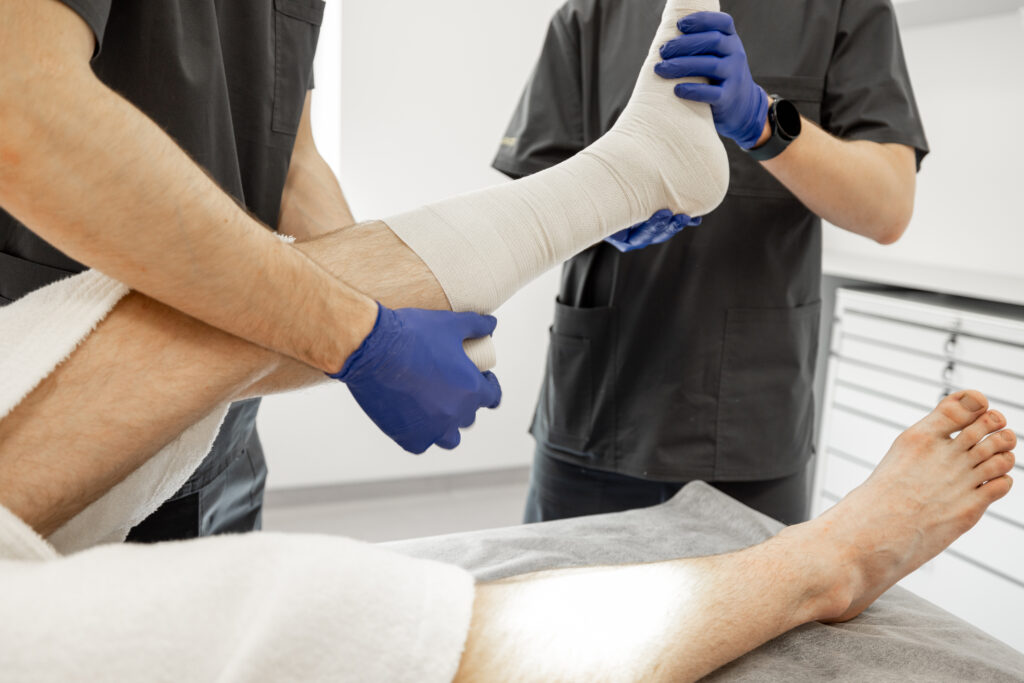
Bones heal by forming new tissue that bridges the gap created by the injury. But if the alignment is wrong, the new bridge forms incorrectly. This leads to weak bone union, reduced movement and long term pain. Fracture treatment care ensures that the broken ends remain in correct position while the new bone forms. Treatment may involve casting, splinting or advanced fixation methods depending on the fracture type. At Orthospine Care, specialists choose the most suitable method so healing remains strong, straight and stable.
How fracture treatment care builds long term stability
Healing is not complete when the pain reduces. True recovery means the bone regains strength to carry weight, absorb impact and support daily movement. After immobilisation, controlled and guided movement becomes important. This is where fracture treatment care steps beyond pain control and into rehabilitation. At Orthospine Care, recovery involves strengthening exercises, flexibility training and gradual weight bearing. These steps rebuild stability, prevent future weakness and help patients regain confidence in movement.
Why professional care prevents permanent deformity
A poorly treated fracture may heal, but not in the right way. Bones that fuse incorrectly can create bends, joint imbalance or long term stiffness. Over time, this affects posture, walking pattern, grip strength or limb mobility depending on the location of the injury. Proper fracture treatment care prevents such deformities by ensuring correct positioning during the entire healing phase. At Orthospine Care, specialists track alignment continuously so the bone does not shift during recovery, preserving natural structure.
Where rehabilitation fits into successful healing
Rehabilitation is not a secondary stage, it is part of treatment. Once the bone stabilises, muscles around the injury must wake up again. Without movement, muscles weaken and joints become stiff. Fracture treatment care includes progressive rehabilitation that teaches the body to use the injured limb naturally. At Orthospine Care, therapists guide patients through controlled exercises, safe stretches and movement routines that help restore flexibility, strength and coordination.
How Orthospine Care ensures safe and timely healing
The difference between incomplete healing and full recovery often lies in supervision. Many fractures seem minor but turn complicated if ignored. At Orthospine Care, treatment decisions are based on fracture pattern, age, bone density, lifestyle needs and recovery goals. This allows fracture treatment care to be personalised rather than generalized. Regular follow ups track bone union, swelling control and muscle response. Timely adjustments to care prevent delays and ensure that healing continues smoothly.
When patients should not wait to start fracture treatment care
If pain persists after a fall, movement feels weak or swelling increases, treatment should not be postponed. Fracture treatment care becomes necessary when the body struggles to manage trauma alone. Delaying care leads to slower recovery, misaligned healing and long term complications. At Orthospine Care, early intervention improves outcomes, lowers recovery time and protects mobility for the future.
Conclusion
Bones are designed to heal, but they require guidance to heal correctly. Proper fracture treatment care aligns broken segments, restores stability and prevents life-long deformities. At Orthospine Care, treatment is structured, personalised and closely monitored from diagnosis to rehabilitation. With the right care, bones heal stronger, movement returns naturally and life resumes without fear or restriction.